
What is the Regency?

Statue of George IV, Brighton
The Regency period refers to the nine years from 1811 to 1820 when the Prince of Wales, the future George IV, ruled as Regent during the final illness of his father, George III.
During the latter years of his reign, George III was subject to periods of mental illness.
It is now believed that he was suffering from porphyria, an inherited disease whose symptoms of delirium and hallucinations can give the appearance of insanity.
The Regency crisis of 1788
In November 1788, George III suffered his first bout of madness. The government was thrown into a Regency crisis.
The Prime Minister, William Pitt, hoping that the King would recover and anxious to protect his own position, proposed that the Prince of Wales should be appointed Regent but with limited powers of government for at least the first twelve months.
The Prince of Wales’ supporters, Charles James Fox and Edmund Burke, on the other hand, insisted on the automatic right of the heir to the throne to full power to govern, given the incapacity of the King.
Before the matter could be resolved, however, the King recovered and was able to resume his power.

George III from The History of the Reign
of George III by R Bisset (1810)
The King endured two more bouts of madness, in 1801 and 1804, but again, in due course he regained his faculties and was able to continue his rule.
However, in November 1810, Princess Amelia, George III’s beloved youngest daughter, died, and the King was thrown into a severe melancholy, plunging him into another bout of insanity from which he gave no sign of recovering.
The Regency Act 1811
Accordingly, the Prime Minister, Spencer Perceval, introduced the Regency bill in December 1810, proposing that the Prince of Wales be appointed Regent. The bill subjected the Regent to restrictions on his powers of government for twelve months, during which time it was hoped that the King would recover.
The King was to resume active power once the Queen and her council had notified the privy council of his recovery.
The Regency Act was passed on 5 February 1811, with a commission signifying royal assent.
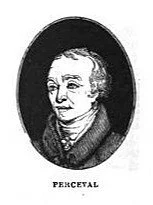
Spencer Perceval
Regency extravagance
The Prince of Wales marked his rise to power in characteristic style. On 19 June 1811, he held a grand party at Carlton House to mark his change in status.
It was a celebration of freedom from the restraints imposed by his father and its extravagance epitomised the Prince’s lifestyle.
The lavish centrepiece of the party, which was attended by all the royalty of Europe, was a miniature canal which ran down the centre of the long tables, surrounded by flowers and moss and filled with gold and silver fish.
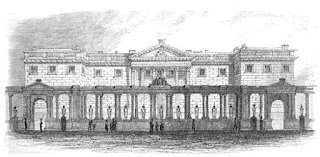
Carlton House from Huish's memoirs of George IV 1831
The end of the Regency
George III never recovered from his illness. The Regency came to an end on his death on 29 January 1820 and the Prince Regent became King George IV.
Rachel Knowles writes faith-based Regency romance and historical non-fiction. She has been sharing her research on this blog since 2011. Rachel lives in the beautiful Georgian seaside town of Weymouth, Dorset, on the south coast of England, with her husband, Andrew, who co-writes this blog.
If you have enjoyed this blog and want to encourage us and help us to keep making our research freely available, please buy us a virtual cup of coffee by clicking the button below.
Sources used include:
Chedzoy, Alan, Seaside Sovereign - King George III at Weymouth (2003)
Clarke, The Georgian Era (Vizetelly, Branston and Co, 1832, London)
Fry, Plantagenet Somerset, The Kings & Queens of England & Scotland (1990)
Huish, Robert, Memoirs of George IV (Thomas Kelly, 1830, 1831, London)
Watson, J. Steven, Oxford History of England: The Reign of George III 1760-1815 (1960)
All photographs © Andrew Knowles