
Regency History’s guide to Kensington Palace

Kensington Palace (2017)
Where is it?
Kensington Palace is situated in Kensington Gardens in London.
History
Kensington Palace started life as a Jacobean mansion built around 1605. It was bought by William III and Mary II in 1689 and was transformed into a royal palace by Sir Christopher Wren so that the King and Queen could live away from the London air.
The palace is now in the care of Historic Royal Palaces.
Georgian connections

Kensington Palace from The History of the Royal Residences by WH Pyne (1819)
George I and George II both used Kensington Palace as one of their principal residences, but after the death of Queen Caroline in 1737, much of the palace fell into disrepair.
Neither George III, George IV nor William IV chose to live at Kensington Palace. They granted “Grace and Favour” apartments to courtiers and members of the royal family. These included:
George IV's estranged wife, Caroline, Princess of Wales
Queen Victoria's father, Edward, Duke of Kent
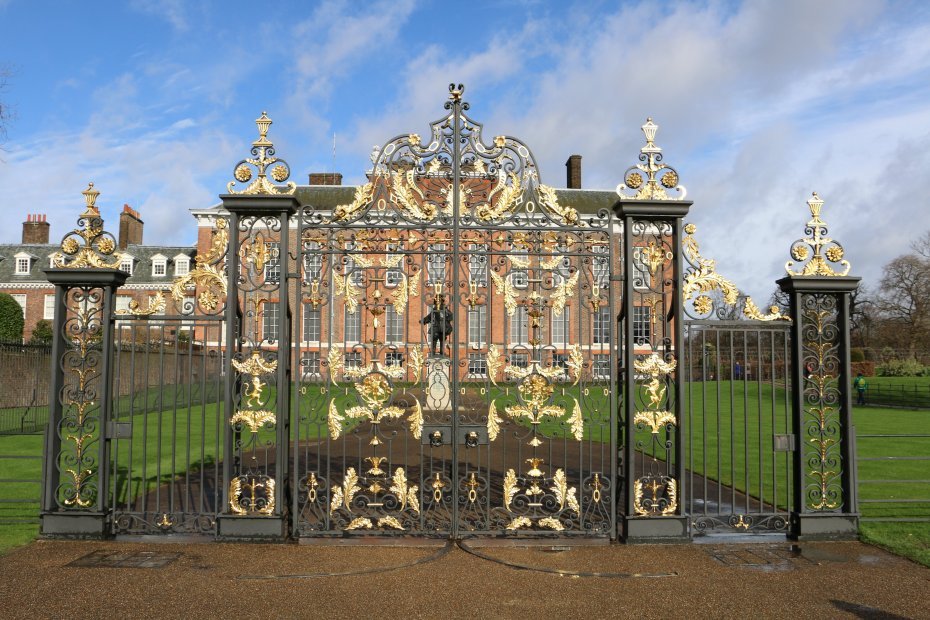
Kensington Palace through the Gold Gates (2017)

Kensington Palace from Kensington Gardens (2017)
Kensington Palace as a tourist attraction
Visiting royal palaces is not a new entertainment. Although not opened to the public until 1899, it was possible to see inside Kensington Palace during the Regency period.
According to Feltham's Picture of London for 1818:
The palace is a large and splendid edifice of brick, and has a set of very handsome state apartments, and some beautiful staircases and ceilings, painted by Verrio and others. He continued: The whole may be seen any day except Sundays, by applying to the housekeeper, for a trifling douceur. 1
The State Apartments
The King's Staircase

The Great Staircase, Kensington Palace, from The History of the Royal Residences by WH Pyne (1819)
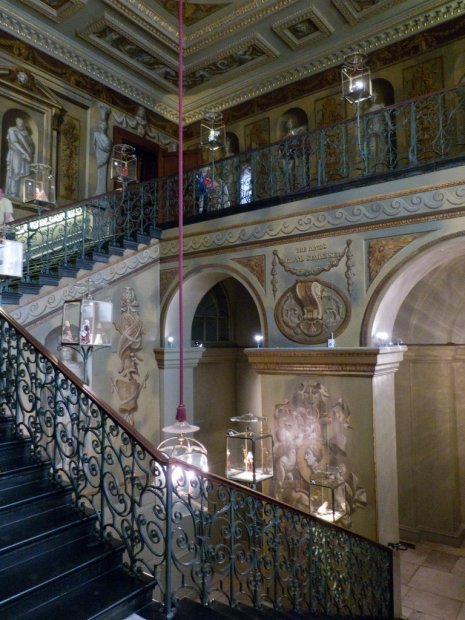
The King's Staircase, Kensington Palace (2012)
Queen Caroline's Drawing Room

Queen Caroline's Drawing Room, Kensington Palace, from The History of the Royal Residences by WH Pyne (1819)
The Queen's Bedchamber

The Queen's Bedchamber, Kensington Palace, from The History of the Royal Residences by WH Pyne (1819)
The Queen's Dining Room

The Queen's Dining Room, Kensington Palace, from The History of the Royal Residences by WH Pyne (1819)
The Queen's Gallery
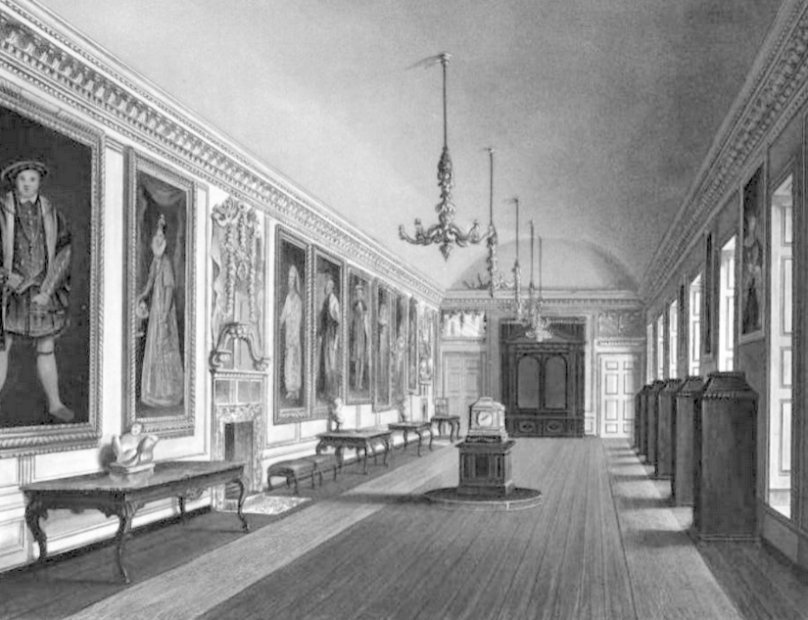
The Queen's Gallery, Kensington Palace, from The History of the Royal Residences by WH Pyne (1819)
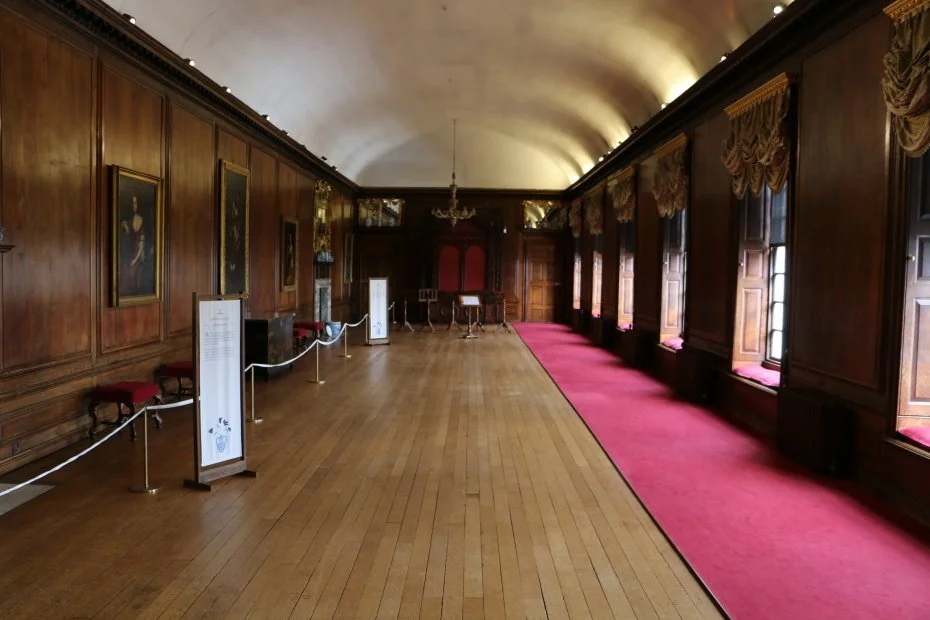
The Queen's Gallery, Kensington Palace (2017)
The Presence Chamber

The Presence Chamber, Kensington Palace, from The History of the Royal Residences by WH Pyne (1819)
The Admirals' Gallery

The Admirals' Gallery, Kensington Palace, from The History of the Royal Residences by WH Pyne (1819)
The Cupola Room
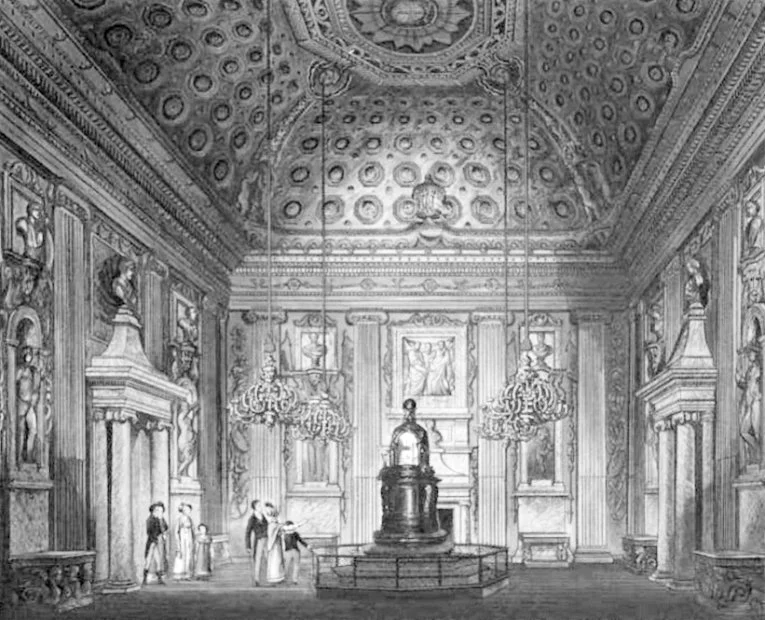
The Cupola Room, Kensington Palace, from The History of the Royal Residences by WH Pyne (1819)
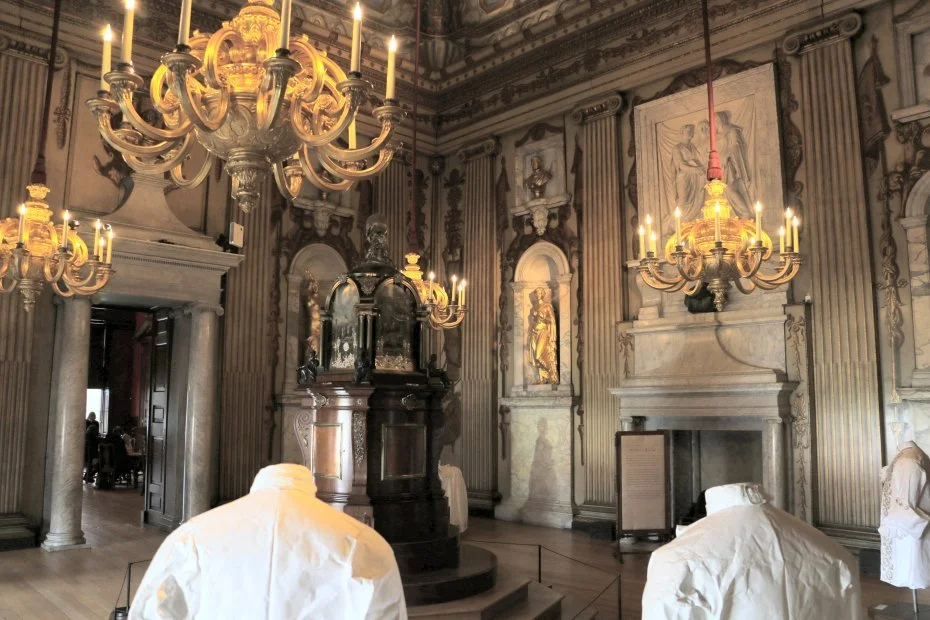
The Cupola Room, Kensington Palace (2017)
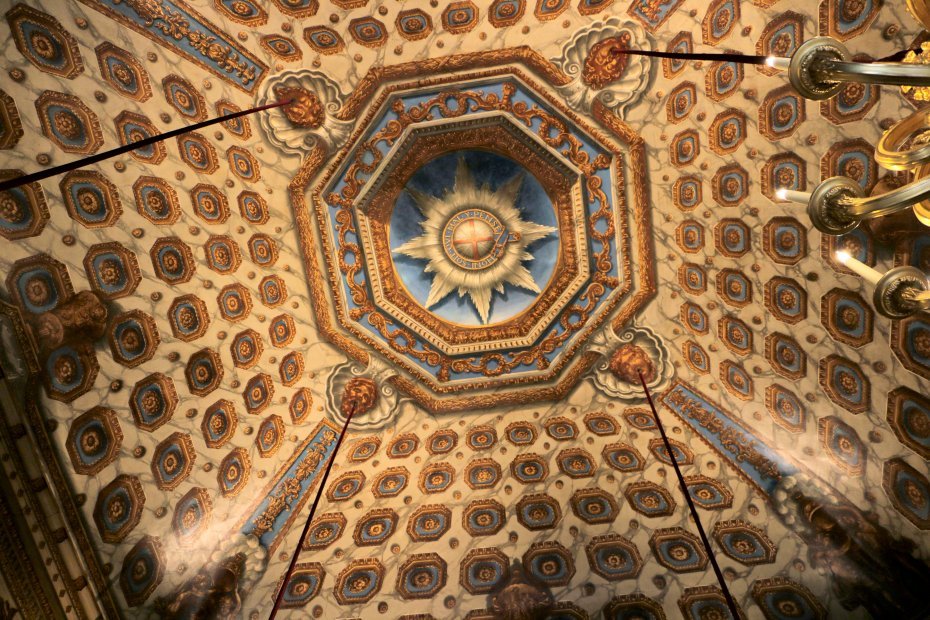
The ceiling of the Cupola Room, Kensington Palace (2017)
The King's Drawing Room
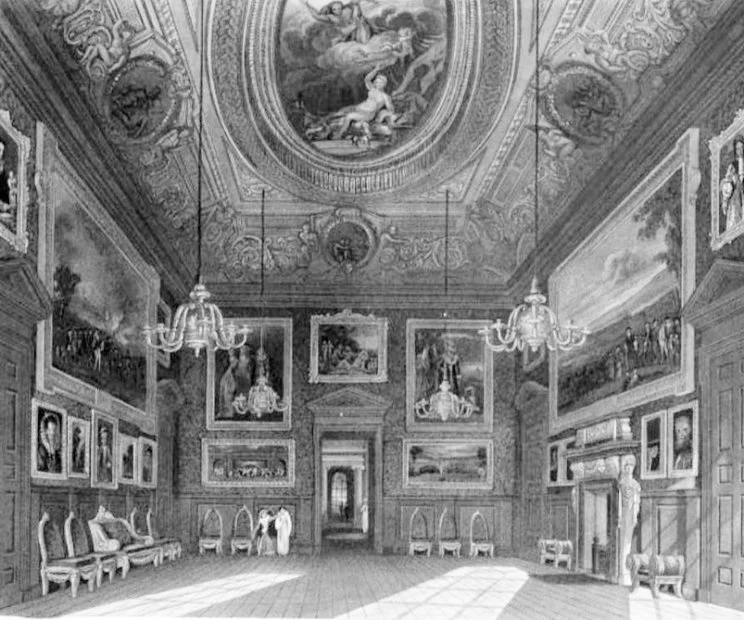
The King's Drawing Room, Kensington Palace, from The History of the Royal Residences by WH Pyne (1819)
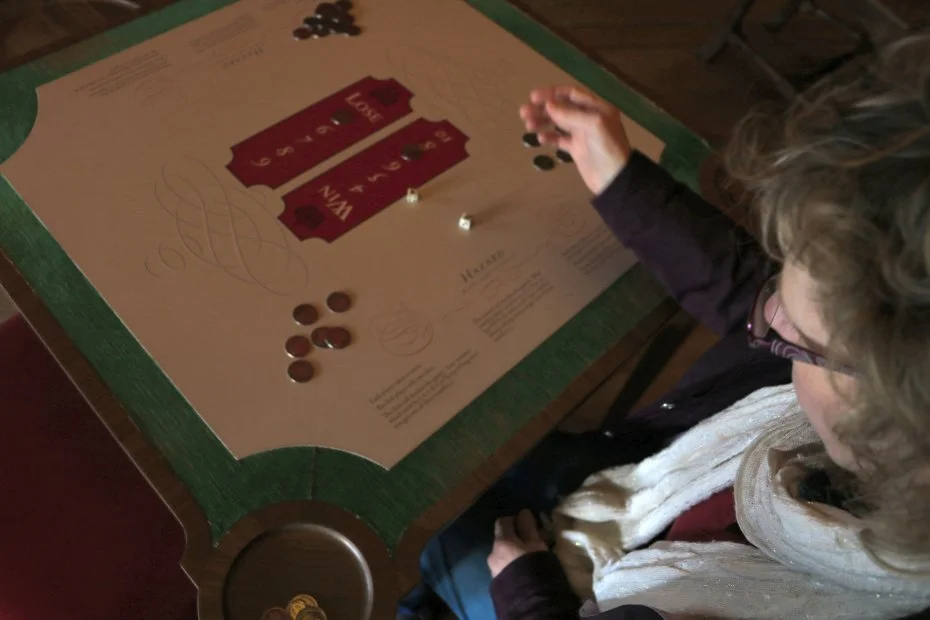
Learning to play Hazard in the King's Drawing Room, Kensington Palace (2017)
The King's Closet

The King's Closet, Kensington Palace, from The History of the Royal Residences by WH Pyne (1819)
Queen Caroline's Closet

Queen Caroline's Closet, Kensington Palace, from The History of the Royal Residences by WH Pyne (1819)
The King's Gallery

The King's Gallery, Kensington Palace, from The History of the Royal Residences by WH Pyne (1819)
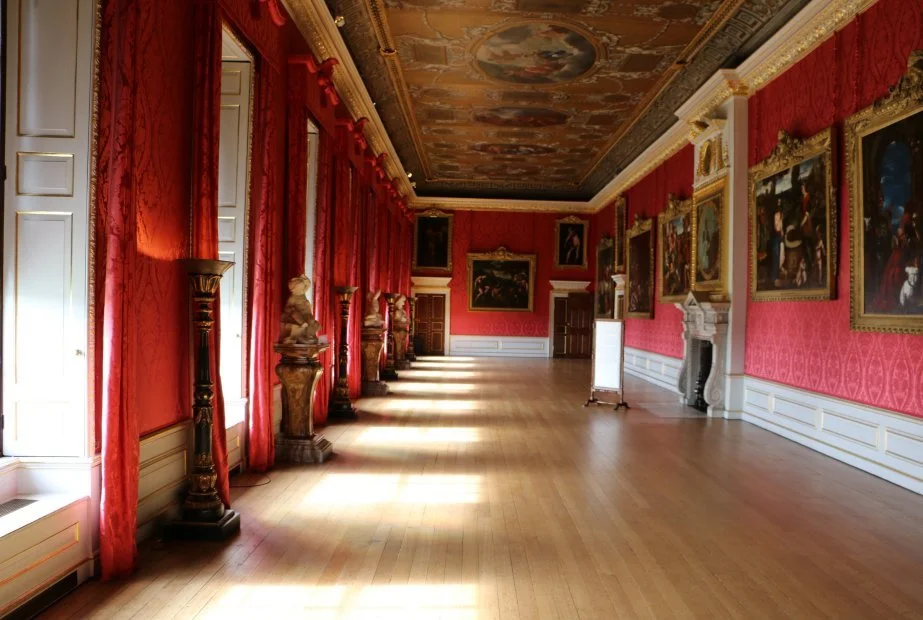
The King's Gallery, Kensington Palace (2017)
Queen Victoria at Kensington Palace
Queen Victoria was born in Kensington Palace on 24 May 1819. It is believed that she was born in the North Drawing Room of her parents’ apartments.

Room where Queen Victoria was born , Kensington Palace (2014)
Victoria: A Royal Childhood
Victoria’s father, Edward, Duke of Kent, died suddenly less than a year after her birth, and Victoria and her mother were left virtually penniless. They returned to their apartments at Kensington Palace where Victoria was brought up in relative seclusion.
When William IV visited the palace in August 1836, he discovered that the Duchess of Kent had adopted some of the state rooms and altered them to suit herself. William was furious and publicly complained about the liberties his sister-in-law had taken and announced his wish that he would live long enough for Victoria to reach her 18th birthday, thereby preventing the Duchess from becoming regent. His wish was granted. He died just four weeks after Victoria turned 18.
Find out more about Kensington Gardens here.
Read about other Royal palaces:
Rachel Knowles writes faith-based Regency romance and historical non-fiction. She has been sharing her research on this blog since 2011. Rachel lives in the beautiful Georgian seaside town of Weymouth, Dorset, on the south coast of England, with her husband, Andrew, who co-writes this blog.
If you have enjoyed this blog and want to encourage us and help us to keep making our research freely available, please buy us a virtual cup of coffee by clicking the button below.
Note
1. From Feltham, John, The Picture of London for 1818 (1818)
Sources used:
Feltham, John, The Picture of London for 1818 (1818)
Humphrys, Julian, The private life of palaces (Historic Royal Palaces, 2006)
Pyne, WH, The history of the Royal Residences of Windsor Castle, St James's Palace, Carlton House, Kensington Palace, Hampton Court, Buckingham House and Frogmore (1819)
Kensington Palace official website
This post was last updated 7 October 2019.
Photographs © Andrew Knowles & RegencyHistory.net