
Painting Paradise: The Art of the Garden – 2015 exhibition at the Queen’s Gallery

St James's Park and the Mall attributed to British School (c1745)
On 20 March 2015, I was invited to attend a bloggers' event to preview the new exhibition at the Queen's Gallery, Buckingham Palace: Painting Paradise—The Art of the Garden. The exhibition ran until 11 October 2015.
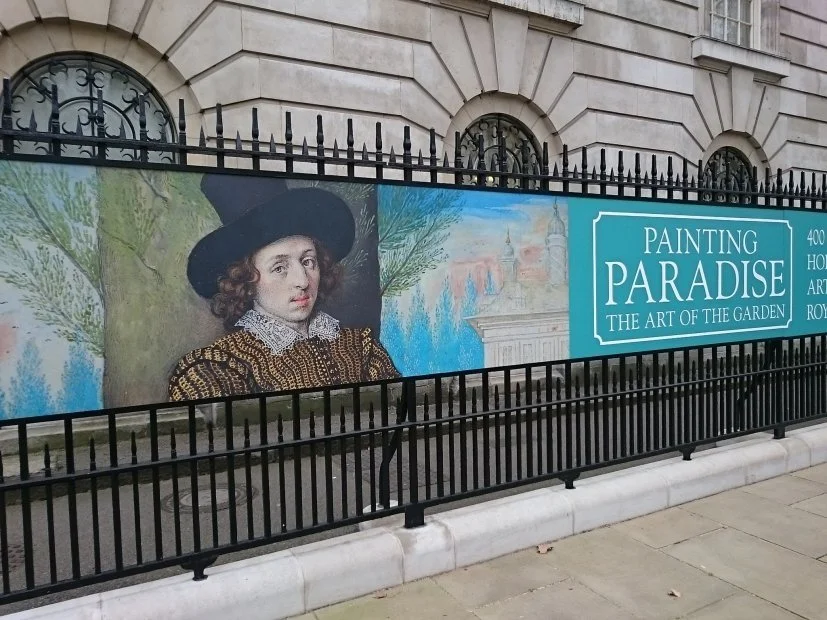
A garden walk through time
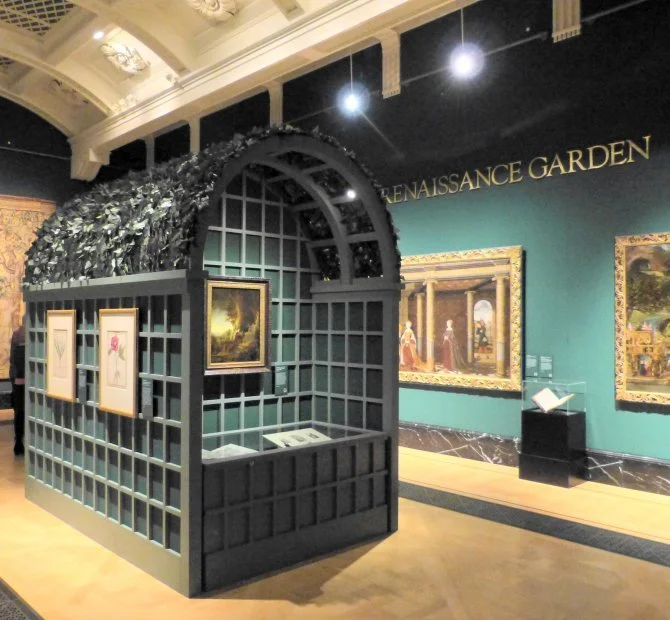
The exhibition portrays the history of the garden using paintings and objects from the Royal Collection. As you walk through the exhibition rooms, you are taken on a chronological tour of the development of the garden, starting with Paradise and ending with The Horticultural Garden. The displays include some lovely touches, such as sprays of artificial flowers, an arbour and a pergola, which help to create the atmosphere of being in a garden.
Paradise

Seven couples in a garden by Bukharan artist (c1510) in Khamsa (Quintet) of Nava'i manuscript by Mir 'Ali Sir Neva'i Haeva'i (1492) acquired by George III c1797
The Sacred Garden

Christ and St Mary Magdalen at the Tomb by Rembrandt van Rijn (1638)
The Renaissance Garden
The selection of items on display in this section includes a rare copy of Thomas Hyll’s book entitled The Profitable Arte of Gardening (1586) and a picture of the family of Henry VIII showing the Great Garden at Whitehall Palace in the background.
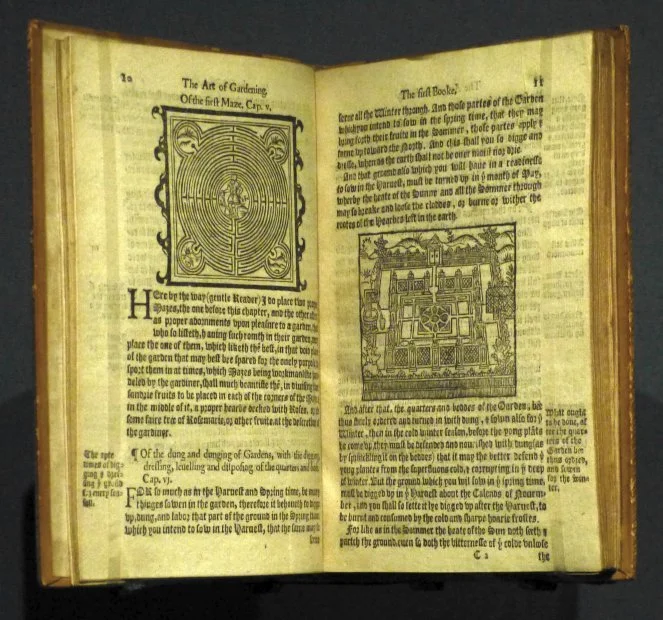
The Profitable Arte of Gardening by Thomas Hyll (1586)

Detail from Family of Henry VIII by British School (c1545) showing Great Garden at Whitehall Palace in background
The Botanic Garden
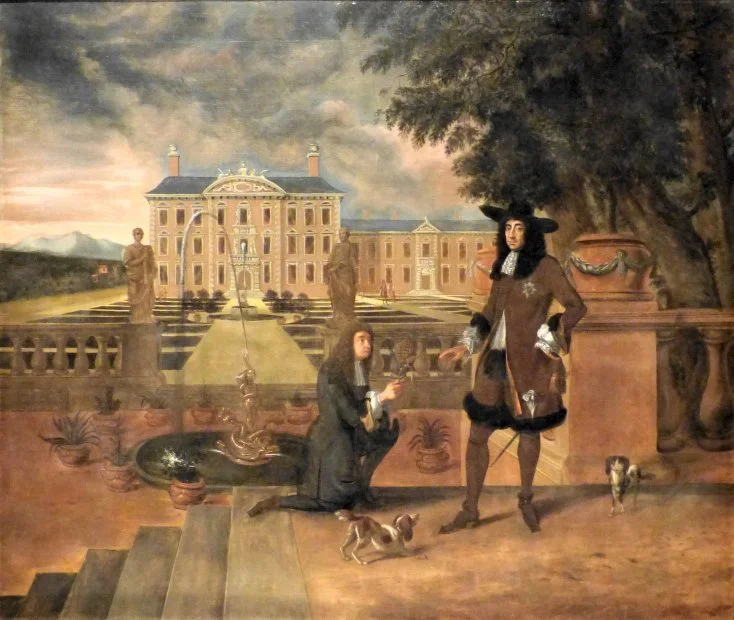
Charles II Presented with a Pineapple by British School (c1677)
The picture of Charles II and the pineapple is fascinating. Although it is said to be the presentation of the first pineapple grown in England, both the King and the man on the left, thought to be his gardener, John Rose, had died before this was achieved! The house in the background may be that of Dorney House, a large house near Oatlands Park. Unusually, Charles II is pictured wearing fashionable clothes rather than ceremonial robes.
In the cabinets before you enter the next garden phase, there are some beautiful decorative objects from the Royal Collection. My favourites are the pieces of porcelain by Chelsea Porcelain Works with detailed botanical designs. There is also a very elaborate Minton soft porcelain pen tray that was given to Queen Victoria when she was a girl.

Circular plate from the Chelsea Porcelain Works (c1755)

Minton soft porcelain pen tray (c1833) belonging to the young Queen Victoria
The Baroque Garden
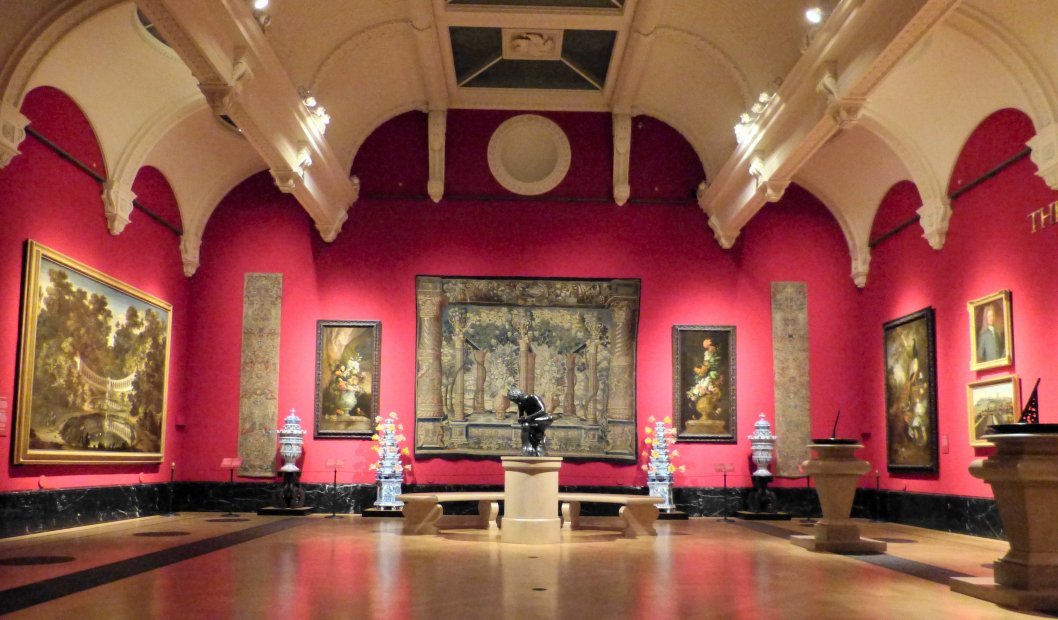
The Baroque Garden includes a superb example of Georgian recycling—a cabinet made around 1785 incorporating 17th century Florentine decorative panels.

Cabinet by Adam Weisweiler (c1785)
Hampton Court
As might be expected from the Royal Collection, there are lots of pictures of royal gardens including several of Hampton Court. Of special interest is the pair of sundials on display which were originally in the gardens, but which have now been replaced with replicas to conserve the originals.

Detail from A View of Hampton Court by Leonard Knyff (c1703)

Enlarged section of A View of Hampton Court by Leonard Knyff (c1703). The red arrows indicate the places of the sundials in the gardens.

One of a pair of horizontal sundials by Thomas Tompion (c1699) which stood in the gardens of Hampton Court. Replicas now stand in their place.

Tulip vase by Adriaen Kocks (c1694)
The tulip vases were used to display flowers and bulbs at Hampton Court Palace.
Bushy Park
I particularly liked the picture of the water gardens at Bushy Park, later home to William IV.

A view of the cascade, Bushy Park Water Gardens by studio of Marco Ricci (c1715)

Detail from A view of the cascade, Bushy Park Water Gardens by studio of Marco Ricci (c1715)
Buckingham House
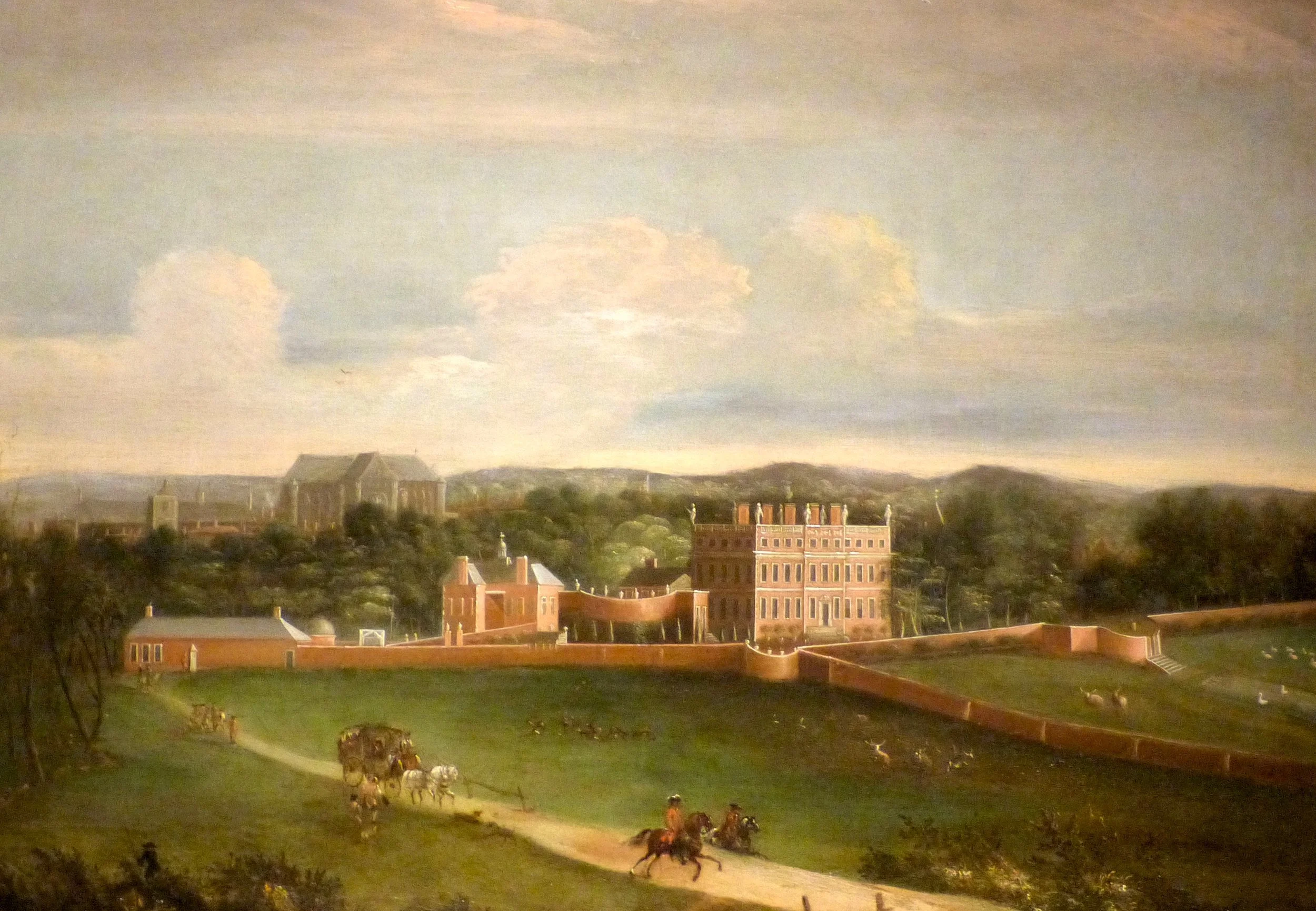
Buckingham House attributed to Adriaen van Diest (c1705)
The Landscape Garden
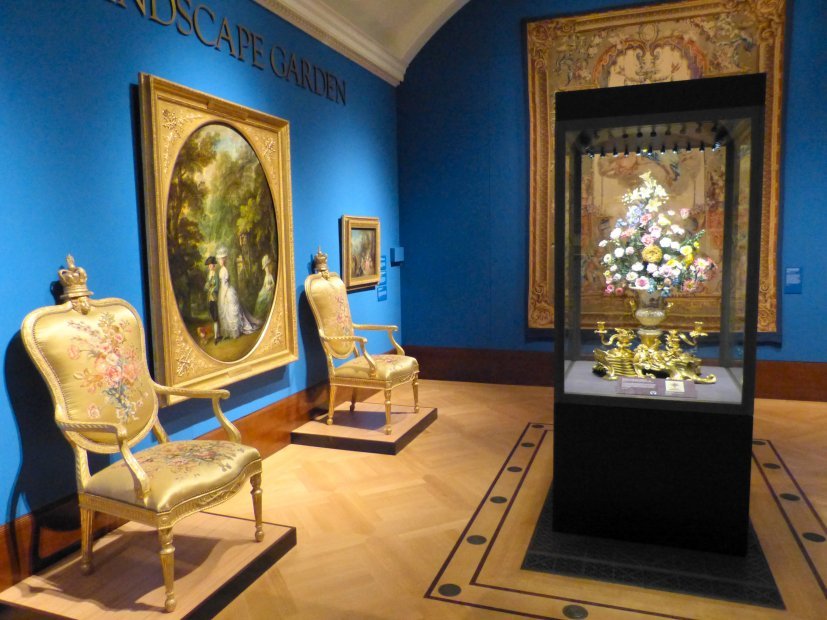
The Sunflower Clock
There is a magnificent porcelain sunflower clock made by the Vincennes Porcelain Factory c1752 which was acquired by George IV in 1819. The sunflower is the symbol of Louis XIV of France, the Sun King. Behind this exhibit hangs a Gobelins tapestry.
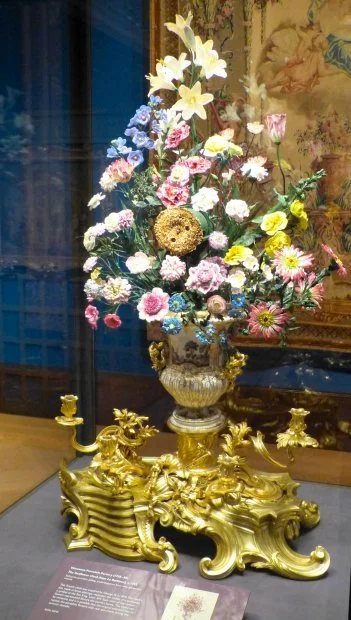
The Sunflower Clock from Vincennes Porcelain Factory (c1752)
The pair of armchairs is embroidered with designs by Mary Moser.
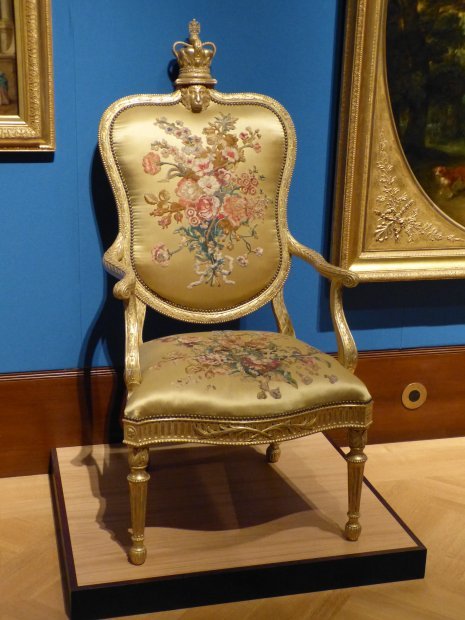
One of a pair of armchairs embroidered with designs by Mary Moser attributed to the Royal School for Embroidering Females under Mrs Nancy Pawsey (c1780). Chair attributed to Robert Campbell.
The Georgian period is well-represented in the exhibition, particularly in The Landscape Garden. There are some lovely paintings and prints of gardens including those at Carlton House, Chiswick, Stowe, Kew and Windsor.
Carlton House

A View of the Garden at Carlton House in Pall Mall by William Woollett (1760)
The Earl of Burlington's gardens at Chiswick

A view of the back part of the Cassina & part of the Serpentine River, terminated by the cascade in the garden of the Earl of Burlington at Chiswick after John Donowell (c1753)
The gardens at Kew
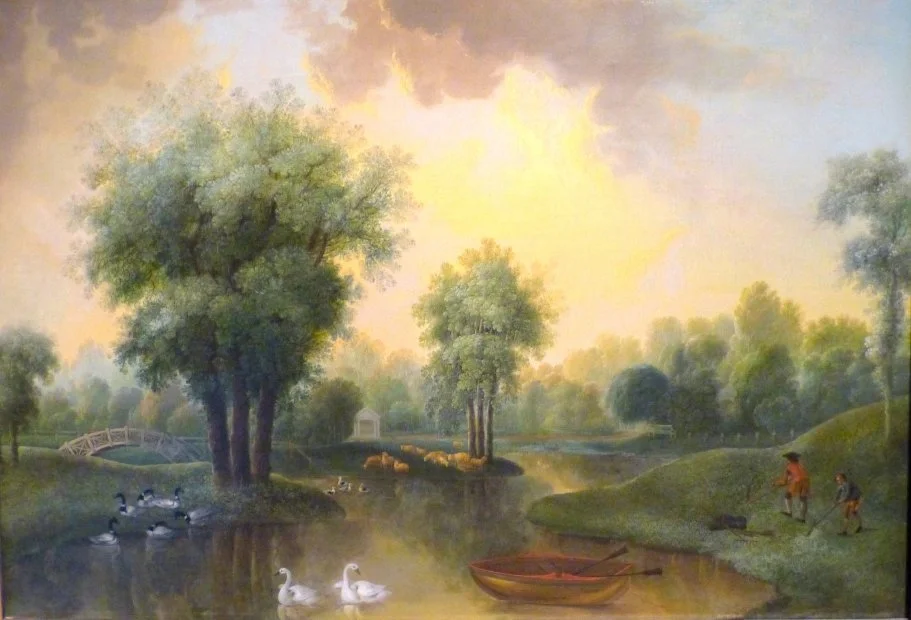
The Gardens at Kew by Johan Jacob Schalch (1759)
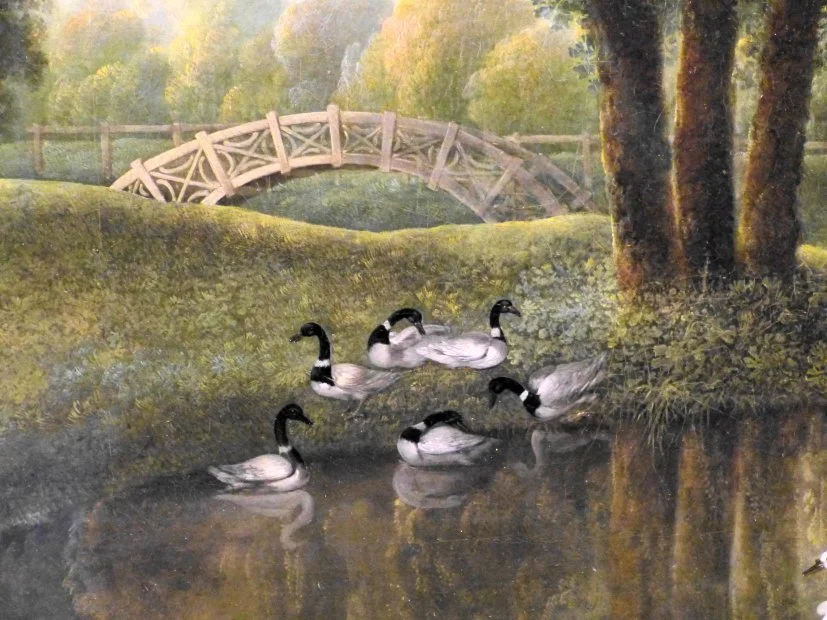
Detail from The Gardens at Kew by Johan Jacob Schalch (1759)
The palace in the next two pictures is not the building we now call Kew Palace, but rather the White House that used to stand opposite.
Read more about Kew Gardens here.

A view of the Palace from the Lawn in the Royal Gardens at Kew by William Elliott after William Woollett (1763)

A view of the palace form the north side of the Lake at Kew by William Elliott after William Woollett (c1766)

A view of the wilderness at Kew by Edward Rooker after William Marlow (c1763)
Buckingham Palace

Buckingham Palace—the garden front from across the lake by Caleb Robert Stanley (1839)
Windsor

The garden of the deputy ranger's lodge, Windsor Great Park by Paul Sandby (c1798)

Detail from The garden of the deputy ranger's lodge, Windsor Great Park by Paul Sandby (c1798)

The hermitage at Frogmore by Samuel Howitt (c1802). The hermitage was designed by George III's daughter, Princess Elizabeth.
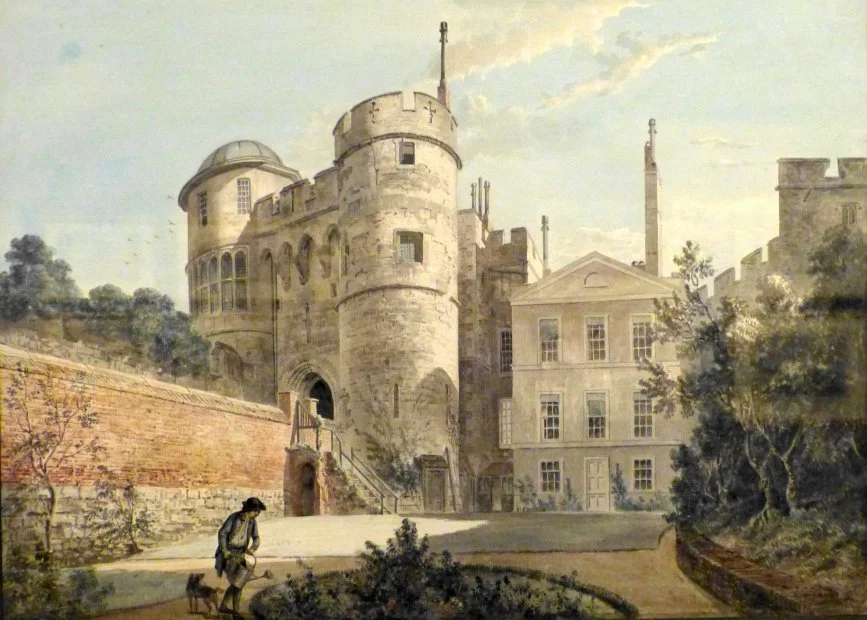
The Norman Gateway and Moat Garden, Windsor Castle by Paul Sandby (c1770)
St James's Park

Detail from St James's Park and the Mall (shown at top of this post) attributed to British School (c1745)
The Horticultural Garden
Some of my favourite items in the exhibition are the books of Humphry Repton’s designs for the gardens at Brighton Pavilion. The illustrations are beautiful, though frustratingly we are limited to just the two pages which are open. How I longed to turn the pages and see the other designs!

Designs for the Pavilion at Brighton—West Front of the Pavilion towards the Garden by Humphry Repton (1806)
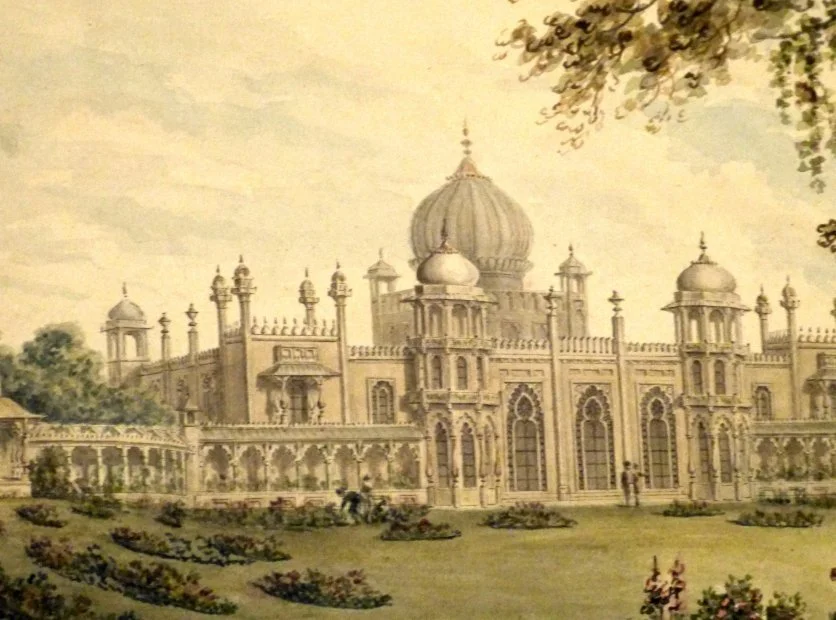
Detail from Designs for the Pavilion at Brighton—West Front of the Pavilion towards the Garden by Humphry Repton (1806)
The final room contains an interesting array of objects including some jewellery belonging to Queen Victoria, a child’s wheelbarrow and a pair of fans.
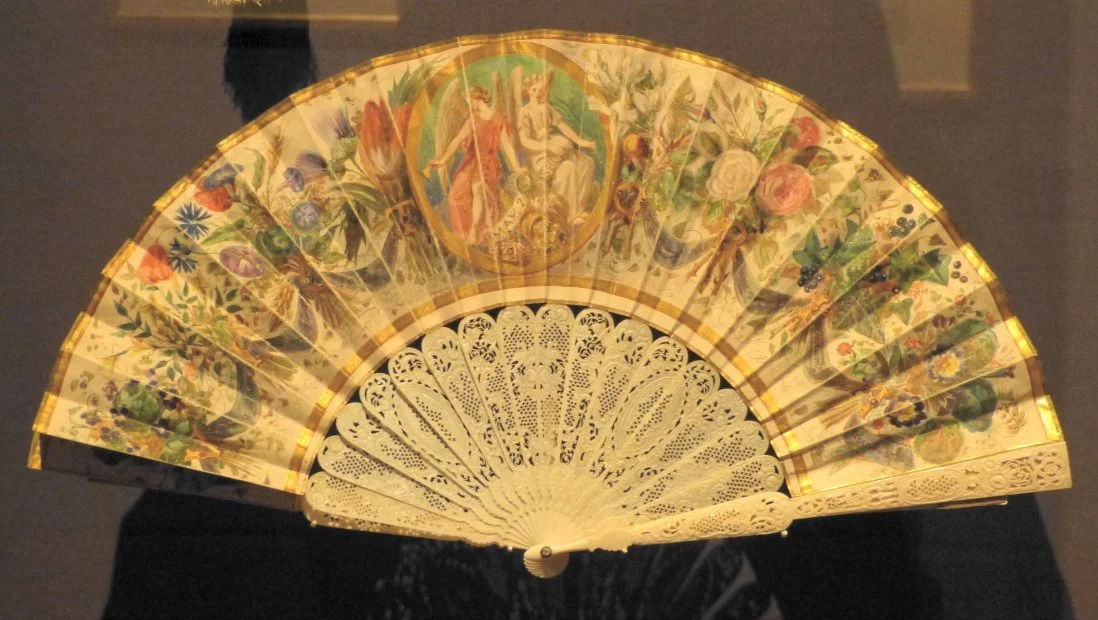
The Princess Royal's fan (1856)
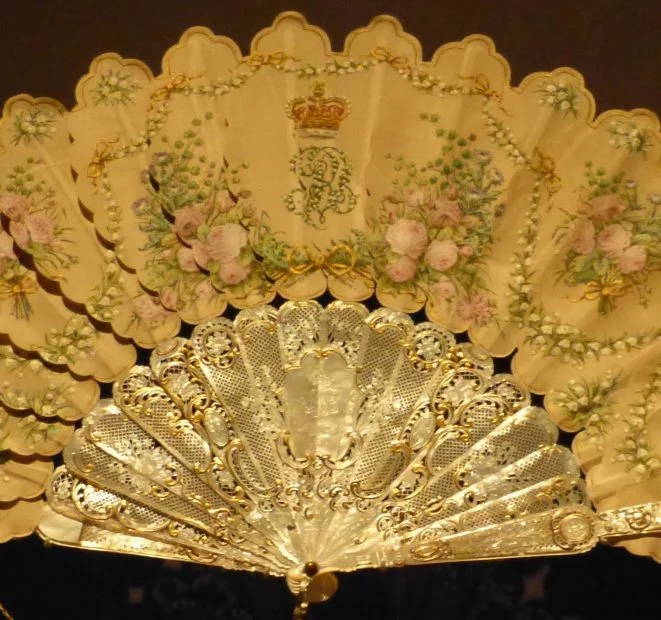
Detail from Queen Victoria's birthday fan (c1858)
Rachel Knowles writes faith-based Regency romance and historical non-fiction. She has been sharing her research on this blog since 2011. Rachel lives in the beautiful Georgian seaside town of Weymouth, Dorset, on the south coast of England, with her husband, Andrew, who co-writes this blog.
If you have enjoyed this blog and want to encourage us and help us to keep making our research freely available, please buy us a virtual cup of coffee by clicking the button below.
All items photographed © The Royal Collection Trust. All photographs © Andrew Knowles and RegencyHistory.net