
A Regency History guide to Athelhampton House in Dorset
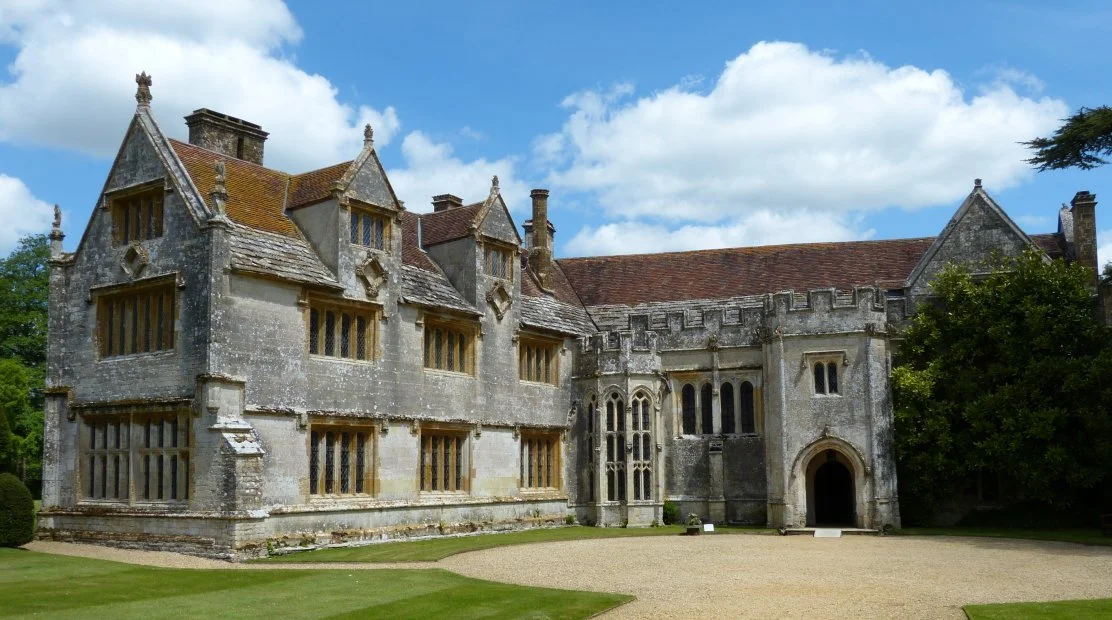
Athelhampton House, Dorset (2016)
Where is Athelhampton?
Athelhampton is a Tudor manor house situated near Dorchester in Dorset.
A history of Athelhampton
The story of Athelhampton starts in 1485 when Sir William Martyn was granted the right to enclose his estate and deer park and build a stone manor with towers and crenellations—the battlements that give a castle its characteristic shape. The result was the Great Hall with a solar on one side, providing living accommodation, and a buttery on the other. Subsequent owners added the west wing and a gatehouse and extended the house to the rear.
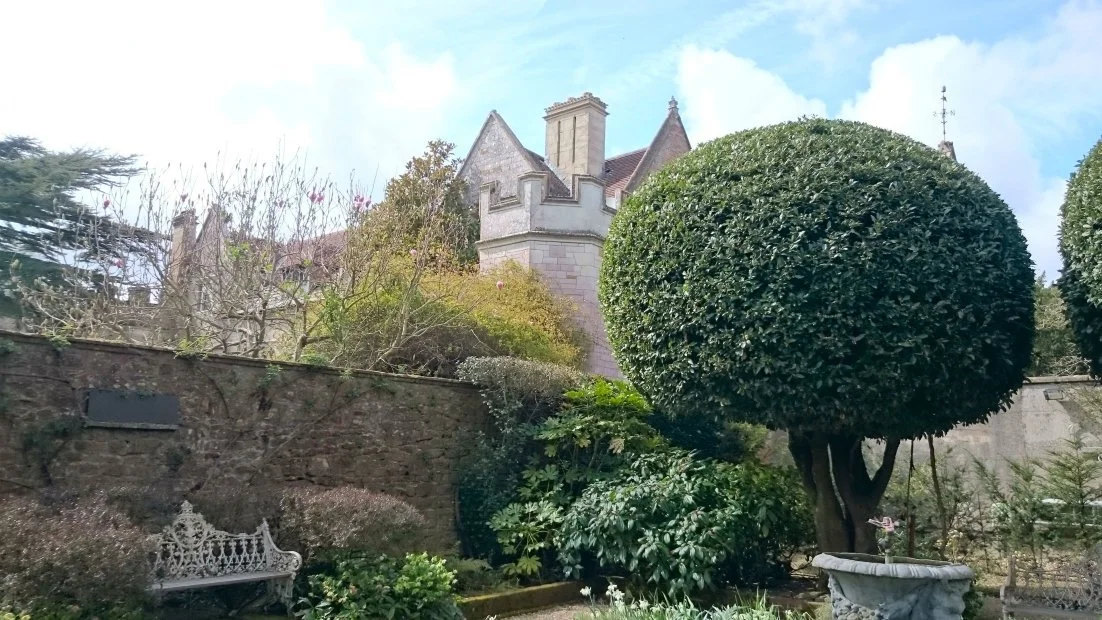
View of Athelhampton House from the White Garden (2015)
About 100 years after the Great Hall was built, one of Sir William’s descendants, Nicholas Martyn, died without male heirs. He left the estate to his four daughters in equal shares and the house was split into separate dwellings. Sir Ralph Bankes of Corfe Castle acquired three of these shares by marriage and other means, but sold them to Sir Robert Long, 1st Baronet, to help finance his expensive new house at Kingston Lacy.
This three-quarter share was subsequently inherited by Catherine Tylney-Long, who married the Duke of Wellington’s nephew, William Pole-Tylney-Long-Wellesley, 4th Earl of Mornington, in 1812. The Duke’s nephew only had a life interest in his wife’s property and so the house passed to her son William, 5th Earl of Mornington, on her death in 1825.
He subsequently sold Athelhampton to George Wood who acquired the fourth share, reuniting the house once more. By now, the property was very run down, having been used by tenant farmers for many years. The gatehouse was demolished around 1862 and the Norman church was replaced by a new church before passing to a new owner, Alfred Cart de Lafontaine in 1891.
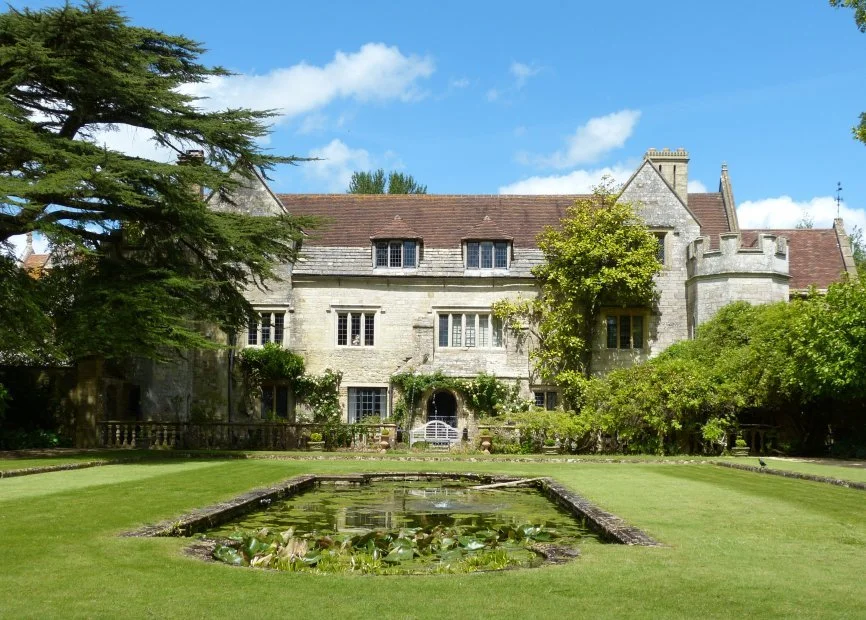
Athelhampton House, Dorset (2015)
De Lafontaine laid out formal gardens and restored the house but sold it on when he ran out of money. Eventually, the house was bought by the Cooke family who sold it in 2019.
The house was visited often by the author Thomas Hardy (1840-1928) and was once lived in by the Russian cubist artist Marevna—Marie Vorobieff—whose paintings are on display in a gallery in the house.
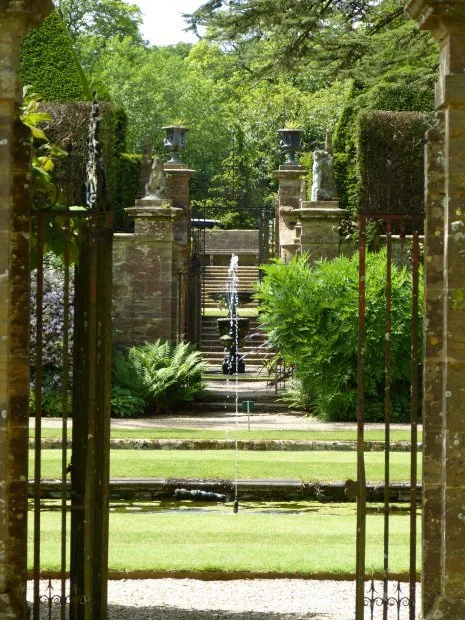
The Gardens, Athelhampton House, Dorset (2016)
A change of ownership
Athelhampton House changed ownership in 2019. It still belongs to Historic Houses and is open to visitors, but its contents were sold at auction and I don't know how much of what I saw in 2016 is still the same as I haven't been back yet.
Highlights from a tour of Athelhampton House in 2016
There were a number of items on display which are of particular interest to the Georgian historian. Some rooms are only viewable from the doorway.
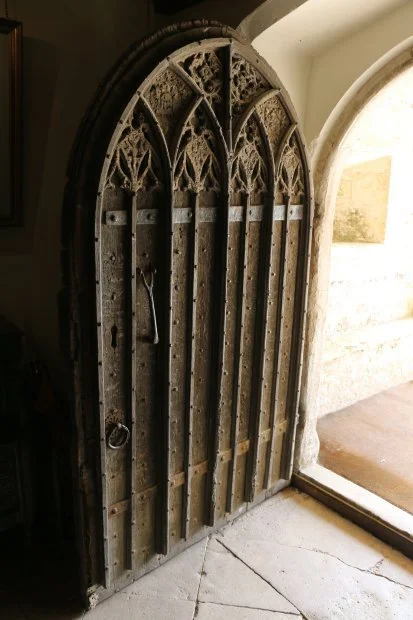
Front door, Athelhampton House, Dorset (2015)
Great Hall
The Great Hall dates back to the late 15th century and includes some original heraldic glass. On the balcony, there is a George III mahogany organ.
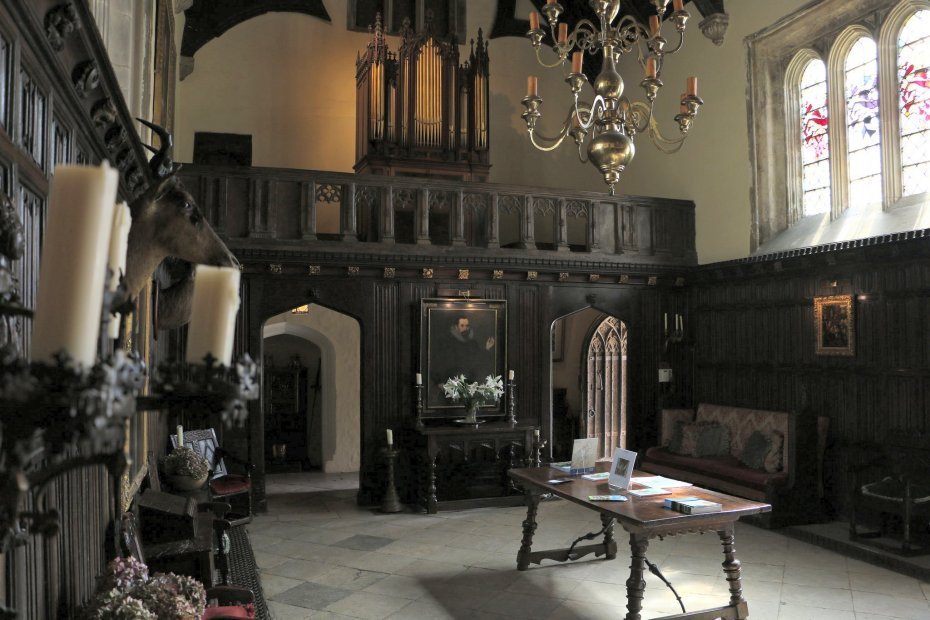
The Great Hall, Athelhampton House, Dorset (2015)
King’s Ante Room
This little passage way includes some prints of Carlton House and a lovely portrait of George III’s fifth daughter, Princess Sophia.

Portrait of Princess Sophia, King's Ante Room, Athelhampton House, Dorset (2015)
Wine Cellar
Just inside the entrance to the wine cellar is a Coade stone torchère. This was part of a set of ten candlestick stands made by Coade and Sealy of Lambeth in 1810 for George, Prince of Wales, at Carlton House. Coade and Sealy was the artificial stone manufactory run by Eleanor Coade, one of the women featured in Rachel’s book, What Regency Women Did For Us. At this time, Eleanor had taken her cousin John Sealy into partnership, hence the name, Coade and Sealy.

Coade stone torchere in the Wine Cellar, Athelhampton House, Dorset (2015)
Great Chamber
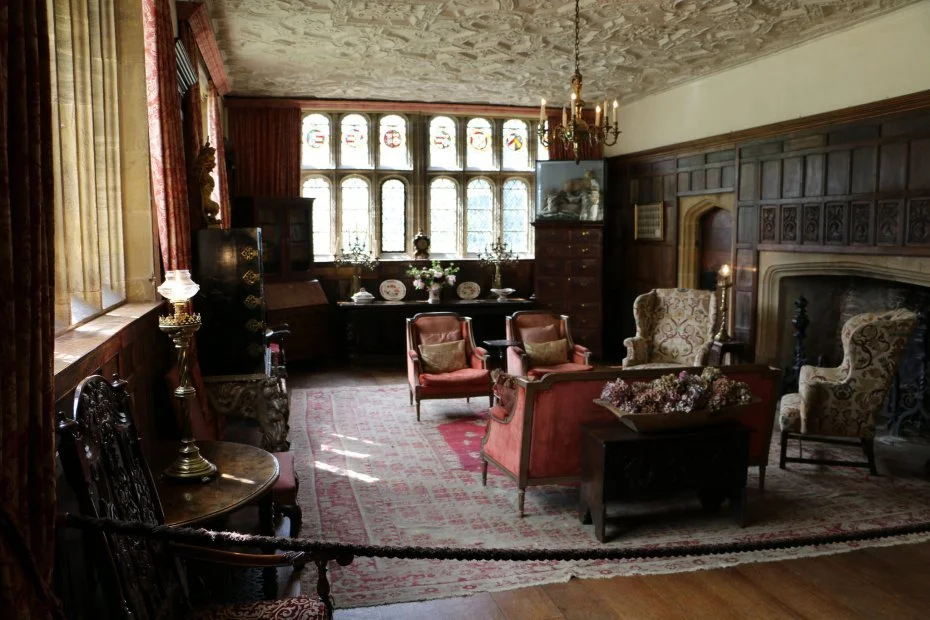
The Great Chamber, Athelhampton House, Dorset (2015)
Library (now used as a billiard room)
This is one of the rooms that you can only view from the doorway. At the far end of the room is a Georgian globe which apparently shows the voyages of Captain Cook, but I couldn’t get close enough to see!
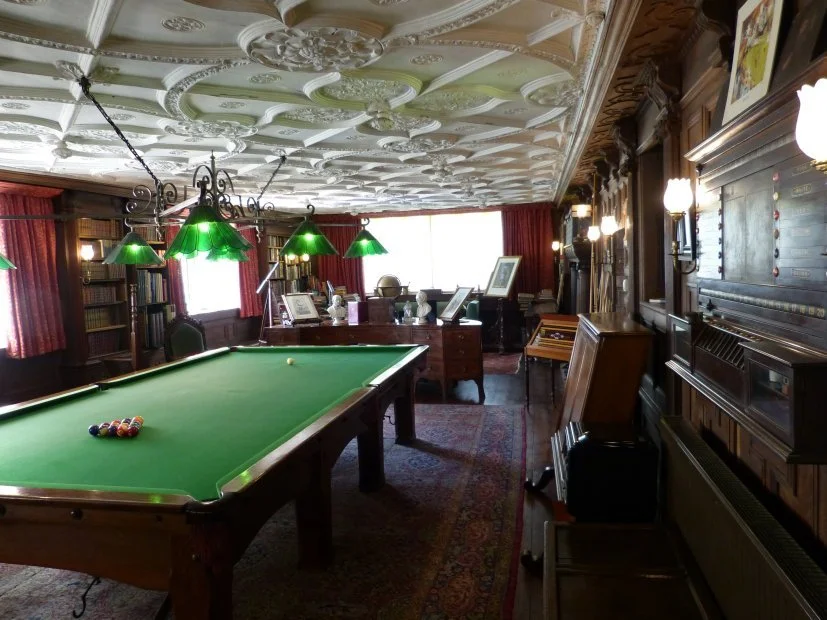
The Library, Athelhampton House, Dorset (2015)
King’s Room
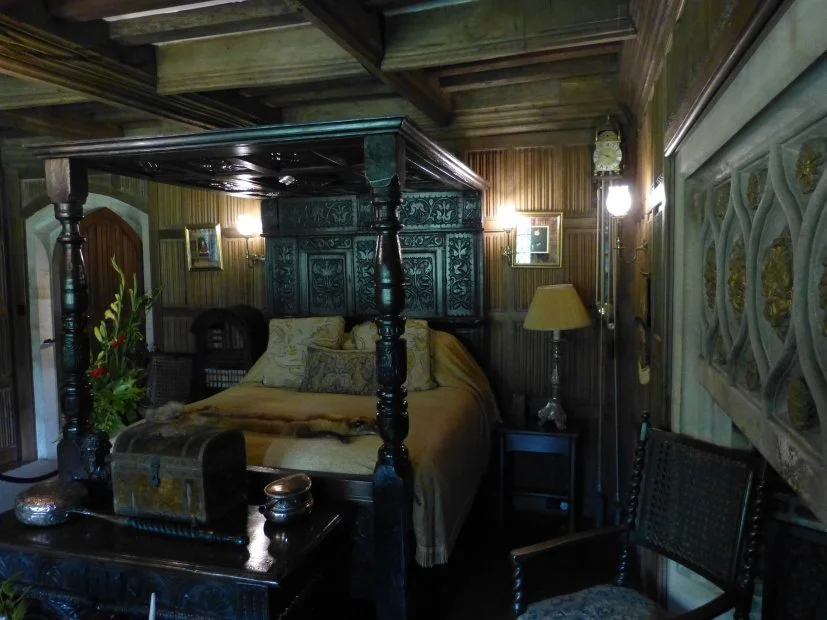
The King's Room, Athelhampton House, Dorset (2015)
Green Parlour
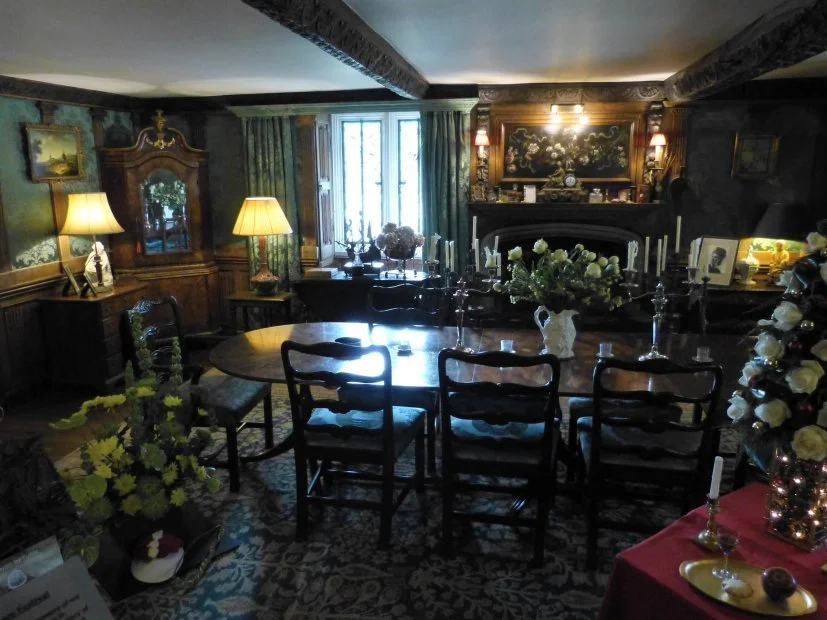
The Green Parlour, Athelhampton House, Dorset (2015)
Dressing Room
There is a small collection of vintage clothing on display, including a Georgian dress and a Regency costume, though sadly, not easy to see from the doorway.

Vintage clothing in the Dressing Room, Athelhampton House, Dorset (2015)
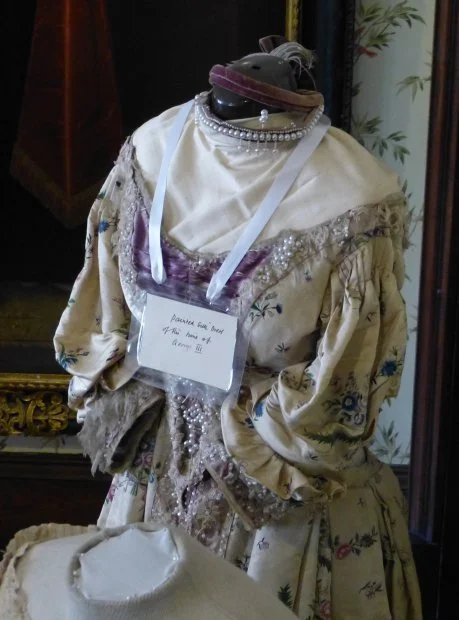
Georgian dress in the Dressing Room, Athelhampton House, Dorset (2015)
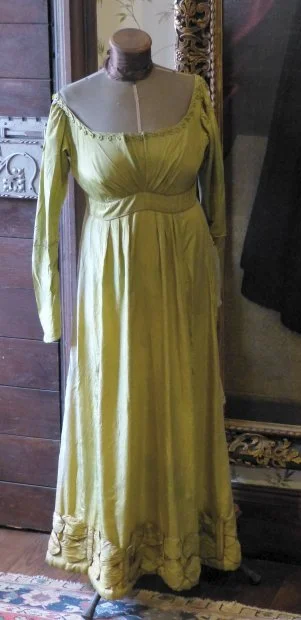
Regency dress in Dressing Room, Athelhampton House, Dorset (2015)
Yellow Bedroom Closet
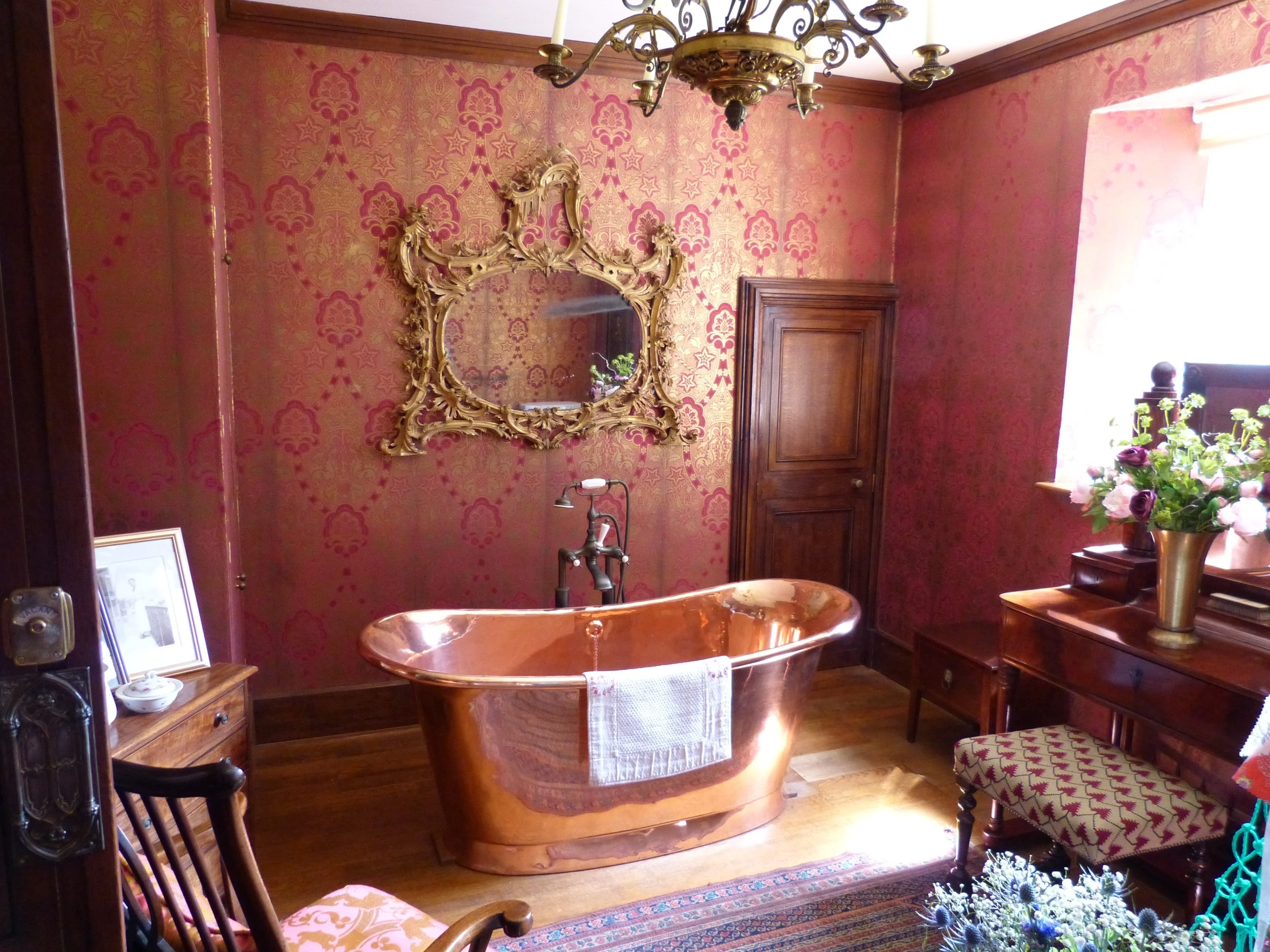
Yellow Bedroom Closet, Athelhampton House, Dorset (2015)
Yellow Bedroom
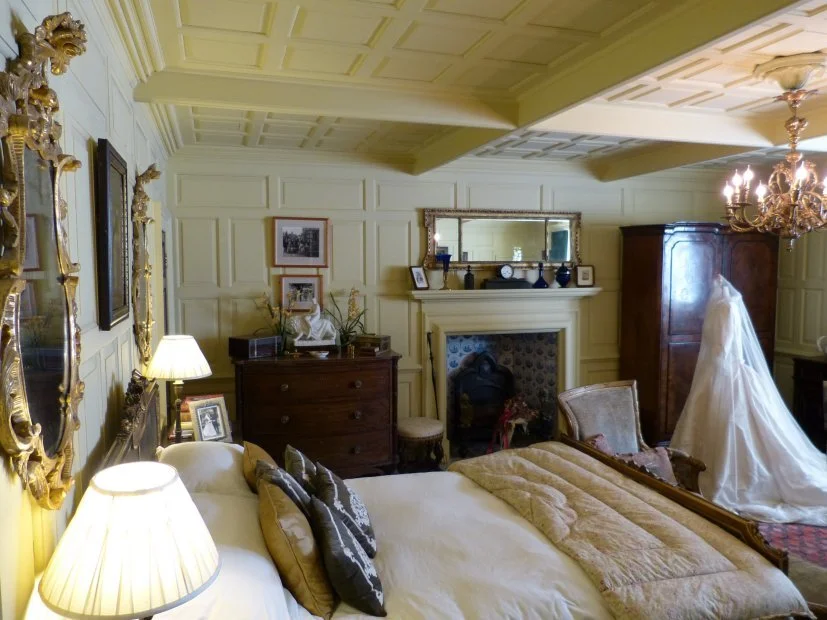
Yellow Bedroom, Athelhampton House, Dorset (2015)
State Bedroom
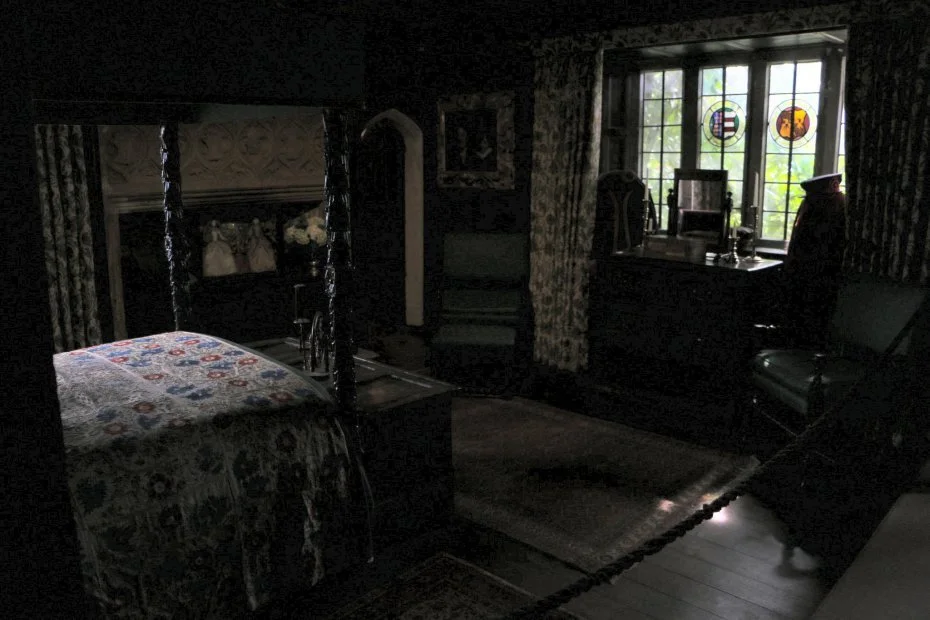
A rather dark picture of the State Bedroom, Athelhampton House, Dorset (2015)
The Gardens
Although the formal gardens have no claim to Georgian origins as they were laid out in the 1890s, they are beautiful and well worth a visit. There are also other gardens formed later including The Canal and a bridge over the River Piddle leading to a short riverside walk. There is also a toll house within the grounds, beyond the Lime Walk.
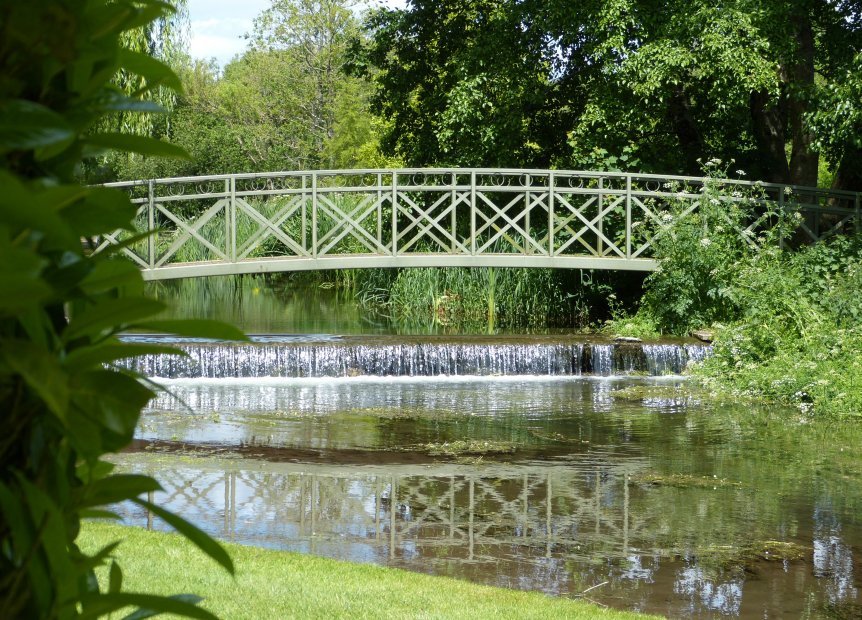
Bridge over the River Piddle, Athelhampton House, Dorset (2015)
The Great Court
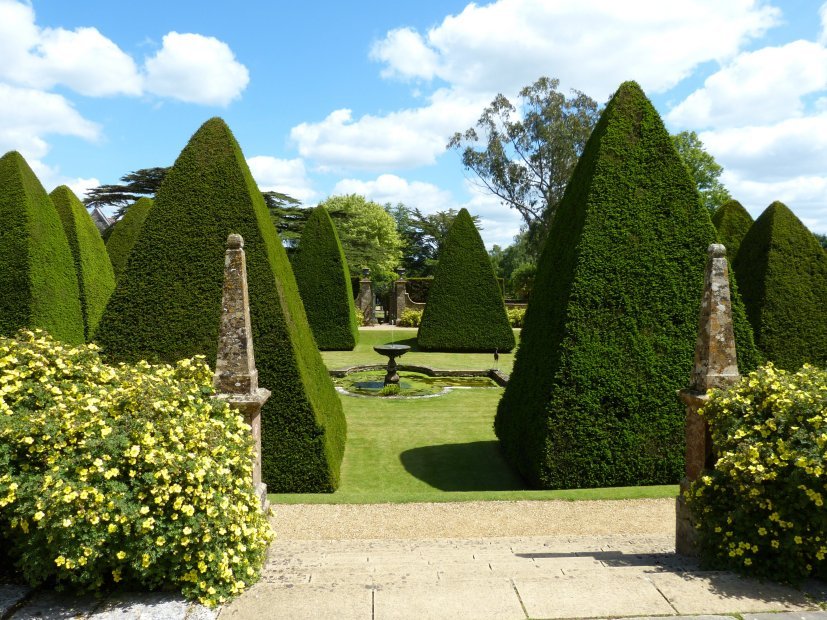
Bridge over the River Piddle, Athelhampton House, Dorset (2015)
The Corona
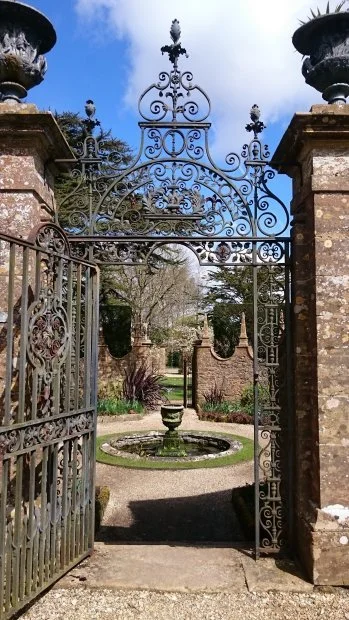
The Corona, Athelhampton House, Dorset (2015)
The Canal
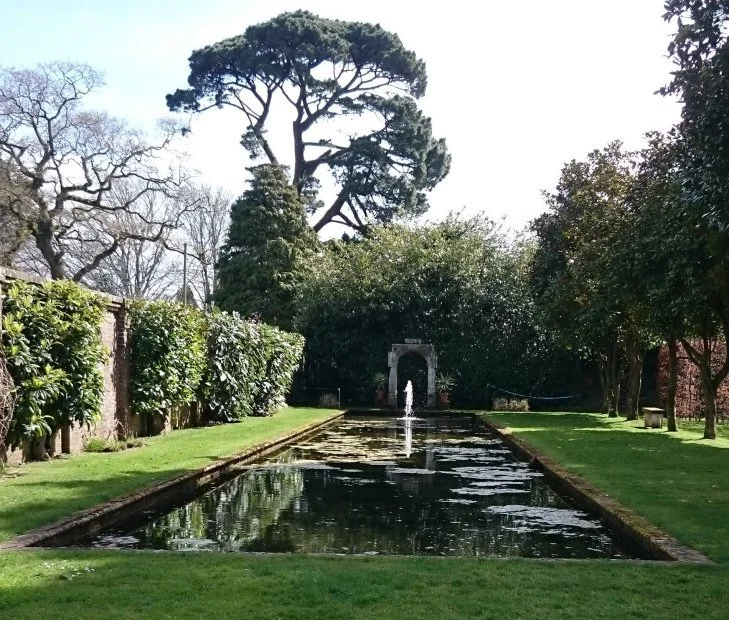
The Canal, Athelhampton House, Dorset (2015)
The Dovecote
The dovecote was built in the early 16th century at the same time as the west wing.
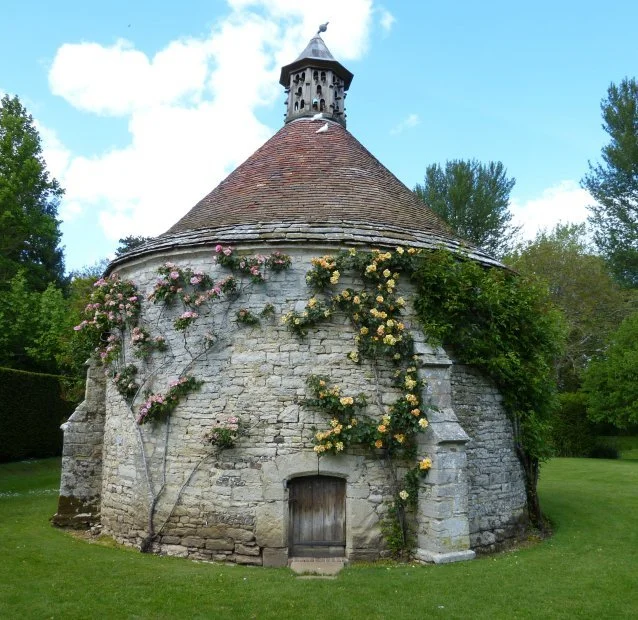
The Canal, Athelhampton House, Dorset (2015)
Toll House

The Toll House at Athelhampton House, Dorset (2015)
Rachel Knowles writes faith-based Regency romance and historical non-fiction. She has been sharing her research on this blog since 2011. Rachel lives in the beautiful Georgian seaside town of Weymouth, Dorset, on the south coast of England, with her husband, Andrew, who co-writes this blog.
If you have enjoyed this blog and want to encourage us and help us to keep making our research freely available, please buy us a virtual cup of coffee by clicking the button below.
Sources used include:
Cooke, Patrick, Athelhampton House & Gardens (Dorchester, 2010)
All photographs © Andrew Knowles & RegencyHistory.net