
The National Trust Carriage Museum at Arlington Court – a Regency History guide

The National Trust Carriage Museum, Arlington Court (2014)
Where is it?
The National Trust Carriage Museum is housed in the stables of Arlington Court near Barnstaple in North Devon.
Find out more about Arlington Court in our Regency History guide here.
History
In 1966, the National Trust decided to start a collection of British carriages and display them in the stables of Arlington Court – one of the few stables of a National Trust property that had not already been converted into a restaurant or other building.
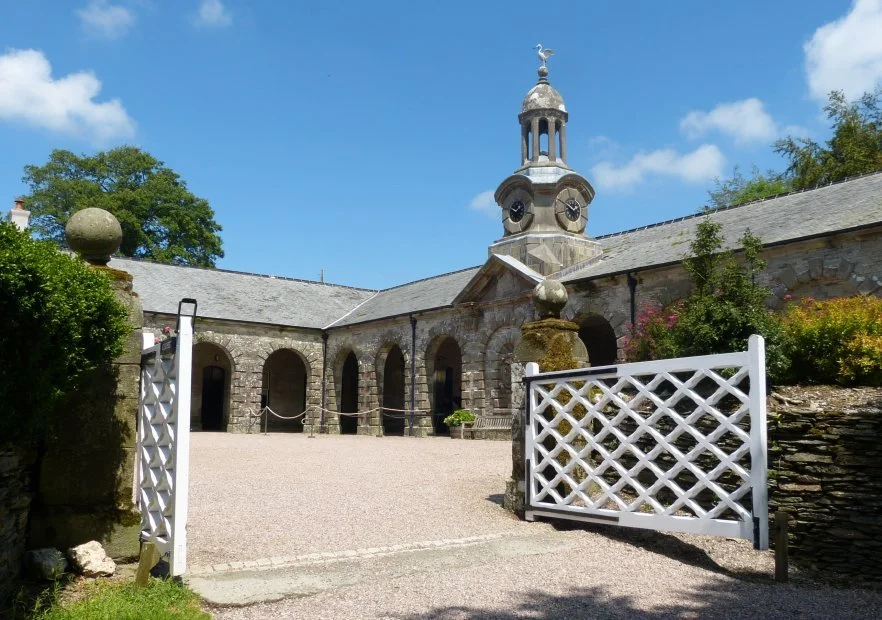
The stables, Arlington Court (2014)
Some of the carriages were gifted to the Trust, such as eight carriages from the 7th Marquess of Bute, whereas others are on loan, mostly from other National Trust properties and museums.
The collection
The National Trust Carriage Collection includes a wide variety of carriages, mostly dating from the 1800s. I have highlighted a few of the earliest vehicles.
State coach and state chariots
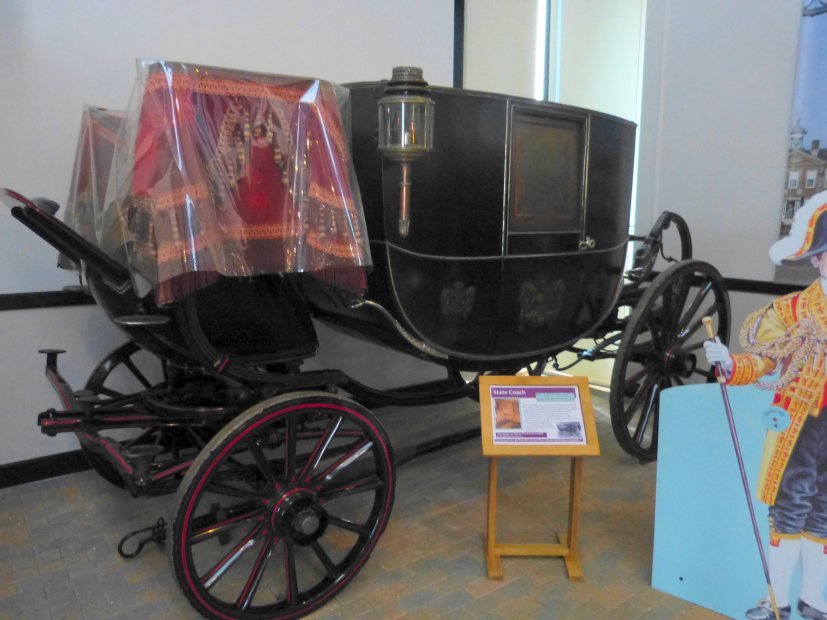
State coach, Arlington Court (2014)
These carriages date from the mid-1800s and because they were only used for state occasions, they are in very good condition.
The main difference between a state coach and a state chariot is the shape of the body. A coach can seat four people inside on two seats, one ahead of the doors and one behind the doors. A chariot, on the other hand, is only designed to seat two people and they both sit on the single seat behind the doors.
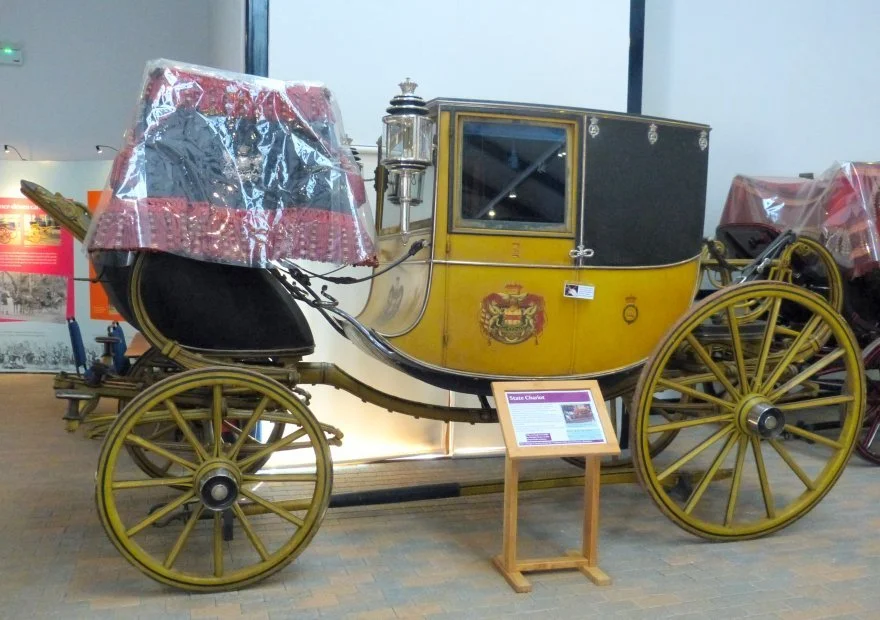
State coach, Arlington Court (2014)
Both state coaches and chariots would have been driven by a coachman in full livery with a decorative seat cloth covering the coachman’s seat known as a hammer cloth (shown under a protective covering in both photographs above).
Behind the carriage body is the footmen’s cushion – a padded perch on which two liveried footmen would stand.
Travelling chariots
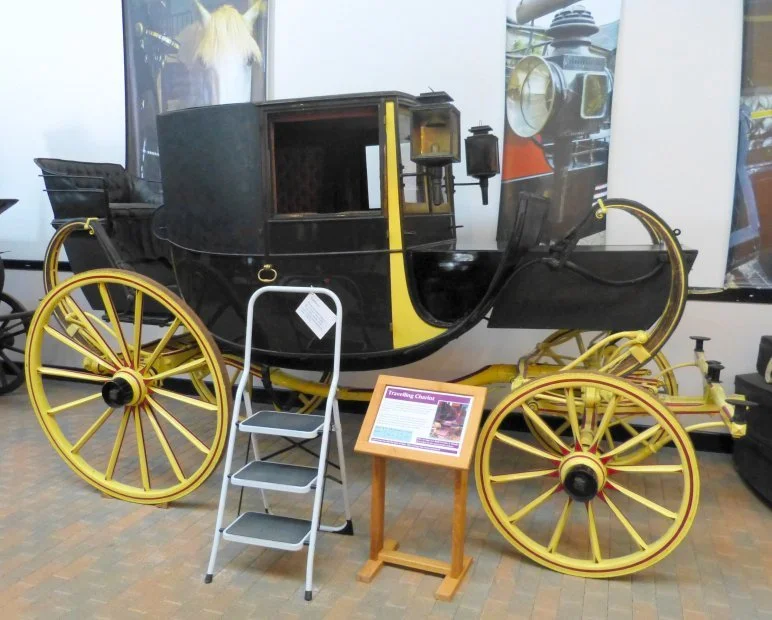
Travelling chariot, Arlington Court (2014)
A travelling chariot accommodated two people on a single seat behind the doors. It was used for long journeys, including making the Grand Tour.
It was postilion-driven which meant that the carriage was driven by one or more post-boys riding the horses instead of by a coachman on a box. However, a coachman’s seat could be added to adapt it for driving about town.
A selection of other carriages on display
Barouche
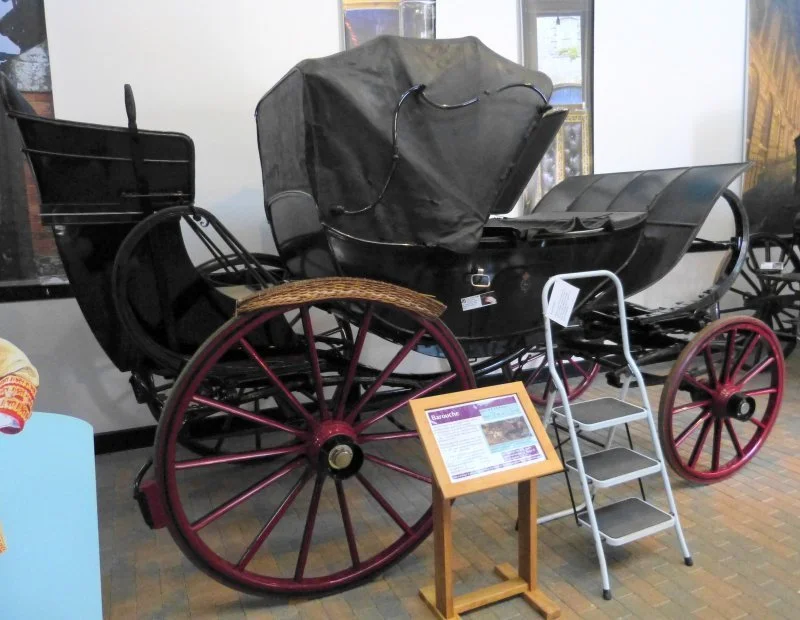
Barouche, Arlington Court (2014)
Brougham – double and single
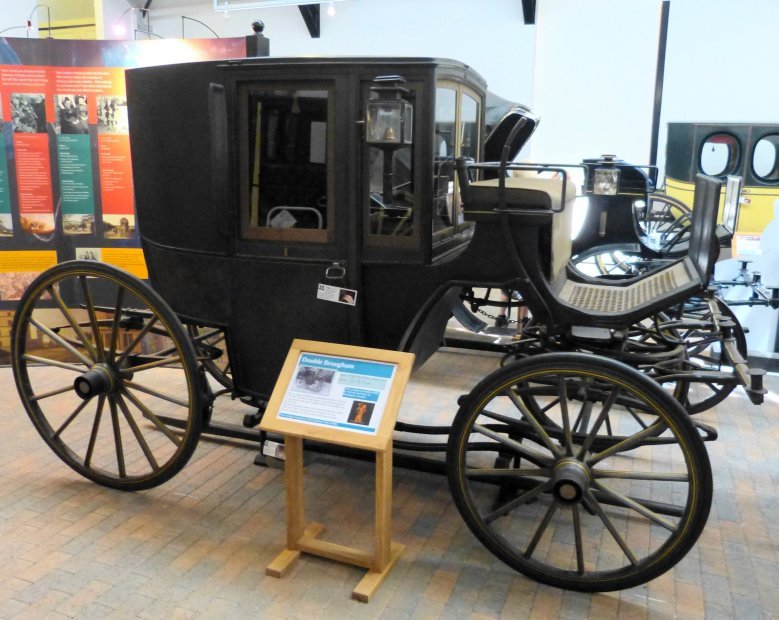
Double Brougham, Arlington Court (2014)
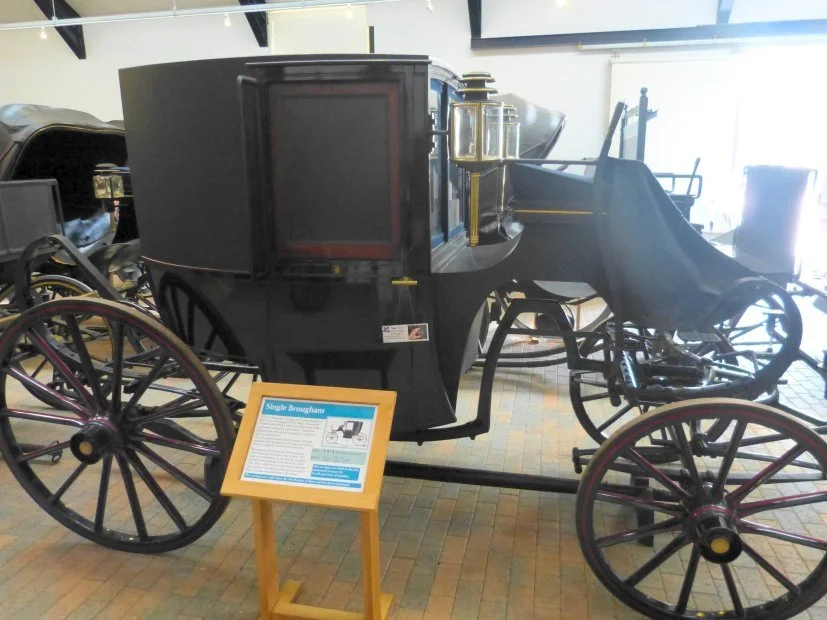
Single Brougham, Arlington Court (2014)
Britzschka
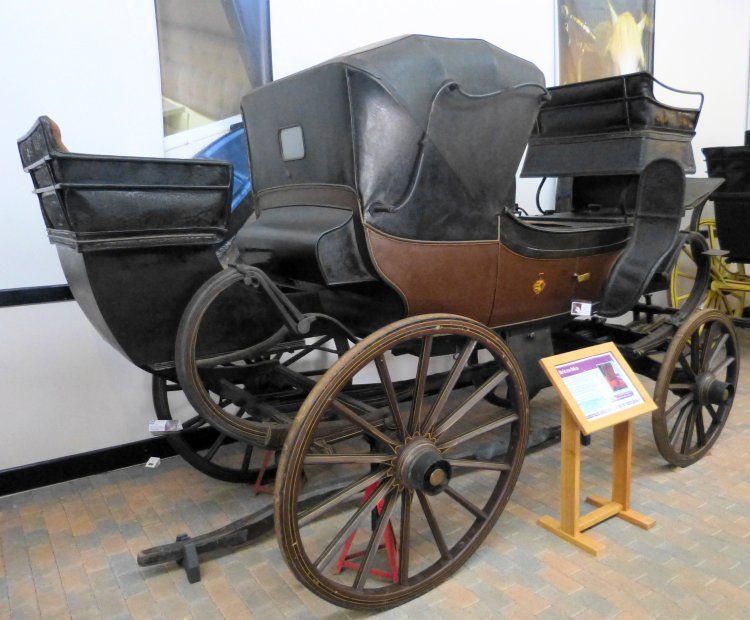
Britzschka, Arlington Court (2014)
Landau
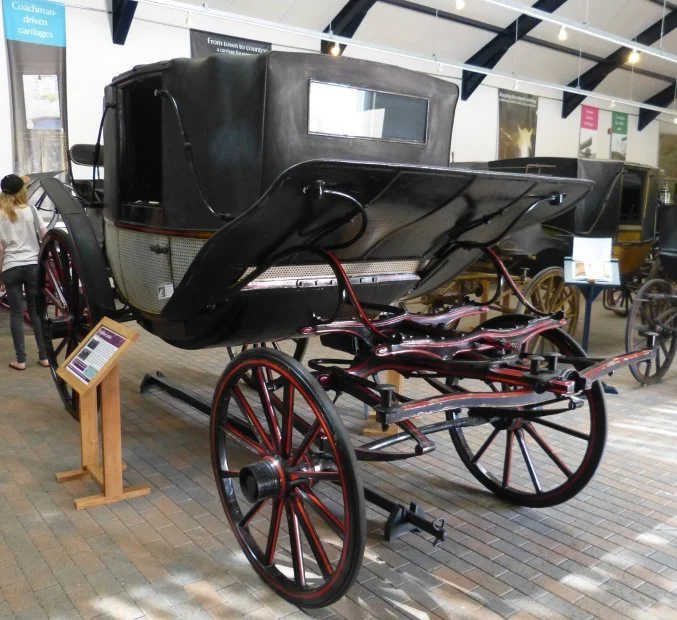
Postilion Landau, Arlington Court (2014)
Gig

Hooded Gig, Arlington Court (2014)
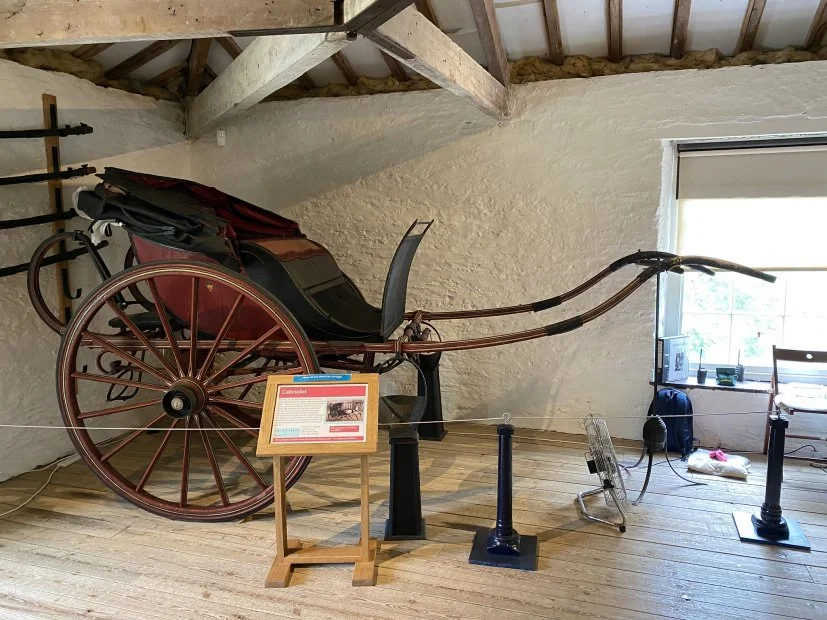
Cabriolet, Arlington Court (2023)
Victoria
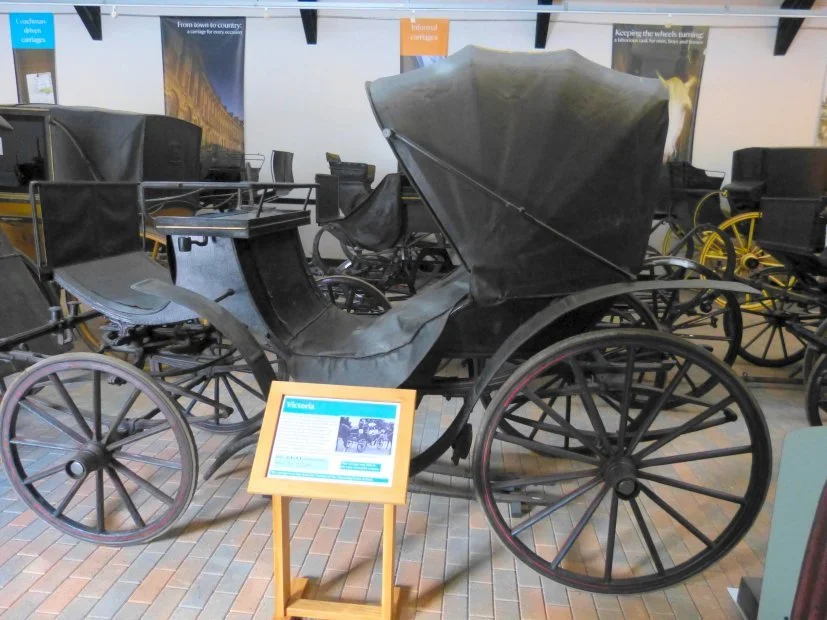
Victoria, Arlington Court (2014)
Last visited: July 2023
Rachel Knowles writes faith-based Regency romance and historical non-fiction. She has been sharing her research on this blog since 2011. Rachel lives in the beautiful Georgian seaside town of Weymouth, Dorset, on the south coast of England, with her husband, Andrew, who co-writes this blog.
If you have enjoyed this blog and want to encourage us and help us to keep making our research freely available, please buy us a virtual cup of coffee by clicking the button below.
Sources used include:
Badcock, Marigold, Gibbons, David and Parker-Williams, Demelza, Arlington Court and the National Trust Carriage Museum, National Trust Guide (2009)
All photographs © RegencyHistory.net