
Georgians celebrated in London statues
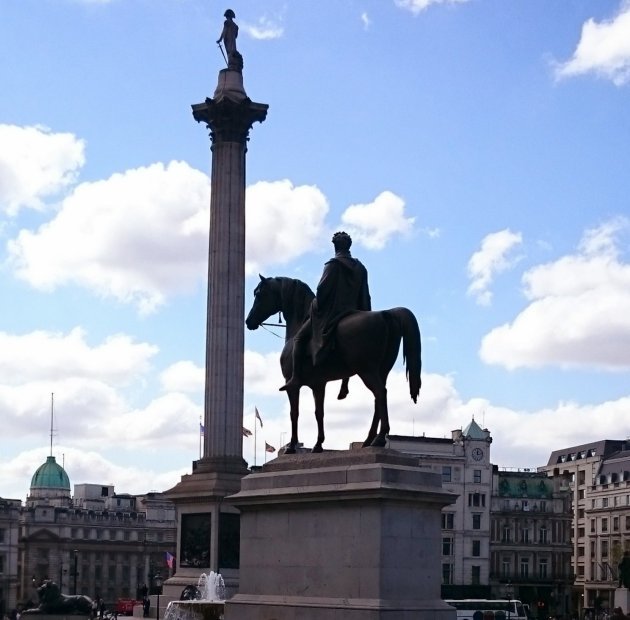
Trafalgar Square, London (2015)
Although we live down by the sea in sunny Weymouth in Dorset, we are fortunate to have the opportunity to visit London on a regular basis as Rachel’s parents live a short train journey away from the capital. Walking through the streets of London, we always try to spot things with a Georgian connection.
This post takes a look at some of the statues in London that commemorate Georgian royalty and other prominent figures. It is by no means an exhaustive list and no doubt we will discover more in the future.
George III and George IV
There are impressive equestrian statues in London of both George III (1738-1820) and George IV (1762-1830) situated within a short distance of each other. George III, by the sculptor Matthew Cotes Wyatt, is on Cockspur Street—a two minute walk away from Sir Francis Legatt Chantrey’s statue in Trafalgar Square, where George IV sits astride his horse in front of the National Gallery.
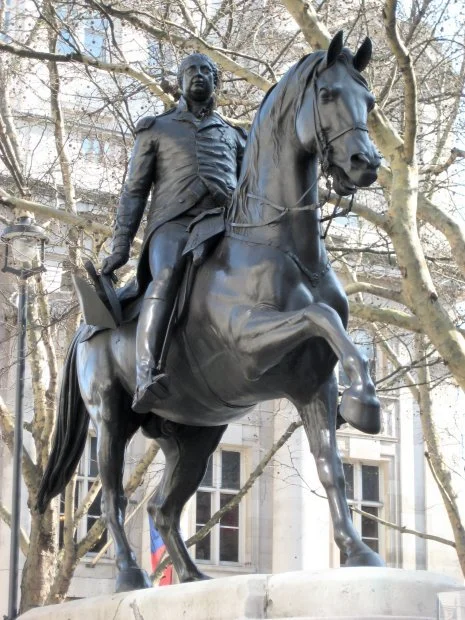
Equestrian statue of George III, Cockspur Street, London (2015)
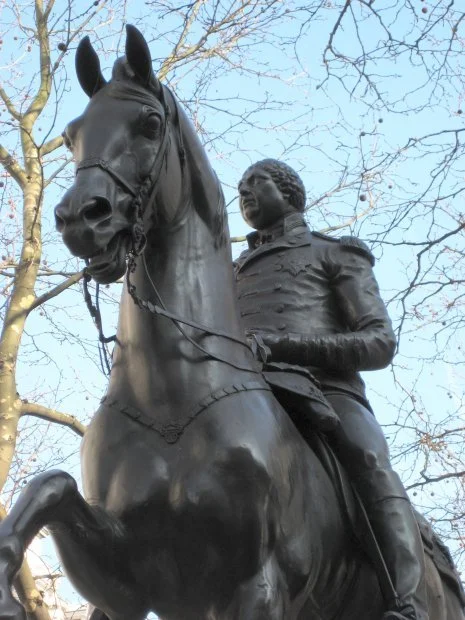
Equestrian statue of George III, Cockspur Street, London (2015)

Equestrian statue of George IV, Trafalgar Square, London (2024)
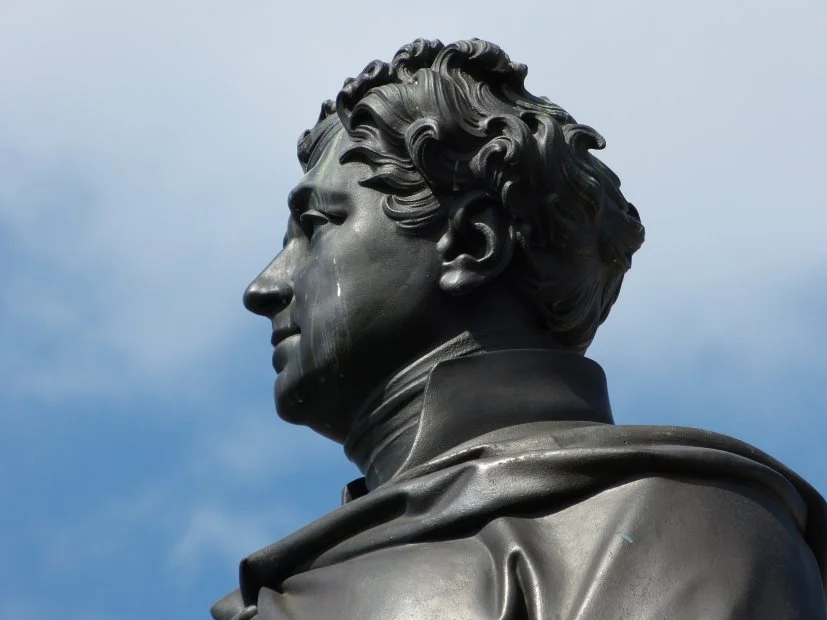
Detail from equestrian statue of George IV, Trafalgar Square, London (2015)
Two commemorative columns
At the top of his column in Trafalgar Square is the famous naval hero of the Battle of Trafalgar, Vice Admiral Horatio Lord Nelson (1758-1805).
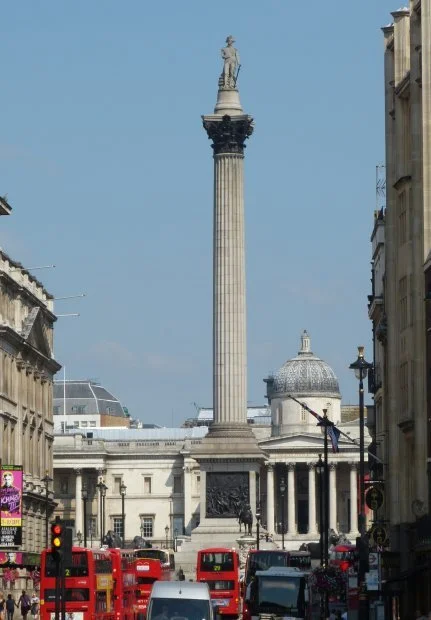
Nelson's Column, Trafalgar Square, London
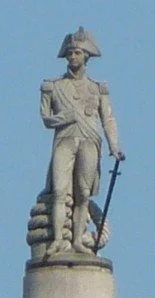
Statue of Admiral Horatio Lord Nelson on Nelson's Column, Trafalgar Square, London
Lesser known is the Duke of York column, just off The Mall, supporting a statue of Frederick, Duke of York (1763-1827), George III’s second son, who was Commander in Chief of the British Army 1795-1809 and 1811-1827.
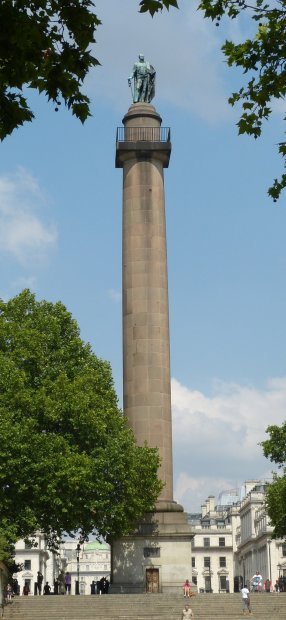
Duke of York Column, The Mall, London
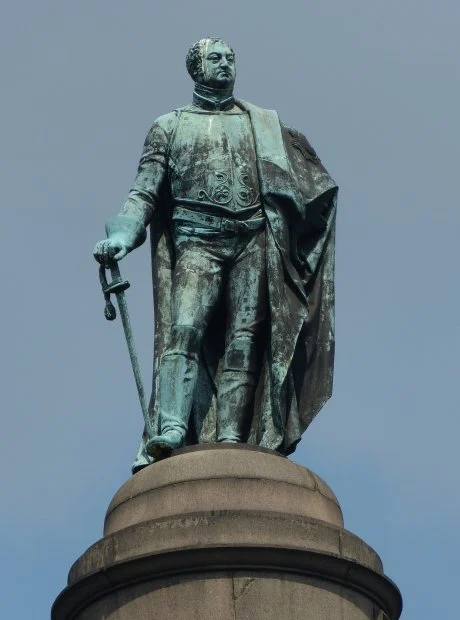
Statue of Frederick, Duke of York, on Duke of York Column, The Mall, London
Artists and architects
Appropriately, there is a statue of Sir Joshua Reynolds (1723-1792), the first President of the Royal Academy, in the courtyard of Burlington House on Piccadilly, home to the Royal Academy since 1874.
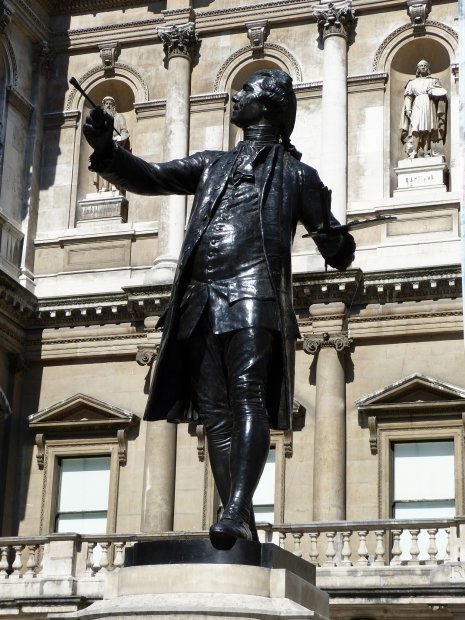
Statue of Sir Joshua Reynolds, Burlington House, Piccadilly, London
On the outside of the Royal Society of Painters in Watercolours on Piccadilly, you can see the busts of famous artists including JMW Turner (1775-1851) and Paul Sandby (1731-1809), one of the founder members of the Royal Academy.

Bust of JMW Turner, Piccadilly, London

Bust of Paul Sandby, Piccadilly, London
In 1956, a bust of the architect John Nash (1752-1835) was erected outside All Souls Langham Place—a church that he had designed.
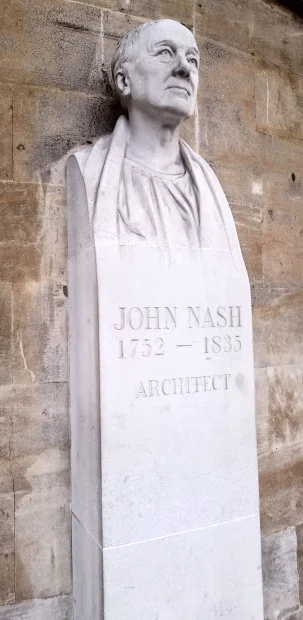
Bust of John Nash, outside All Souls Langham Place, London
Fashionable Regency figures remembered
The statue of Beau Brummell (1778-1840) on Jermyn Street is relatively new—it was only erected in 2002. It seems a fitting site for Beau—looking down the Piccadilly Arcade with its superior shops selling everything for the gentleman of fashion, from made-to-measure suits and footwear to jewellery and grooming products.
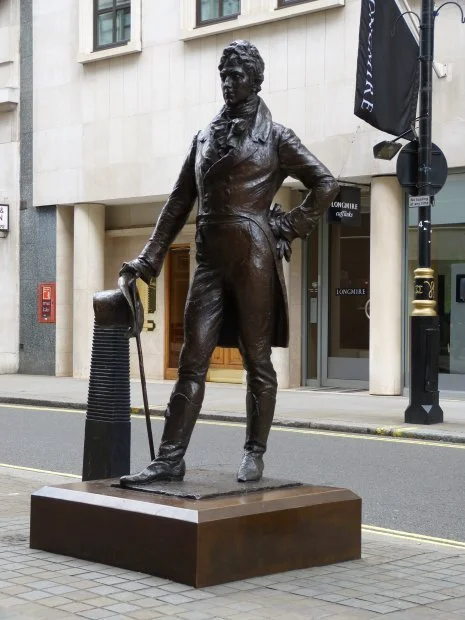
Statue of Beau Brummell, Jermyn Street, London
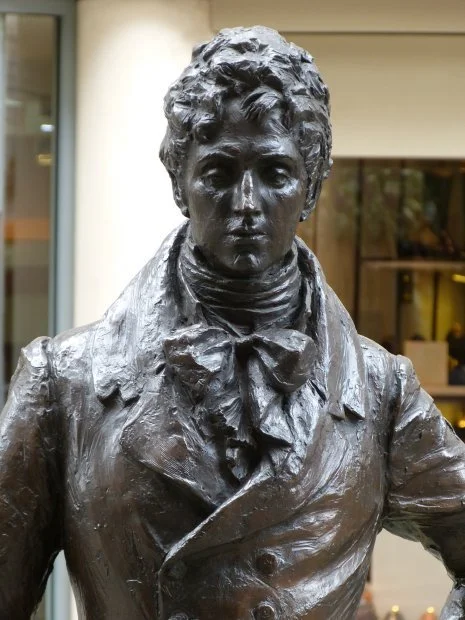
Statue of Beau Brummell, Jermyn Street, London
The famous Romantic poet, Lord Byron (1788-1824), is commemorated by a somewhat isolated statue in a very unromantic position on a traffic island on the hugely busy Park Lane.
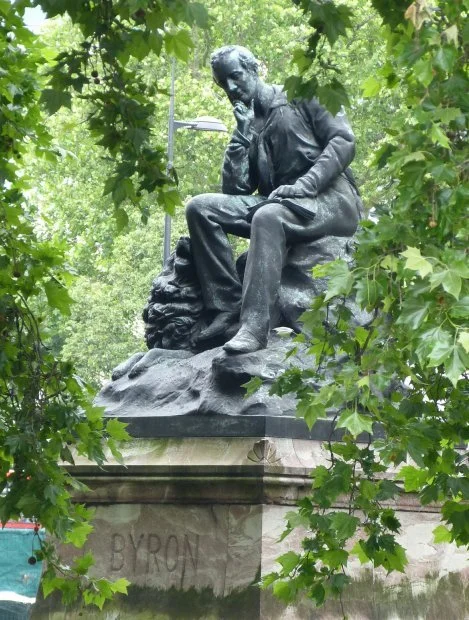
Statue of Lord Byron, Park Lane, London
An economist and an explorer
Adam Smith (1723-1790) was a Scottish economist and philosopher. He wrote The Wealth of Nations in 1776—it was still on the reading list when I studied economics at university! You can find his statue on the rear of Burlington House.

Statue of Adam Smith, Burlington House, Piccadilly, London
Captain James Cook (1728-1779) was a naval captain, explorer and cartographer. His statue was erected on The Mall in 1914.
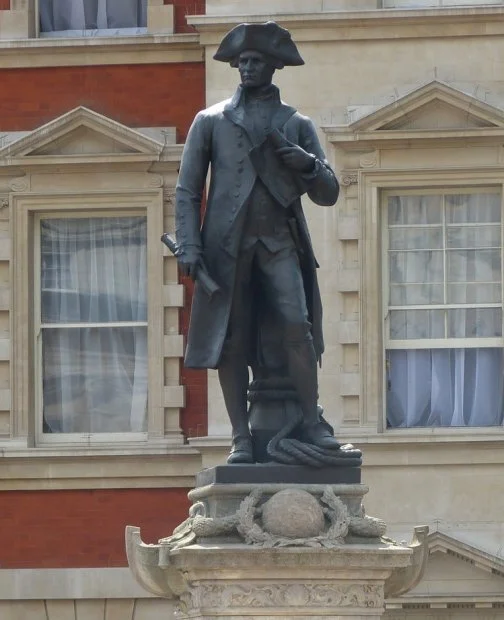
Statue of Captain James Cook, The Mall, London
Politicians
An equestrian statue of Arthur Wellesley, 1st Duke of Wellington (1769-1852), military hero of the Battle of Waterloo and British Prime Minister stands on Threadneedle Street, outside the Bank of England.
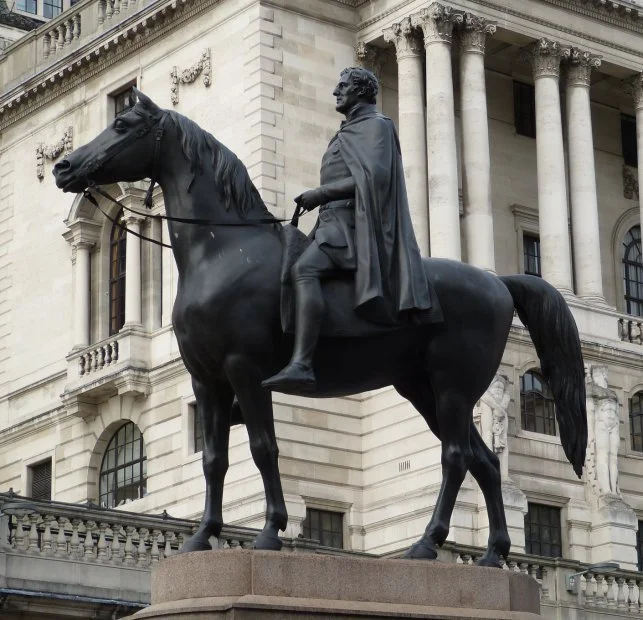
Equestrian statue of 1st Duke of Wellington, Threadneedle Street, London
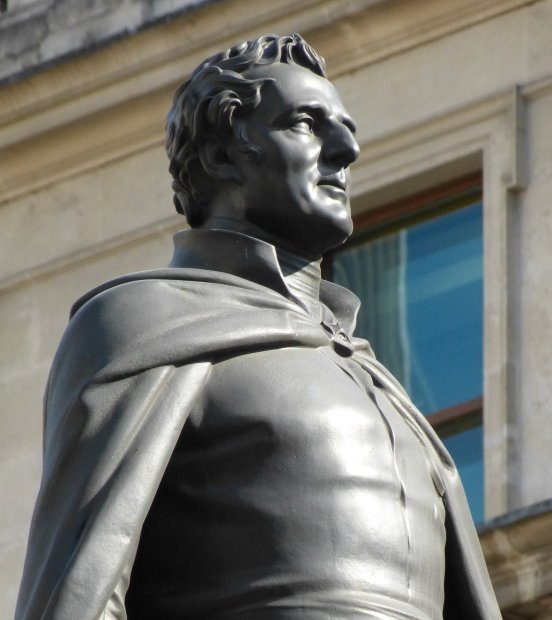
Equestrian statue of 1st Duke of Wellington, Threadneedle Street, London
Another Georgian Prime Minister, George Canning (1770-1827), stands in Parliament Square along with several of his successors, including Sir Robert Peel (1788-1850).
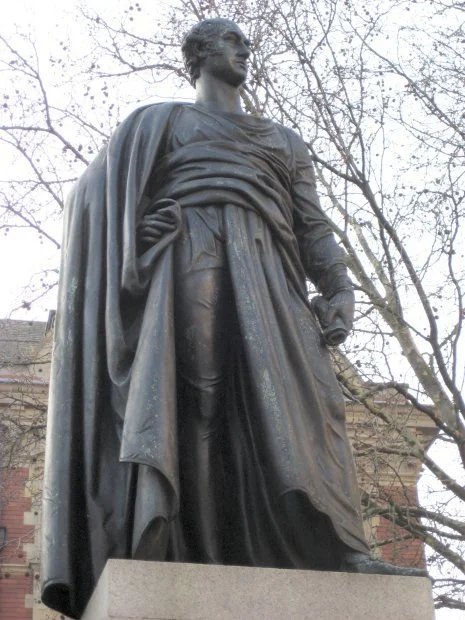
George Canning, Parliament Square, London
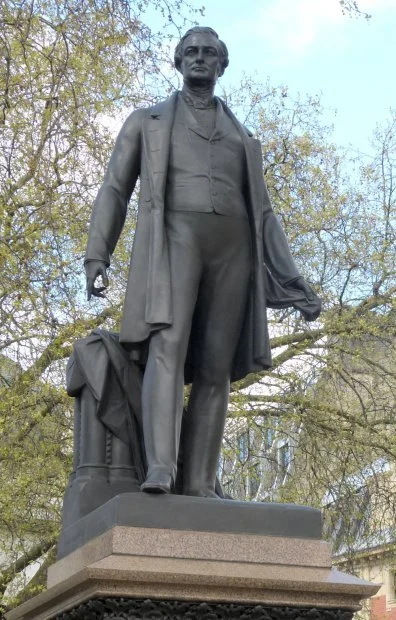
Sir Robert Peel, Parliament Square, London
A statue of the Whig politician Charles James Fox (1749-1806) stands in Bloomsbury Square Gardens. He holds a copy of the Magna Carta in his hand, signifying his role as the 'Man of the People'.

Statue of Charles James Fox, Bloomsbury Square, London
John Willkes (1725-1797) was a Fellow of the Royal Society, High Sheriff of Buckinghamshire, a Member of Parliament and Lord Mayor of London. But beneath these titles was a libertine, an outlaw and a convict, and the inspiration for many who agitated for liberty.
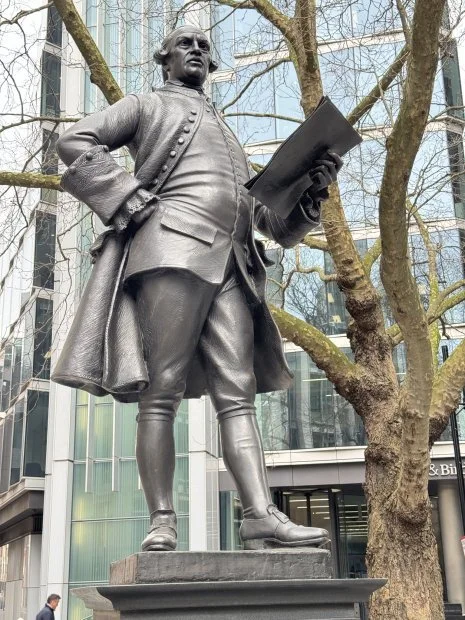
Statue of John Wilkes on Fetter Lane, London (2025)
A philanthropist and an evangelical
Thomas Coram (1668-1751) set up the Foundling Hospital in 1741. His statue is outside the Foundling Museum on Brunswick Square, London.
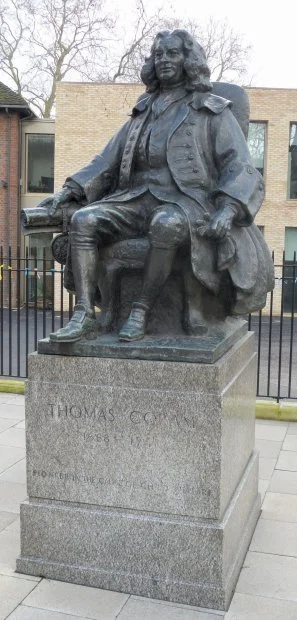
Statue of Thomas Coram, Brunswick Square, London
John Wesley (1703-1791) was an evangelical Anglican minister who, together with his brother Charles and George Whitefield, founded the Methodist movement. His statue stands in the gardens of St Paul’s Cathedral.
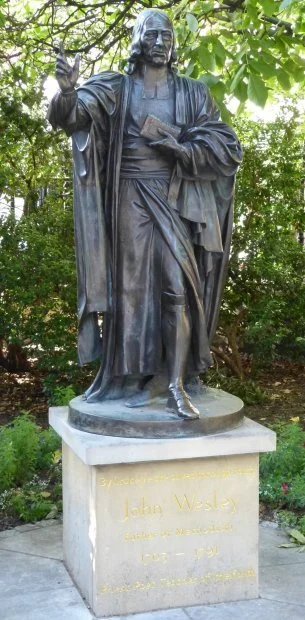
Statue of John Wesley, outside St Paul's Cathedral, London
Rachel Knowles writes faith-based Regency romance and historical non-fiction. She has been sharing her research on this blog since 2011. Rachel lives in the beautiful Georgian seaside town of Weymouth, Dorset, on the south coast of England, with her husband, Andrew, who co-writes this blog.
If you have enjoyed this blog and want to encourage us and help us to keep making our research freely available, please buy us a virtual cup of coffee by clicking the button below.
All photographs © Andrew Knowles and RegencyHistory.net