
Rowlandson’s comic art - 2015 exhibition at the Queen’s Gallery, London
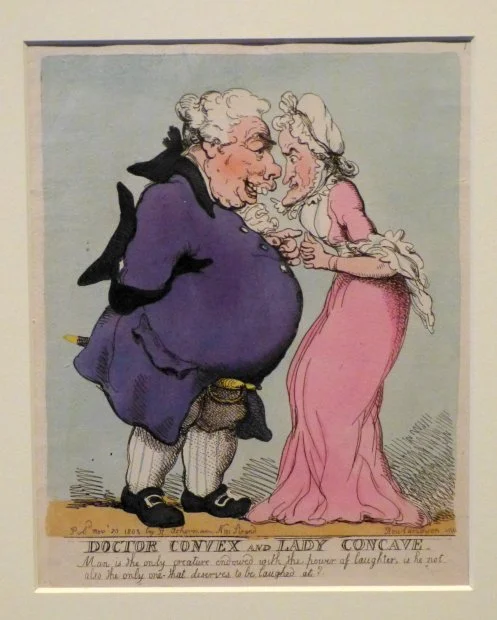
Doctor Convex and Lady Concave by Thomas Rowlandson (1802)
Thomas Rowlandson (1756–1827) was one of the greatest caricaturists of his time. The exhibition at the Queen’s Gallery—High Spirits—was all about his comic art and included nearly 100 of his prints and drawings. The exhibition ended on 14 February 2016, but you can still enjoy it on this blog.
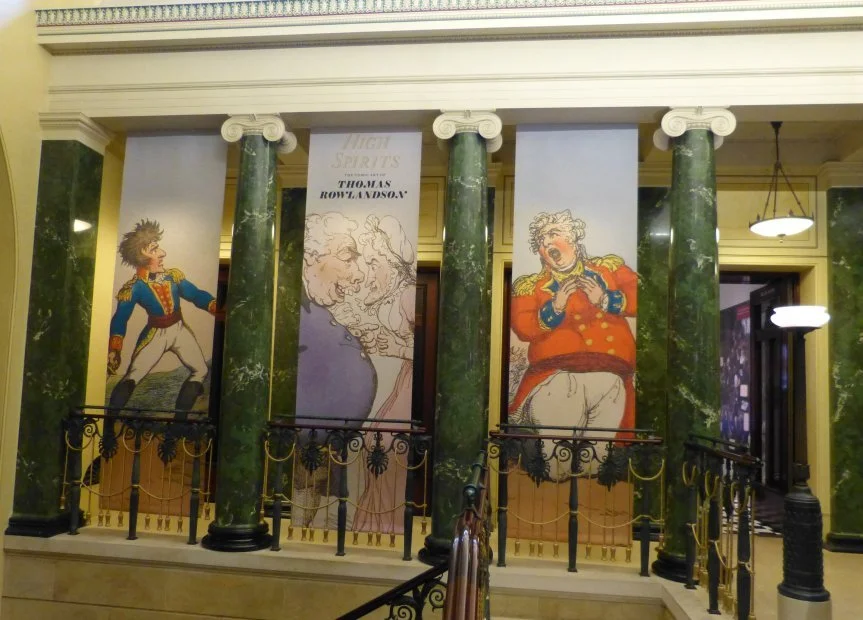
High Spirits exhibition at the Queen's Gallery, Buckingham Palace, London (2015)
Here is the promotional video for the exhibition narrated by Brian Blessed. It is a lovely introduction to the subject of Thomas Rowlandson's art and caricatures in general.
There is a comprehensive book that accompanies the exhibition which includes all the prints and pictures on display (and a few more besides) together with the background and provenance for each.
The fashion for caricatures
Before I start telling you about the exhibition, I have a confession to make. I am not a huge fan of caricatures—they are very Georgian, but not always to my taste. Rowlandson’s cartoons are often quite ugly and frequently bawdy. However, I appreciate their cleverness even when I’m not keen on the pictures and I did find some prints in the exhibition that I liked.
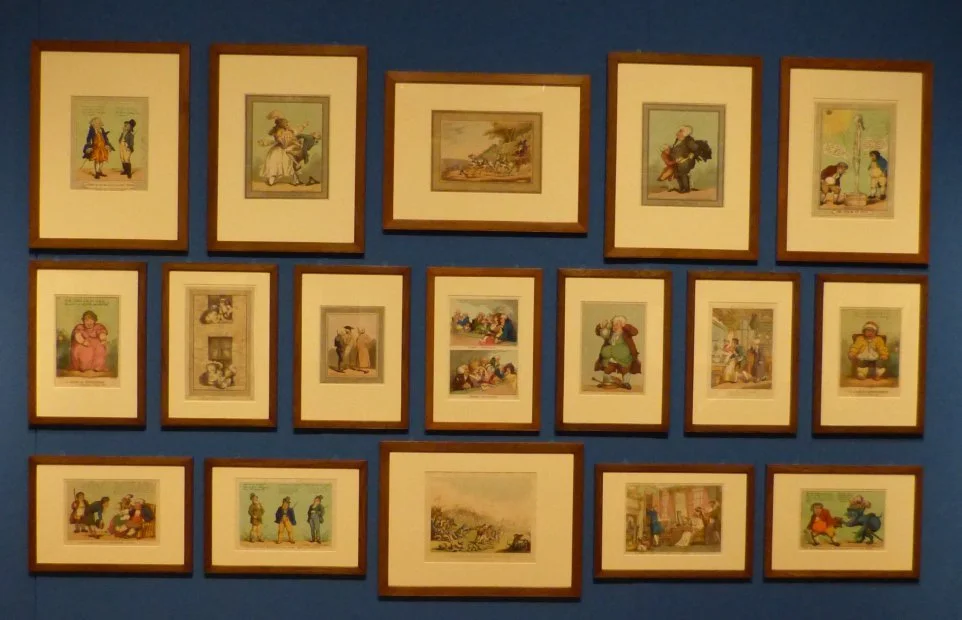
A wall of Rowlandson prints at the exhibition (2015)
Caricatures were a great source of amusement to rich and poor alike. It was fashionable to collect prints and display them on a wall or screen or keep them in an album. Showing off your print collection was a popular after dinner entertainment. If you couldn’t afford to build up your own portfolio, then you could hire one from a print shop for the evening to share with your guests. If that was beyond your means, you could still enjoy spotting the royals and politicians lampooned in cartoon form by gazing at the latest prints on display in the print shop window.

Rachel is looking at a screen in the exhibition covered with cut-outs of Thomas Rowlandson prints which dates from c1806

A close-up of the print screen shown above (2015)
Everyday life
Many of Rowlandson’s prints were social satires – taking a humorous view of daily life and topics that were in the news. Rowlandson was fond of depicting opposites - such as Doctor Convex and Lady Concave at the top of the page and the very streamlined outline of Buck's Beauty contrasting with the curves of Rowlandson's Connoisseur below.

Buck's Beauty and Rowlandson's Connoisseur by Thomas Rowlandson (c1799)

Three Principal Requisites to form a Modern Man of Fashion by Thomas Rowlandson (1814)
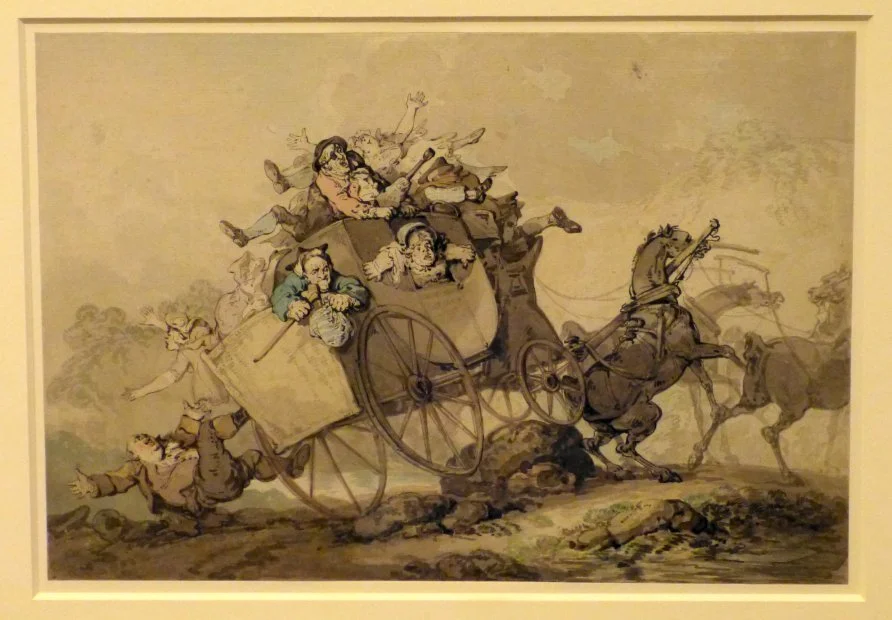
Overset by Thomas Rowlandson (c1790)
Rowlandson delighted in caricaturing current events, such as the news that Richard Brinsley Sheridan was going to pull down the Theatre Royal in Drury Lane in order to build a bigger one. Rowlandson depicted this as the theatre tumbling down during a performance.

Chaos is Come Again! by Thomas Rowlandson (1791)
Ridiculing the royals
George III and his family were frequently the subject of Rowlandson’s cartoons. His caricatures included prints about:
George III's illness of 1788-9
George, Prince of Wales's bad behaviour
The Mrs Clarke scandal of 1809 involving the Duke of York. During the Mrs Clarke scandal, Rowlandson produced an incredible 27 caricatures in little over 6 weeks!

Money Lenders featuring the young George IV by Thomas Rowlandson (1784)
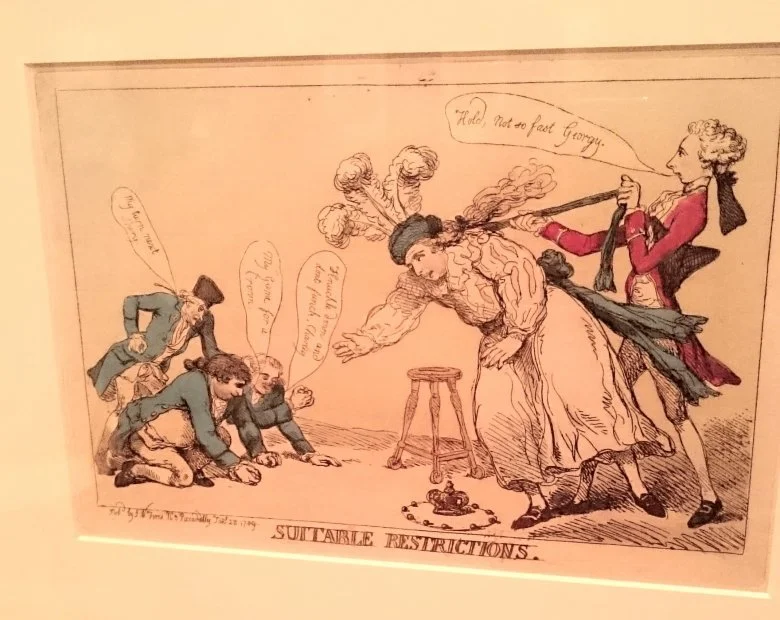
Suitable Restrictions for a Regency by Thomas Rowlandson (1789)

Yorkshire Hieroglyphics by Thomas Rowlandson (1809) depicting a love letter from the Duke of York to Mrs Clarke in pictures.

A York Address to the Whale. Caught lately off Gravesend by Thomas Rowlandson (1809). The Duke of York pleads with the whale to distract the public from the Mrs Clarke scandal.
Political satire
Rowlandson began producing political caricatures around 1780. The battle between the Whigs led by Fox and the Tories led by Pitt gave ample scope for his wicked wit.
His series of prints on the Westminster Election of 1784, published by William Humphrey, was particularly successful, firmly establishing him as one of the leading satirists of his day.
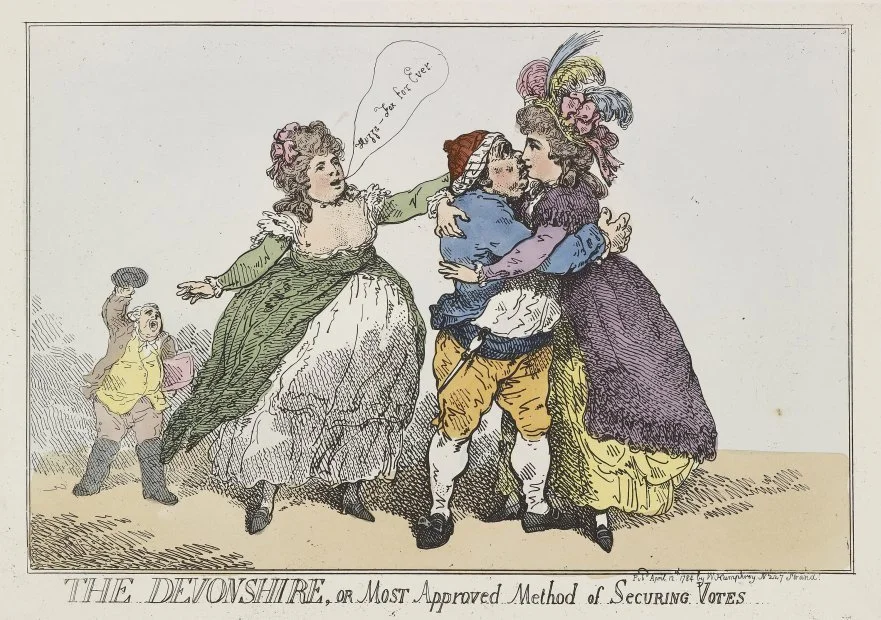
The Devonshire or Most Approved Method of Securing Votes by Thomas Rowlandson (1784). Georgiana, Duchess of Devonshire, is shown kissing a butcher in order to secure his vote for Fox.
Views of England and other works of art
In addition to all the caricatures, a number of Rowlandson's other works were on display. These included book illustrations from Ackermann’s Microcosm of London and An excursion to Brighthelmstone made in the year 1789. This volume included what was probably my favourite picture in the whole exhibition—that of the bathing machines at Brighton pictured below.

Bathing Machines by Thomas Rowlandson in An excursion to Brighthelmstone made in the year 1789 by H Wigstead (1790)

Christie's Auction Room from The Microcosm of London published by R Ackermann (1808) and illustrated by Augustus Pugin (the architecture) and Thomas Rowlandson (the people).
The paintings in the exhibition included this one, featuring George III returning from a hunting trip.

King George III returning from hunting through Eton by Thomas Rowlandson (c1800)
A Georgian connection with the Dutch paintings
Having examined the Rowlandson exhibition thoroughly, we decided to take a quick look round the exhibition of Dutch paintings which ran alongside it. Although these were pre-Georgian, mostly dating from the 17th century, there was a Georgian connection. Many of the paintings were acquired by George IV and prints of various rooms in Carlton House and Windsor Castle from Pyne’s The History of the Royal Residences showed the paintings had been displayed. One or two of the paintings in the exhibition were even identifiable in the prints.

An Old Woman called The Artist's Mother by Rembrandt van Rijn (1627)

The King's Drawing Room, Windsor Castle from The History of the Royal Residences by WH Pyne (1819). The Old Woman is on display to the right of the doorway.
There was also a small selection of Sèvres porcelain on display.

Chocolatière from the Sèvres porcelain factory (1777). Acquired by George IV in 1815.

Pot-pourri à vaisseau or pot-pourri en navire from the Sèvres porcelain factory (1758-9). It is extremely likely that this item was originally owned by Madame de Pompadour, mistress of King Louis XV of France.
In summary, High Spirits was a great little exhibition and the exhibition book details all the works of art on display.
Rachel Knowles writes faith-based Regency romance and historical non-fiction. She has been sharing her research on this blog since 2011. Rachel lives in the beautiful Georgian seaside town of Weymouth, Dorset, on the south coast of England, with her husband, Andrew, who co-writes this blog.
If you have enjoyed this blog and want to encourage us and help us to keep making our research freely available, please buy us a virtual cup of coffee by clicking the button below.
All photos © Andrew Knowles and RegencyHistory.net except Money Lenders and The Devonshire © The Royal Collection. All prints and objects © HM Queen Elizabeth II.