
Richard Brinsley Sheridan (1751-1816)

Richard Brinsley Sheridan from A Journal of the Conversations of Lord Byronwith the Countess of Blessington (1893)
Profile
Richard Brinsley Sheridan (30 October 1751 – 7 July 1816) was an Irish playwright and owner of the Theatre Royal, Drury Lane. His most famous works include The School for Scandal and The Rivals. He was a Whig MP and intimate friend of Charles James Fox and George, Prince of Wales.
Read some of the clever things that Sheridan said and wrote.
Early life
Richard Brinsley Sheridan was born in Dublin on 30 October 1751, the son of Thomas Sheridan, an actor and teacher of rhetoric, and his wife, Frances Chamberlaine, a novelist and playwright. 1
He was christened Thomas Brinsley on 4 November, but his parents called him Richard. 2
He was educated in Dublin at Samuel Whyte’s school in Grafton Street and later in Windsor by his mother before being sent to Harrow in 1762. After spending a few years in London, Sheridan moved to Bath in 1770, where his widowed father taught elocution.

Richard Brinsley Sheridan from The Creevey Papers (1904)
Playwright
In Bath, Sheridan began writing and had several poems published. His most popular works included:
The Rivals (1775)
The School for Scandal (1777)
The Critic (1779)
The libretto for a comic opera, The Duenna (1775).
Drury Lane Theatre
In 1776, Sheridan bought David Garrick’s share in the Theatre Royal, Drury Lane, and on 21 September, the theatre opened under his management. He bought the remaining share in 1778.
The theatre had to be rebuilt in the early 1790s, embroiling Sheridan in complicated financial arrangements.

Theatre Royal, Drury Lane, from The Microcosm of London (1808-10)
In 1809, the Drury Lane Theatre burnt down depriving Sheridan of his major income stream. The rebuilding of the theatre, together with its debts, was taken on by Samuel Whitbread, and when it reopened in 1811, Sheridan no longer had any share in its management.
Whig MP
Despite his success as a playwright, Sheridan was keen to enter politics. He became an MP in 1780, supporting the Whig opposition led by Charles James Fox. During his political career, he was MP for Stafford (1780-1806), Westminster (1806-7) and Ilchester (1807-12).

Charles James Fox from The Historical and Posthumous Memoirsof Sir Nathaniel Wraxall (1884)
During the Regency crisis of 1788, Sheridan acted as a link between the Prince of Wales and the Whigs. Sheridan spoke eloquently in favour of the impeachment of Warren Hastings.

George IV when Prince Regent after Sir Thomas Lawrence (1815) NPG
Like Fox, Sheridan initially supported the French Revolution but opposed the execution of the King. He fell out with Edmund Burke who painted him and Fox as extreme radicals who wanted to remove the British monarchy.
Sheridan was in favour of reform and Catholic emancipation and became increasingly involved in Irish politics, supporting Irish independence. He also spoke enthusiastically in support of freedom of the press.
An infamous elopement
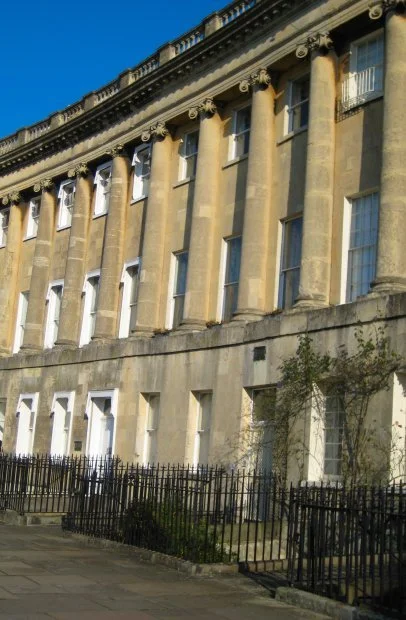
Thomas Linley's house on Royal Crescent, Bath (2013)
On 18 March 1772, Sheridan eloped with Elizabeth Linley from her father’s house in Bath. Elizabeth was a beautiful and talented soprano singer who was being relentlessly pursued by a married man named Captain Matthews. Elizabeth had called on Sheridan to save her from his importunities.
Neither family was in favour of the marriage. Thomas Linley wanted his daughter to continue her successful musical career; Sheridan’s father thought the Linleys an inferior connection. The couple were eventually married on 13 April 1773. Thomas Linley accepted the marriage, but Sheridan’s father disowned him. They had one son, Thomas (1775).

Elizabeth Sheridan as St Cecilia Print by W Dickinson after Sir Joshua Reynolds (1776) © British Museum
A matter of honour
After the elopement, Matthews denounced Sheridan’s behaviour in the Bath Chronicle. Sheridan successfully fought a duel with him to make him apologise. Matthews then forced a second duel in which Sheridan was badly injured.
Extravagant living
Sheridan and his wife Elizabeth were welcomed into aristocratic circles where they were encouraged to live in a style beyond their means. Sheridan became an intimate friend of Charles James Fox and of George, Prince of Wales. He was not addicted to gambling like many of his friends, but frittered away his money on extravagant living and heavy drinking.
In March 1777, Sheridan was elected a member of the Literary Club at Samuel Johnson’s instigation. On 2 November 1780, he was elected a member of Brooks’s Club having been rejected twice previously.

Samuel Johnson from The Historical and Posthumous Memoirs of Sir Nathaniel Wraxall (1884)
An errant husband
Sheridan was not a faithful husband. He had an affair with Mrs Frances Anne Crewe, a Whig hostess to whom he dedicated The School for Scandal.

Frances Anne Crewe as St Genevieve Print by T Watson after Sir Joshua Reynolds (1773) © British Museum
He then embarked on a passionate affair with Harriet, Lady Duncannon, later Lady Bessborough, the Duchess of Devonshire’s younger sister. It was not until Harriet’s husband threatened to divorce her in 1789 that the affair was finally brought to an end. But Sheridan remained obsessed with Lady Bessborough, causing his ex-lover a good deal of embarrassment.

Harriet, Lady Bessborough from La Belle Assemblée (1810)
An illegitimate child
In 1792, Elizabeth had a daughter, Mary, whose father was probably Lord Edward Fitzgerald, with whom she was having an affair. Sheridan treated Mary as his own daughter, but sadly she died as an infant. Despite his infidelities, Sheridan was distraught when Elizabeth became ill with tuberculosis and died on 28 June 1792.
A second marriage
On 27 April 1795, Sheridan married again. His second wife was Hester Jane Ogle, the 19-year-old daughter of the dean of Winchester, known as Hecca. They had a son, Charles Brinsley, in 1796 and purchased the estate of Polesden Lacey in Surrey for their family.
Whilst Sheridan continued to pursue his obsession with Lady Bessborough, Hecca had an affair with Lord Grey.

Hester Sheridan née Ogle after Hoppner from Sheridan by Walter Sichel (1909)
Financial difficulties
Sheridan consistently outlived his income, but he was proudly independent and was reluctant to accept financial help from others. However, in 1804, Fox and the Prince of Wales persuaded him to accept the role of Receiver-General for the Duchy of Cornwall.
After losing his seat in the House of Commons in 1812, Sheridan was no longer exempt from being arrested for debt and was imprisoned several times.
Illness and death
Sheridan’s heavy drinking affected his political performance and his health and he suffered from bouts of depression. He became ill in December 1815 and died on 7 July 1816 at 14 Savile Row with his wife beside him. He was buried in Poets’ Corner in Westminster Abbey on 13 July.

Westminster Abbey from The Microcosm of London (1808-10)
Rachel Knowles writes faith-based Regency romance and historical non-fiction. She has been sharing her research on this blog since 2011. Rachel lives in the beautiful Georgian seaside town of Weymouth, Dorset, on the south coast of England, with her husband, Andrew, who co-writes this blog.
If you have enjoyed this blog and want to encourage us and help us to keep making our research freely available, please buy us a virtual cup of coffee by clicking the button below.
Notes
There would appear to be some uncertainty as to Sheridan’s date of birth. Jeffares says Sheridan was born in September or October 1751 whereas Stephen and others state it precisely as 30 October 1751.
From Jeffares.
Sources used include:
Jeffares, A Norman, Sheridan, Richard Brinsley (1751-1816), Oxford Dictionary of National Biography (Oxford University Press, 2004; online edn Jan 2008, accessed 18 Aug 2014)
Moore, Thomas, Memoirs of the Life of the Right Honourable Richard Brinsley Sheridan (1825)
Stephen, Sir Leslie (ed), Richard Brinsley Sheridan, Dictionary of National Biography, 1921-2, vols 1-20,22 (Oxford University Press, 1921-2; online edn 2010 on Ancestry.com)
All photographs © Andrew Knowles and RegencyHistory.