
Cotehele - a Regency History guide
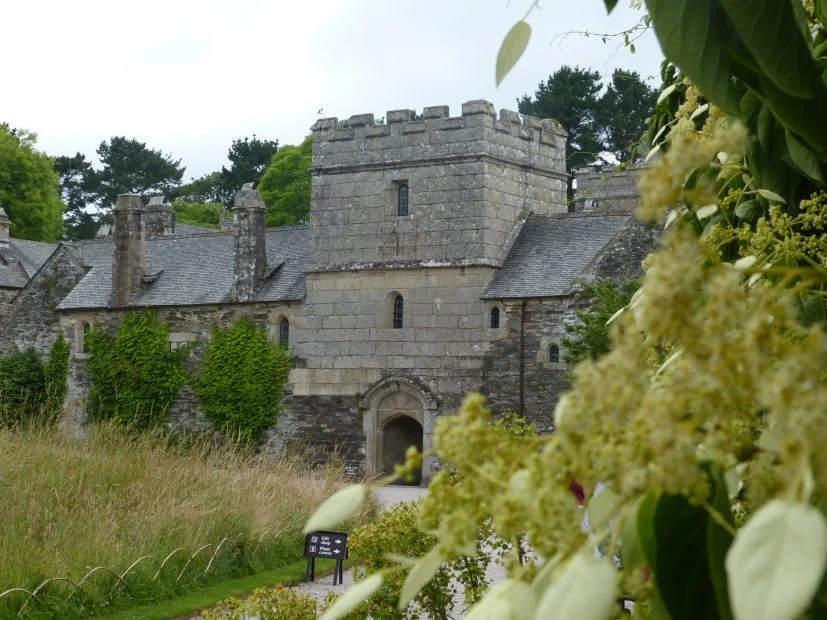
Cotehele (2014)
Where is Cotehele?
Cotehele is a Tudor manor in Cornwall.
Cotehele and the Edgcumbe family
In 1353, Hilaria de Cotehele married William Edgcumbe and the medieval house at Cotehele passed into the Edgcumbe family. Between 1485 and about 1560, the house was rebuilt by successive generations of Edgcumbes, resulting in the substantially Tudor house that exists today.
By 1553, before the building works were even finished, Cotehele had been abandoned for Mount Edgcumbe, the Edgcumbes’ newly completed Tudor mansion in south Cornwall which became their primary seat.
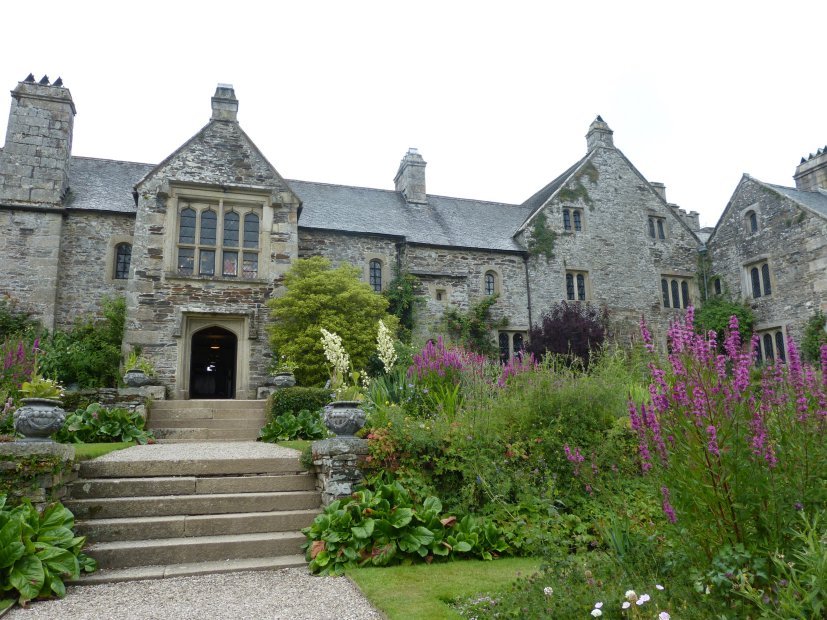
Cotehele from the garden (2014)
During the 1660s, Colonel Piers Edgcumbe lived at Cotehele and remodelled the interiors, but his son chose to return to Mount Edgcumbe. During the Second World War, Mount Edgcumbe was largely destroyed by bombing and Cotehele became the family home of the Edgcumbes once more.
In 1947, Cotehele was given into the care of the National Trust in lieu of death duties, and its contents followed in 1974.
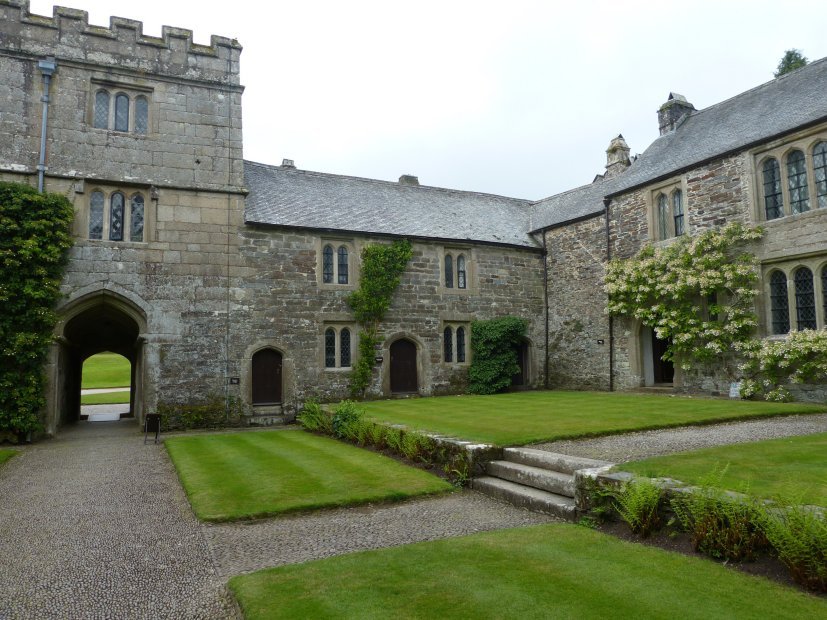
The Courtyard, Cotehele (2014)
A Georgian tourist attraction
Cotehele remained a secondary home of the Edgcumbe family throughout the Georgian period. During the 1750s, Richard Edgcumbe, 1st Baron Edgcumbe (1680–1758), modernised the interiors of Mount Edgcumbe and sent its out-of-date furnishings to Cotehele. This created a house that seemed to belong to the past and Cotehele became a tourist attraction, drawing a visit from George III.
The King’s visit
On 25 August 1789, George Edgcumbe, 1st Earl of Mount Edgcumbe (1721–95), hosted a visit from George III and Queen Charlotte during their stay at Saltram in Plymouth. 1
The royal party took barges from the Saltash ferry up the River Tamar to Cotehele.
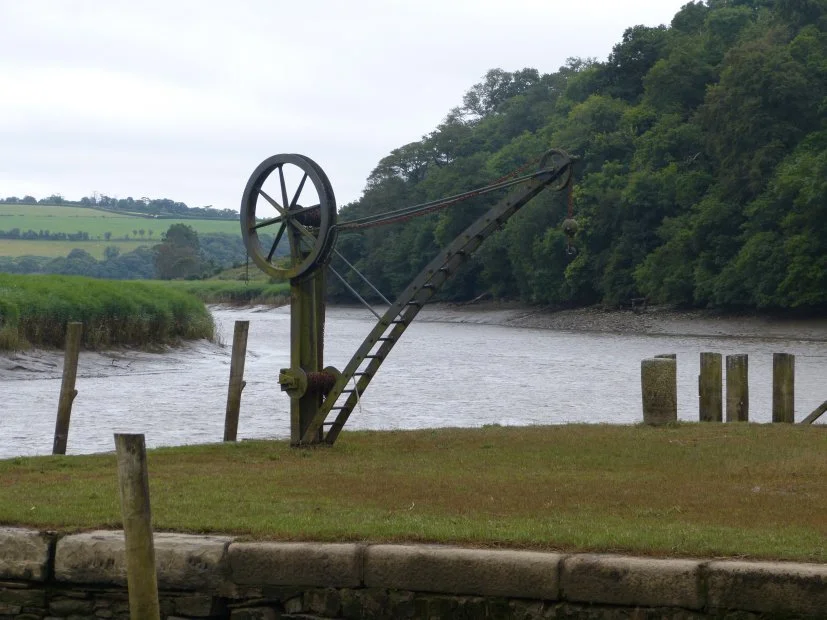
View down the River Tamar from Cotehele (2014)
The Gentleman’s Magazine (1789) wrote:
The Noble Owner of this venerable mansion received his Royal Visitants, on their landing, with becoming dignity. The ramparts of his castle were occupied by his vassals, and he himself was attended by a chosen hand of faithful adherents, who shouted, ‘God Save the King!’
Triumphal cars, with four wheels each, and two ponies, were provided to convey their Majesties and the Princesses to the castle, which stands on a proud eminence, about a quarter of a mile from the banks of the river. 2
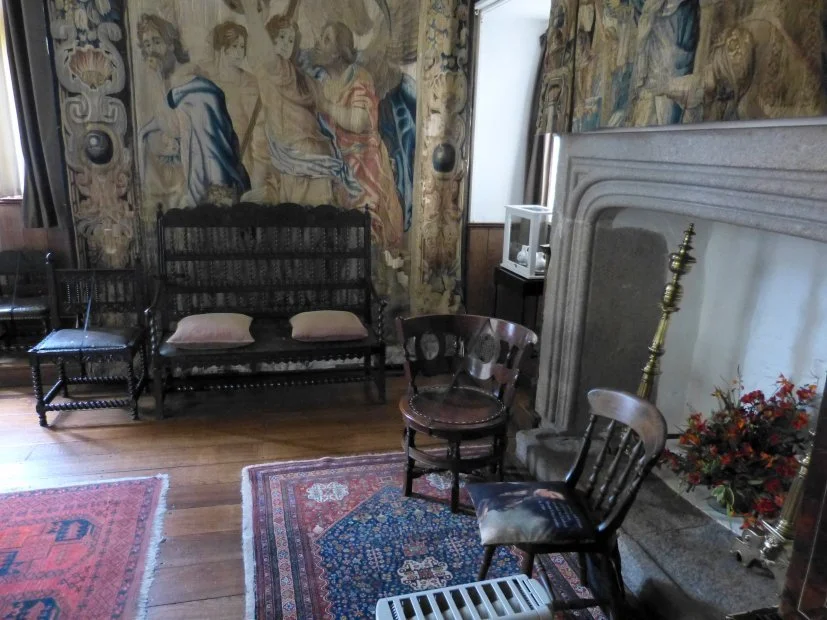
The Old Drawing Room, Cotehele (2014)
The royal party was given a tour of the house and served breakfast, traditionally in the Old Drawing Room. The meal was served on the old family pewter which was engraved with the Edgcumbe coat of arms. Eating off pewter rather than anything grander added to the historical experience of Cotehele because of the pewter’s long association with Cotehele and the Edgcumbe family.
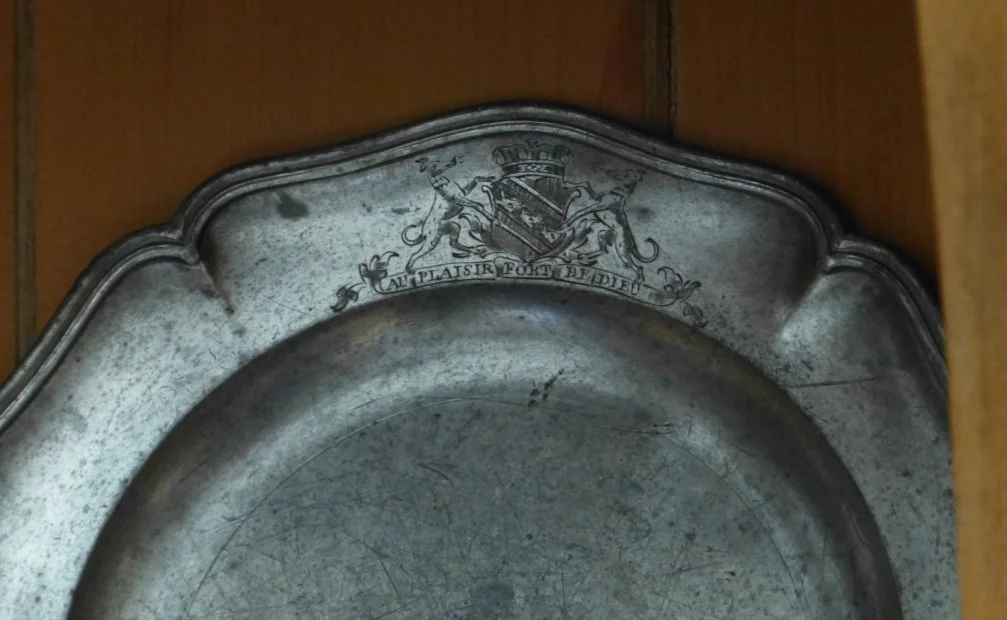
The old family pewter engraved with the Edgcumbe coat of arms (2014)
The visit to Cotehele was very brief. According to Queen Charlotte’s journal, the party landed at 10.30am and re-embarked at 12.10pm. 3 The reason for the haste is explained by the report that appeared in The Gentleman’s Magazine:
Being shewn the antique curiosities of the castle, among which were many singular pieces of ancient armour, and partaking of some refreshment, which was highly relished by keen appetites, the whole party re-embarked, with a full intent to reach the salmon-weir, which, for bold and picturesque scenery, far exceeds all the other magnificent views which the Tamar presents; but it was found that the tide would not serve to reach it, and they returned to Saltram about two in the afternoon, much gratified by the novelty of the fresh-water navigation. 2
The first guidebook to Cotehele, Cotehele on the Banks of the Tamar, was published around 1840 with coloured prints by local artist Nicholas Condy. Queen Victoria visited in 1846 and again in 1856.
A visit to Cotehele
Here are some more photos from our visit in 2014.
The Tudor Hall
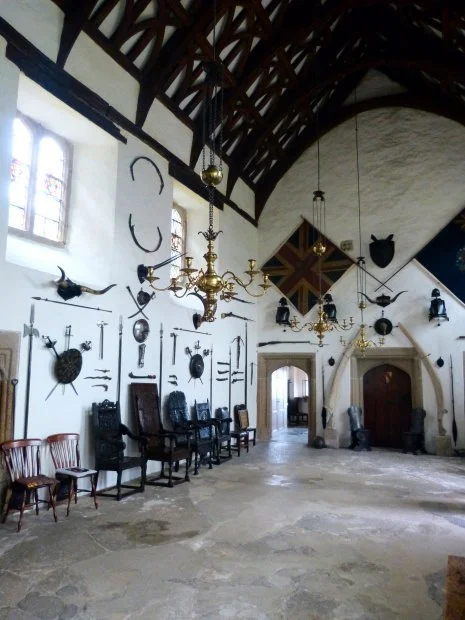
The Great Hall, Cotehele (2014)
The Punch Room
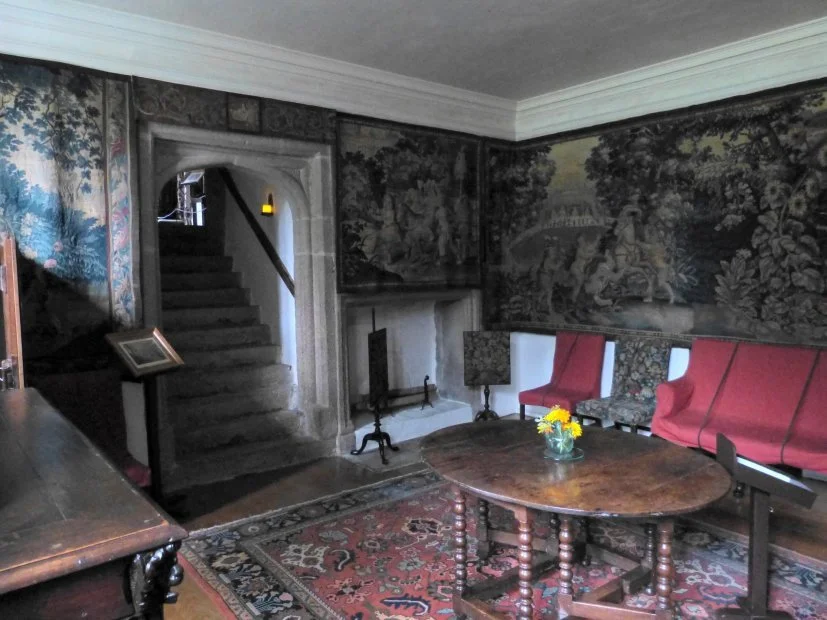
The Punch Room, Cotehele (2014)
The Old Drawing Room
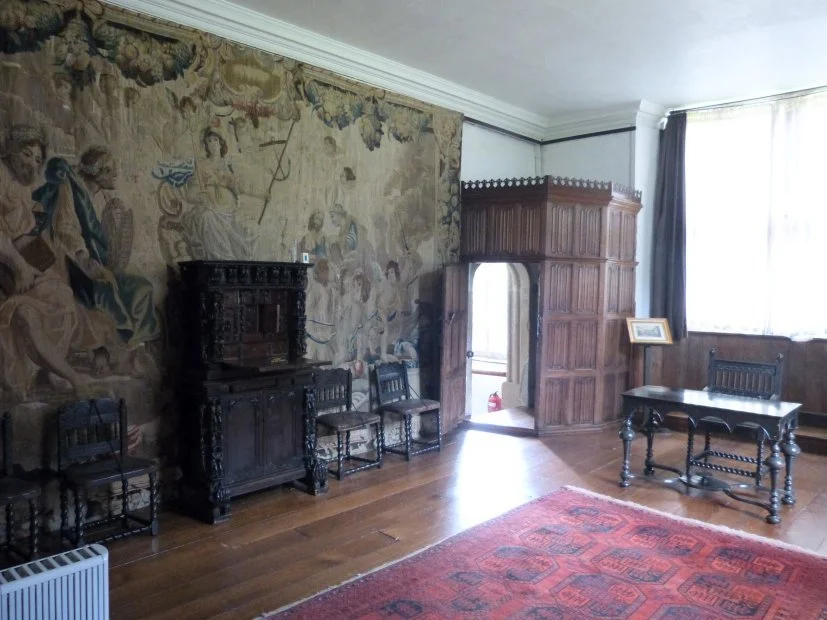
The Old Drawing Room, Cotehele (2014)
The old family pewter in the Kitchen
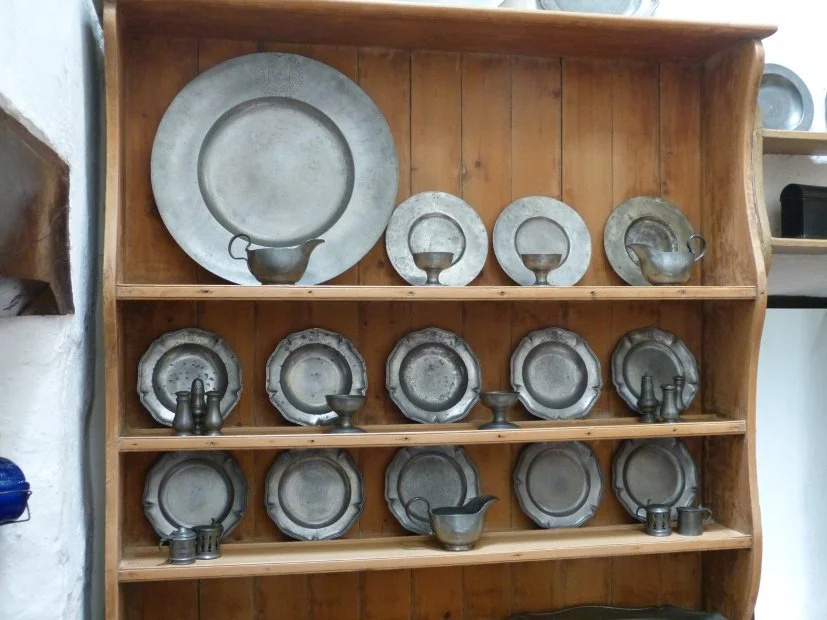
The old family pewter in the Kitchen, Cotehele (2014)
King Charles’s Room
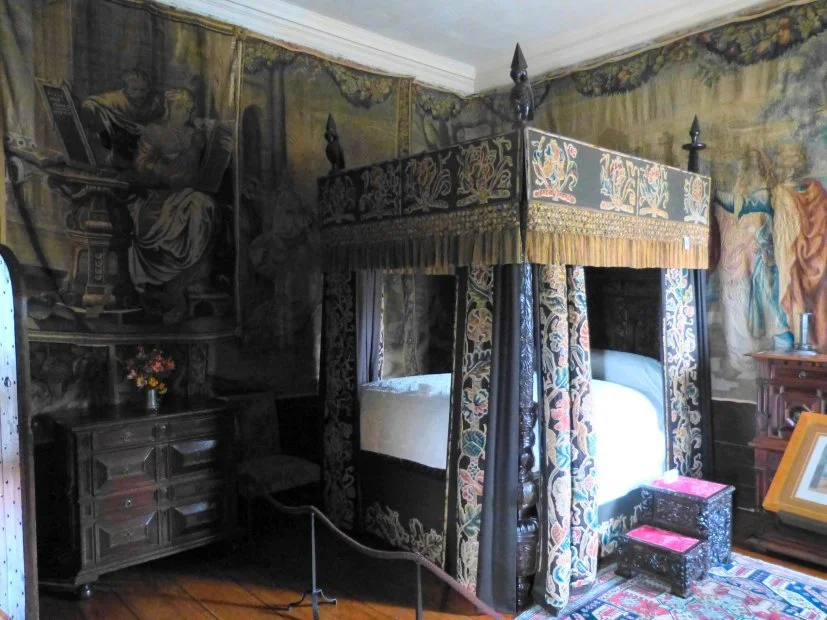
King Charles's Room, Cotehele (2014)
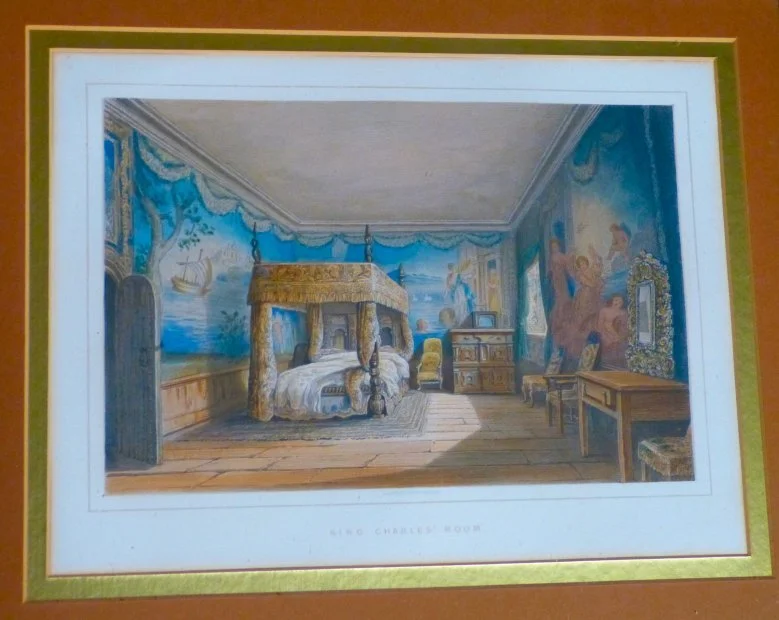
King Charles's Room after print by Nicholas Condy (c1840) (Photo 2014)
There were reproductions of Nicholas Condy’s prints in many of the rooms.
Tudor courtyard
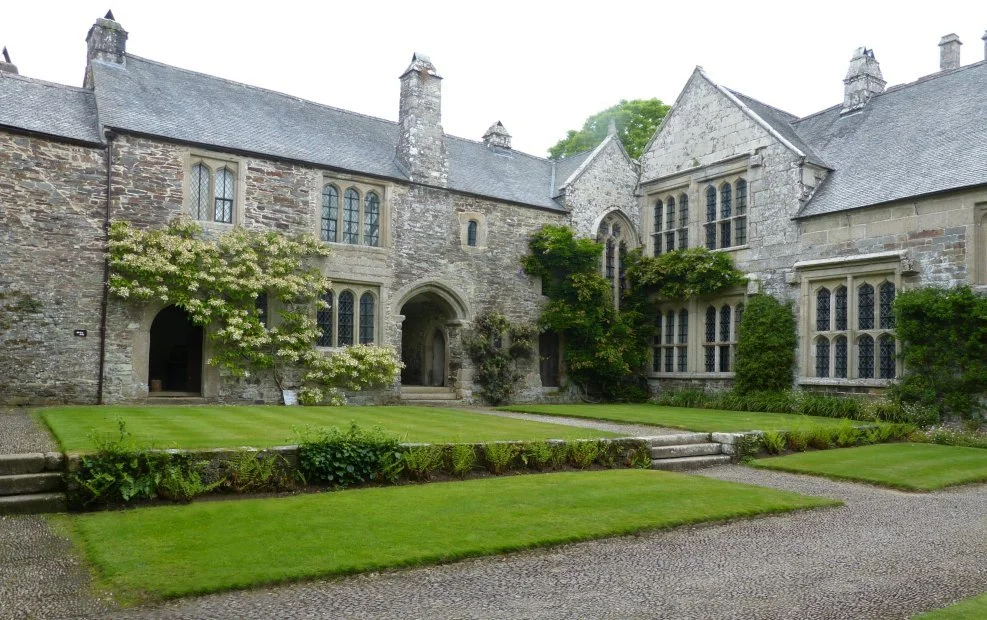
Tudor courtyard, Cotehele (2014)
Rachel Knowles writes faith-based Regency romance and historical non-fiction. She has been sharing her research on this blog since 2011. Rachel lives in the beautiful Georgian seaside town of Weymouth, Dorset, on the south coast of England, with her husband, Andrew, who co-writes this blog.
If you have enjoyed this blog and want to encourage us and help us to keep making our research freely available, please buy us a virtual cup of coffee by clicking the button below.
Notes
This is the date quoted in the National Trust Guide. The Gentleman’s Magazine stated that the visit took place on 26 August, but also got the name of the Edgcumbes’ house wrong, referring to it as Kitley—a house connected with the Bastard family, situated near Plympton and not up the Tamar.
The Gentleman’s Magazine (1789).
Queen Charlotte’s journal, quoted in the National Trust Guide.
Sources used include:
Hunt, Rachel, ed by Anna Groves, Cotehele, National Trust Guide (2013)
The Gentleman’s Magazine (1789)
All photographs © Andrew Knowles and RegencyHistory
Last visited July 2014 and post last updated 2/4/26