Naval Career of Captain Wentworth
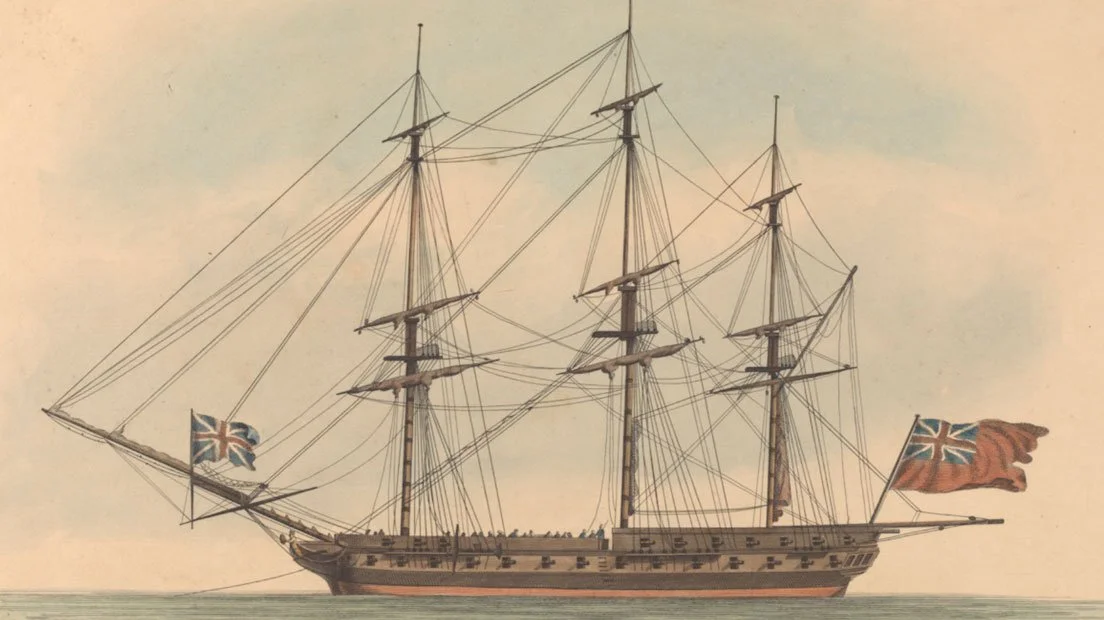
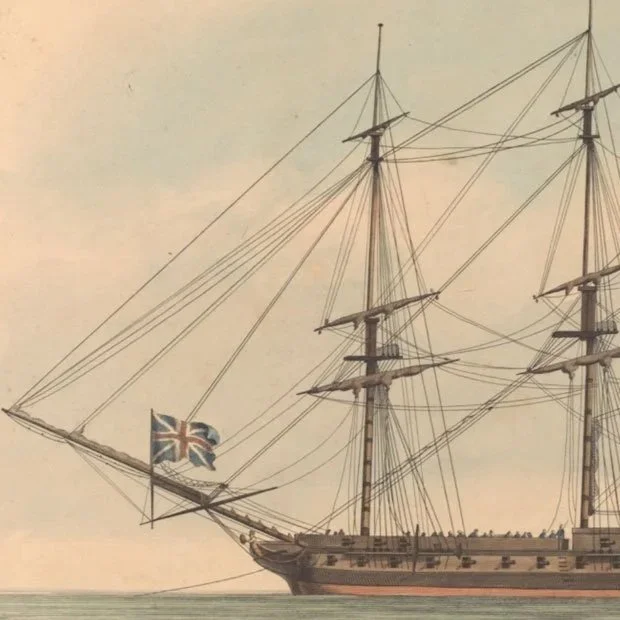
The frigate Cambrian in 1805. Captain Wentworth’s Laconia would have looked similar.
Gallant Captain Wentworth is an entirely fictional character crafted by Jane Austen for her novel, Persuasion.
Despite this, his naval career (what we know of it), is worthy of being examined. Its creator, Jane, had the advantage no later novelist could claim—easy access to two naval officers who sailed and fought during the Revolutionary and Napoleonic Wars.
In Persuasion, Jane gives us glimpses into Wentworth’s backstory. Let’s weave these into what we know about naval history of the period to fill out what his career may have been.
Choosing the Navy
Why did Frederick Wentworth join the Navy? Of course, we don’t know the depth of backstory Jane Austen imagined for him—she might never have considered his motivation for becoming a sailor.
What we do know is that his brother was a curate. She seems to have modelled the Wentworths on her own family, perhaps imagining Frederick’s father to be, like hers, a rector. The Wentworth boys, like her brothers, chose between the church and the Navy.
The sons of rectors had limited career options. The church, the law or the military were routes most commonly taken. Of the military, the Navy was the least expensive because officer commissions were earned, not bought.
According to his memoir, Francis Austen ‘decided on the Navy for his profession.’ We have no idea what inspired a boy from rural Hampshire to choose to go to sea. The inspiration for another rector’s son, Horatio Nelson, was more obvious. Living near the coast, he loved watching ships and sailors, and wanted to follow in the footsteps of his uncle, Captain Maurice Suckling.
In joining the Navy, Frederick Wentworth followed in the footsteps of a host of boys from middle class or minor gentry families.
Joining the Navy
For all that they aspired to join the Navy, the Austens, Wentworth and Nelson couldn’t just apply at a recruiting office.
There were three routes to becoming a Navy officer. The most common, and that taken by Horatio Nelson, was to join as a captain’s servant. Most boys taking this route first went to sea at about 12 years of age.
Another way was to have learned seamanship on the lower decks, or in the merchant service. Some of these sailors went on to become officers.
The third route, and the one that most often seems to be dismissed in books about the Navy, was to study at the Royal Navy Academy in Portsmouth. It’s often said that captains did not think much of Academy students.
However, both the Austen brothers attended the Academy, and both went on to become admirals. It’s therefore reasonable that Jane would have sent Frederick Wentworth to the Academy.
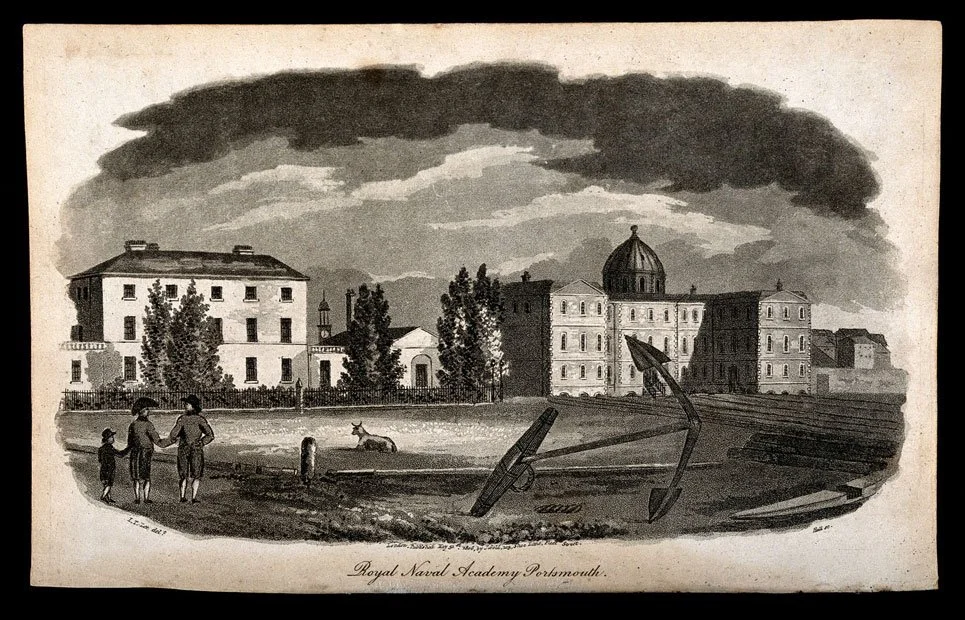
The Royal Naval Academy Portsmouth, 1806 (Wellcome Collection)
The Royal Navy Academy
The Academy was open to boys aged between 12 and 15. Given that Wentworth was born in or around 1783, he would have attended in about 1796. That’s ten years after Francis Austen studied there.
To be accepted, a boy had to be the son of a nobleman or gentleman, or of a commissioned naval officer. They also had to pass an examination.
Education included writing, arithmetic, drawing, navigation, gunnery, fortification, along with French dancing, fencing and using firearms. Much of the learning was on land, but there was scope for some sea-based activities, such as learning how to rig and unrig a ship, and to operate guns.
It’s acknowledged that many navy officers had little regard for the Academy or its students. Admiral Lord Vincent, Nelson’s commander in the Mediterranean and later Admiral of the Fleet, famously wrote in 1801:
The Royal Academy at Portsmouth, which is a sink of vice and abomination, should be abolished.
There were two main objections to the Academy. The first was that boys serving aboard a ship at sea learned a lot more than those in a classroom. The second was that captains felt it undermined their power of patronage. They chose which boys could become servants, but they had no control over who was admitted to the Academy.
For all the negative feelings towards the Academy, it was where Francis and Charles Austen were educated, and it’s reasonable to assume Jane imagined Wentworth also attending.

Midshipman Robert Dean in 1804, aged 14. A young midshipman would have been immensely proud of his uniform. (National Maritime Museum 2022).
Climbing the ranks in the Royal Navy
Having completed his education at the Academy, Wentworth, like the Austen brothers, was assigned to a ship. Now in his mid-teens, he needed to acquire two years of sea time before being entitled to the rank of midshipman.
The next step up was to lieutenant. According to the Regulations and Instructions of the Royal Navy, no one could become a lieutenant until:
‘They have served Six Years at Sea, and have been rated Two of the said Six Years as Midshipman, or Mates, in some of His Majesty’s Ships, and that they do produce regular Journals and good Certificates from the Commanders they have served with.’
To be considered officer material you had to be good with paperwork. They also had to be at least 20 years of age, and to have passed an examination.
The examination involved standing before a committee, usually of three senior officers, and answering their questions to their satisfaction. Passing the exam gave them more paper, a certificate, which entitled them to take the rank of lieutenant—when a position opened up.
Up to this point we have assumed Wentworth’s career, based on Jane Austen’s knowledge of the Navy. This brings us to early 1806, when he’s a lieutenant aboard a British ship in the Caribbean.
Becoming Commander Wentworth
The first reference to Wentworth’s career that Jane Austen shares with us is in Persuasion, at the start of chapter 4:
He was not Mr Wentworth, the former curate of Monkford, however suspicious appearances may be, but a Captain Frederick Wentworth, his brother, who being made commander in consequence of the action off St Domingo.
The ‘action of St Domingo’ was a sea battle on 6 February 1806, in the Caribbean. It saw eleven British ships defeat eight French vessels, capturing or destroying them.
Because we don’t know how much of Wentworth’s backstory had been imagined by Jane Austen, we don’t know what size ship she envisaged him serving on during the battle. Perhaps it was one of the big 74-guns, such as Agamemnon, said to be Nelson’s favourite ship. Here Wentworth would have been one of several lieutenants.
Wherever he served, Jane Austen implies that he performed some act of bravery that led to him being given the rank of commander. That is, he was put in charge of his own small vessel.
The size of Navy ships was often given in terms of how many guns they carried. A commander was responsible for a ship of at most 20 guns. (A gun was naval terminology for a cannon.) Nelson followed a similar route, being promoted from first lieutenant on the 50-gun Bristol to commander of the 14-gun sloop Badger.
This is where there’s some uncertainty about Wentworth’s career. He was promoted to commander in early 1806, and standard practice suggests he was then given a ship. Yet he spent much of that year on half-pay, in Somerset. Is this Jane Austen exercising artistic licence, in order that he could meet and propose to Anne Elliot?
And what rank was he holding during his time with Anne that year? In a long paragraph explaining why Lady Russell disapproved of Wentworth, Jane Austen introduces him as a captain.
Of course, it doesn’t matter whether Anne Elliot was courted by Commander Wentworth or Captain Wentworth. What we can be sure of is that in Jane Austen’s mind, he was a talented and confident officer who was about to be given a ship of his own.
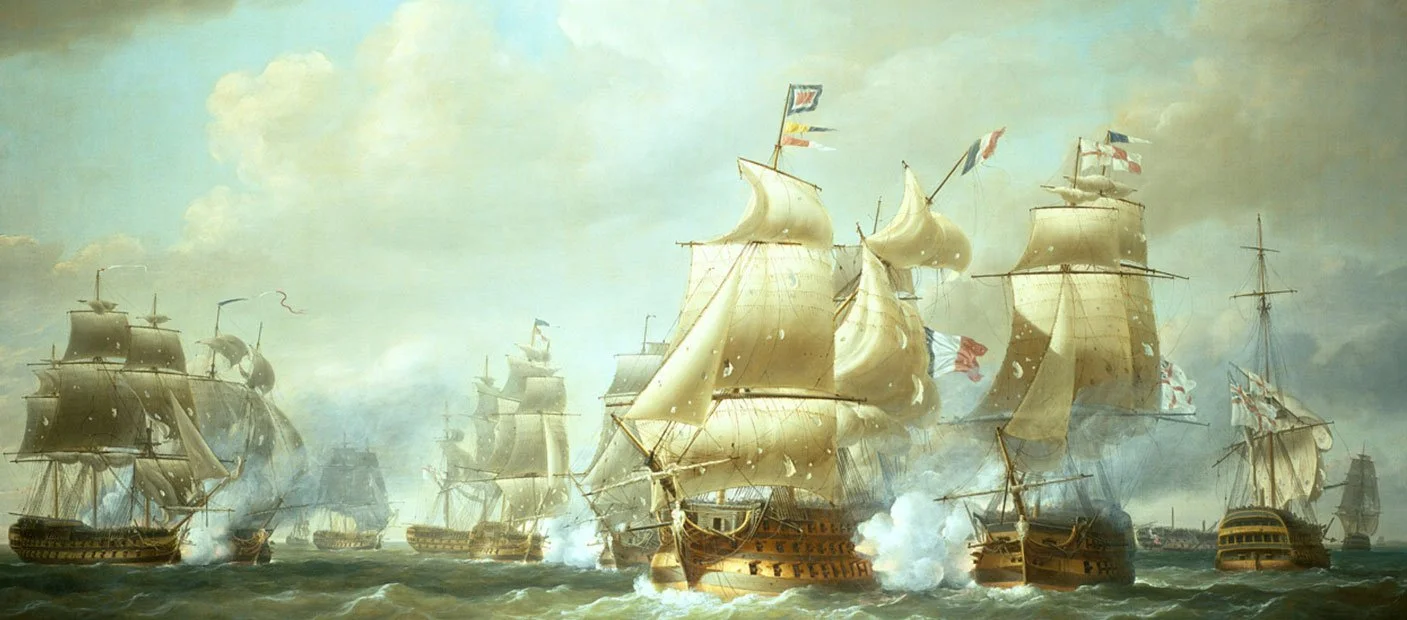
The Battle of St Domingo as visualised by Nicholas Pocock in 1808 (National Maritime Museum)
Wentworth’s first command
In late 1806 Wentworth took command of his first ship, the Asp. She was ‘quite worn out and broken up.’ Despite her tired condition, he was ordered to the West Indies.
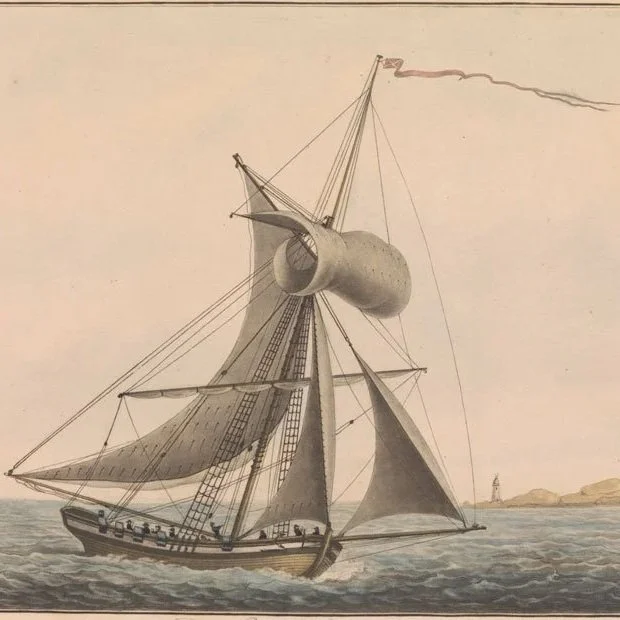
A sloop was a small vessel, typically with two masts, and the senior officer was usually a commander. It usually carried less than 20 guns, and a crew of just over 100 men.
The Asp, like Wentworth, was purely fiction. But the Navy had many similar ships in service at the time and some, like the Asp, were active in the West Indies. In his months in the Caribbean, Wentworth captured ‘privateers enough to be very entertaining.’
An actual sloop, Racoon, is recorded as having taken around a dozen privateers in the West Indies between 1803 and 1805.
Capturing a ship meant a captain and his crew earned prize money. This is explained in more detail in ‘How Captain Wentworth got rich on prize money.’
Returning from the West Indies in late 1807, Wentworth had ‘the good luck… to fall in with the very French frigate I wanted.’
A frigate was a larger ship, typically with three masts and carrying around 40 guns. For Wentworth to capture the frigate was a major achievement. He brought her into Plymouth, meaning he could claim yet more prize money. A captured ship had to be brought into a safe port before it could be claimed as a prize.
By the time he returned to England on the Asp, Wentworth had achieved the rank of captain. As he said himself, if he’d arrived in Plymouth more than six hours later, the Asp would have been caught at sea in a four-day gale that it would not have survived: ‘
And I should only have been a gallant Captain Wentworth, in a small paragraph at one corner of the newspapers; and being lost in a sloop, nobody would have thought about me.
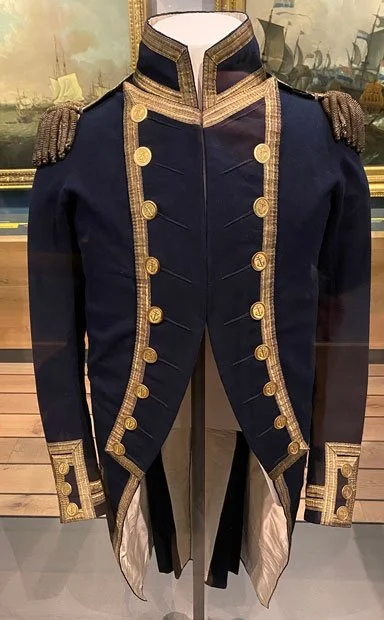
Captain’s full dress coat (National Maritime Museum 2022)
Captain Wentworth of the Laconia
Wentworth’s next ship was the Laconia, a frigate. Frigates were fifth-rate ships, typically with 30-40 guns and a crew of up to 300 men. They were fast, and the Navy had a lot of them.
All larger naval vessels were rated between one and six, with one being the largest. HMS Victory, Nelson’s flagship at Trafalgar, was a first-rate. She carried over 100 guns. A sloop, such as the Asp, was unrated.
In the Laconia, Captain Wentworth had further successes with capturing privateers and the like. He was now serving off the western coast of Europe and Africa, and the Mediterranean, and taking more prizes.
In Persuasion, Jane Austen tells he acquired a fortune of £25,000. Most, if not all, would have been from prize money.
We’re given few other clues as to Wentworth’s career. For six months he allowed Dick Musgrove to serve on his ship as a midshipman. Jane Austen described him as ‘thick-headed, unfeeling, unprofitable’ and implied Wentworth, like other captains, was keen to be rid of him. Jane kills him off before the events of Persuasion take place.
We also know that Wentworth was in or around the Mediterranean in early 1813, because that’s when his ship visited Lisbon.
By the time in which Jane Austen set Persuasion, in 1814, Wentworth is no longer captain of the Laconia. Nor is the ship in active service. The long years of war with France are over, meaning many naval officers are no longer required for service at sea.
Admiral Wentworth
Although she never lived to see it, both of Jane Austen’s brothers became admirals. Francis rose to become an Admiral of the Fleet, although this was largely an honorary status.
Once an officer became a captain, promotion to admiral was virtually guaranteed. Advancement was based on seniority, that is, the date of one’s appointment as a captain. Over time, Wentworth’s name would have risen up the list and eventually he would be offered the post of rear admiral.
From there he might become a vice admiral and then a full admiral. If he lived long enough, he too might become admiral of the fleet.
Wentworth’s friend, Admiral Croft, is actually a rear admiral of the white. Nelson reached the rank of vice-admiral of the white. The colour refers to the squadron, of which there were three: blue, white and red. An officer progressed through all three colours, in that order, before reaching the next rank of admiral.
Being an admiral allowed an officer to continue to draw pay even if, like Admiral Croft, they were not actively serving.
There was, of course, always the risk of being called upon to serve in some capacity. We can’t know what future Jane Austen had in mind for the Wentworths, but given what we know of their characters and situation, if Captain (or Admiral) Wentworth was offered a significant post overseas, I suspect he would take it. And take his wife along with him.
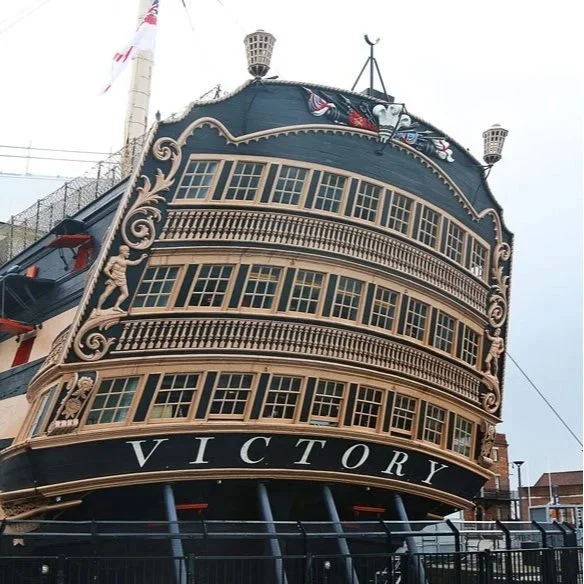
HMS Victory, a ship fit for an admiral
Andrew Knowles researches and writes about the late Georgian and Regency period. He’s also a freelance writer and editor for business. He lives with his wife Rachel, co-author of this blog, in the Dorset seaside town of Weymouth.
If you have enjoyed this blog and want to encourage us and help us to keep making our research freely available, please buy us a virtual cup of coffee by clicking the button below.
Sources used include:
Persuasion by Jane Austen (1818)
Memoir of Francis Austen (Jane Austen House Museum)
Regency History
by Andrew & Rachel Knowles

We research and write about the late Georgian and Regency period.
Rachel also writes faith-based Regency romance with rich historical detail.