Memoir of Admiral Francis Austen

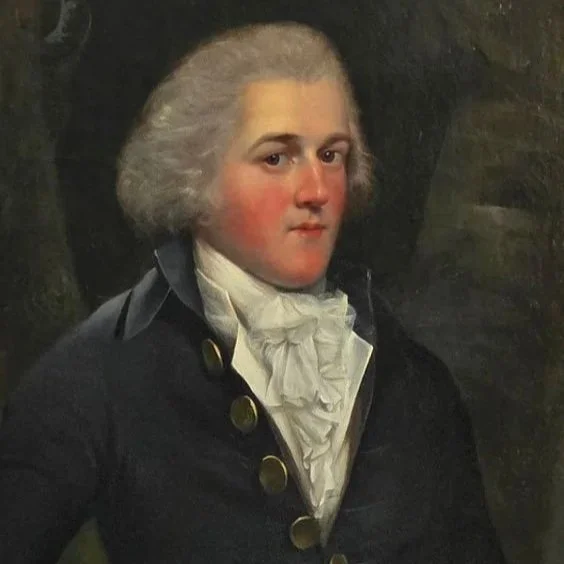
Lieutenant Francis Austen in 1796
A memoir written by Jane Austen’s brother has just been published for the very first time.
It’s a relatively short account, written by her brother Francis, known in the family as Frank. The hand-written document was acquired in 2024 by the Jane Austen’s House Museum in Chawton, Hampshire. They appealed for volunteers to help transcribe it and I was fortunate to be selected for the project.
Excitingly, I was given the page that related to Frank’s service during the time of the great sea battle at Trafalgar.
This article shares a few extracts from the memoir, with additional comments.
Lots of facts, not a lot of feeling
The opening lines of the memoir set the tone of the document.
Captain Francis William Austen, the youngest but one of five Sons of the Revd. George Austen, Rector of Steventon and Dean in the County of Southampton, was born at the former place on the 23rd of April 1774.
It’s written in the third person and it’s packed with facts, but it’s disappointingly light on detail of day to day life or emotion.
Under his paternal roof, he made considerable progress in the usual scholastic exercises (although never remarkable for facility in acquiring languages) until he decided on the Navy for his profession, when through the kindness and Interest of the late Sir Henry (then Mr) Martin at that time Commissioner of Portsmouth Dockyard, he was on the 6th of April 1786 placed at the Royal Academy there…
Frustratingly, Frank doesn’t tell us why he decided to join the Navy. However, he did take the unusual route of attending the academy at Portsmouth. Most boys (he was 12) who aspired to become officers were effectively apprenticed by joining a ship. Relatively few began by studying at Portsmouth and it’s suggested that those who did were considered inferior to those who started their career on a ship.
What this section highlights was that naval promotion very much depended on who you knew. Frank got into the Academy because of the ‘kindness and interest’ of Sir Henry Martin. This theme continued throughout his career.
Preference and promotion
In 1788 Frank joined the ship Perseverance, under Captain Isaac Smith. The memoir records:
‘Our youth was soon remarked as possessing a more than usual degree of theoretical knowledge of his profession, and being, although rather small in stature, of a vigorous constitution and possessing great activity of body, was not long in acquiring a competent knowledge of the practical parts of seamanship…’
My initial reading of the memoir tells me that Frank had a high opinion of his own abilities. He’s presented as a model student at the Academy, going on to become ‘a decided Favourite’ of his captain and other officers.
Frank was promoted to Lieutenant in December 1792. He recorded nothing of the process, other than to highlight that his promotion was ‘early’ because of his merits, and that he got there ahead of ‘a number of very deserving Midshipmen, most of them greatly his seniors in the service.’
Frank continued along the promotion path, becoming a commander in 1799 and a captain in 1800.
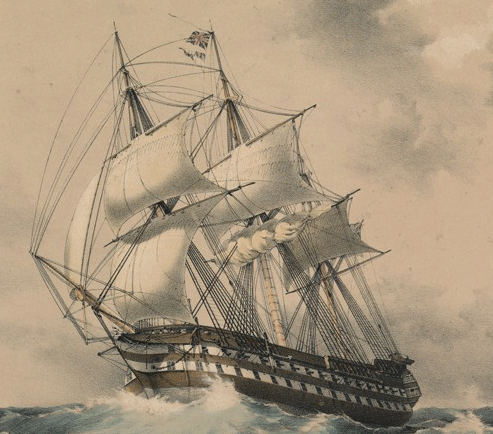
HMS Canopus, Frank’s ship in 1805
Frank Austen and Trafalgar
In 1805 Frank Austen was captain of the Canopus, an 80-gun frigate captured from the French at the Battle of the Nile in 1798. In the summer of 1805 the Canopus was one of several ships, led by Lord Nelson, that chased a French fleet to the West Indies and back to Europe.
Nelson’s aim was to engage the French at sea and destroy them, as he had at the Battle of the Nile.
The section of Frank Austen’s memoir I was asked to transcribe covered October 1805, when Lord Nelson closed in on the French, and their Spanish allies, at Trafalgar.
The memoir explains why Frank, and the Canopus, missed out on the great battle.
‘Early in October the Canopus with 5 other Ships were detached from the Fleet to proceed to Gibraltar and Tetouan for water and Provisions, and being prevented by a continuance of westerly winds from returning to the Fleet, were on the 19th of Oct ordered to give protection to a large and valuable Convoy assembled at Gibraltar and bound to Malta… On the 21st they were overtaken by the Wasp Sloop of War Capt. P.Parker who brought intelligence that two days before, the combined French and Spanish Fleet were coming out of Cadiz…
Even as the Wasp was delivering that intelligence, the Battle of Trafalgar was taking place. Nelson had chosen to attack the combined fleet which had left Cadiz.
Frank didn’t know this. On hearing the news from the Wasp he set sail to rejoin the main fleet but four days later he received the news about ‘the destruction of 20 of the Enemy’s Fleet,’ and the ‘severe blow to England in the death of Lord Nelson.’
Despite having met Nelson more than once, and Navy’s love from the daring Admiral, Frank keeps his account factual and emotionless.
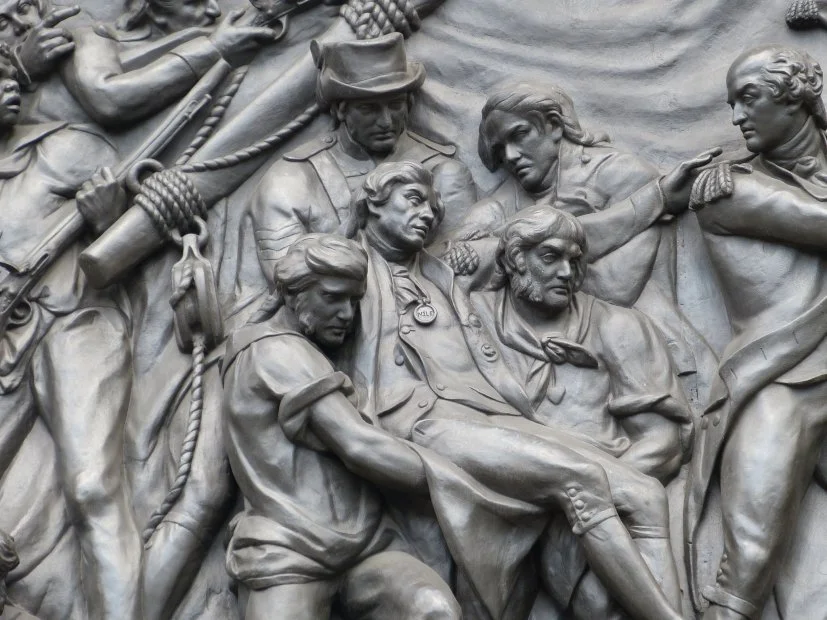
A fatally injured Nelson is carried from the deck of HMS Victory, from a frieze on Nelson’s Column, London.
The women in Frank Austen’s life
Where does his author sister, Jane, feature in this account? Barely at all. She’s not mentioned by name, but only referred to indirectly when he talks of his family and sisters. Her death, in 1817, is not referred to.
His wives get a little more space in the journal. Of his time ashore in Ramsgate in 1803 he records forming ‘an attachment’ to a young lady, Mary Gibson and in 1806 they married. She ‘fully deserved his warmest affections, by her unwearied endeavours to promote his comfort and happiness.’
Her death, giving birth to their eleventh child, provoked a rare flash of feeling:
‘It is impossible and would be needless to describe the deep agony the bereaved widower was called to endure.’
He was consoled by trusting that her ‘Christian Spirit’ was ‘a security of her having passed into a state of bliss.’
In 1828 he married family friend Martha Lloyd. She died in 1843.
‘For 14 years and a half their union had lasted and it had been a most happy one.’
Read Frank Austen’s memoir for yourself
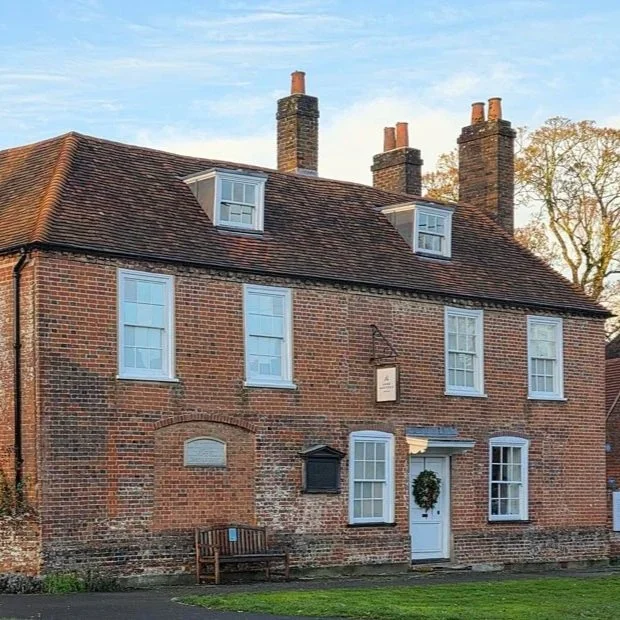
A transcription of the entire memoir, which comprises 41 handwritten pages, is available on the website of Jane Austen’s House Museum in Chawton. The original is now on display in the house. I’m looking forward to seeing it for myself.
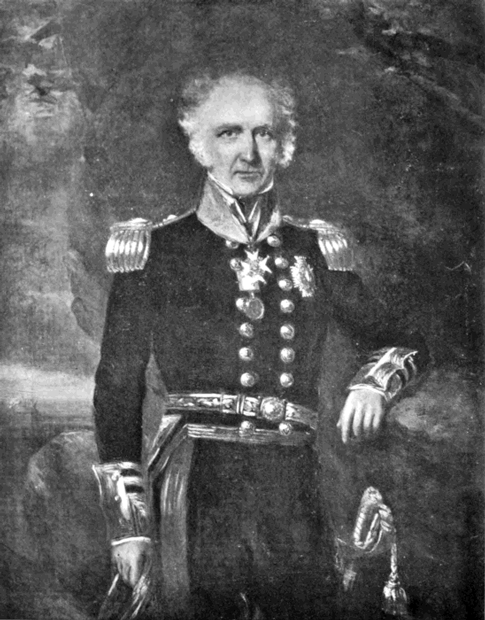
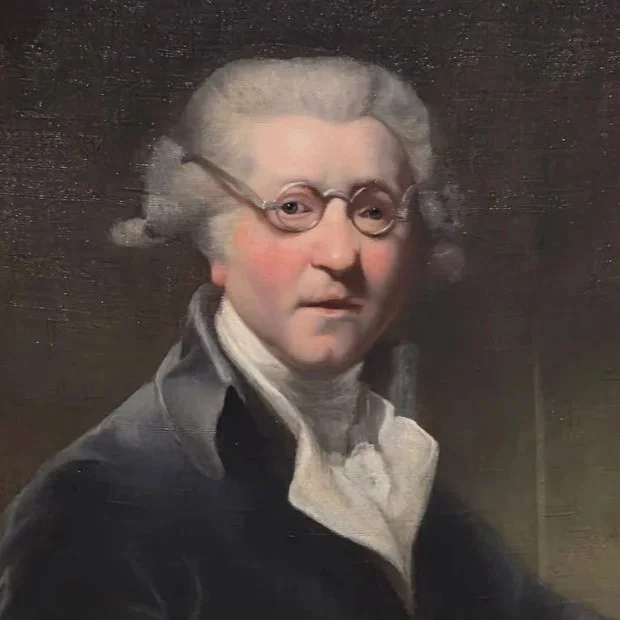
Vice-Admiral Sir Francis Austen, K.C.B
Andrew Knowles researches and writes about the late Georgian and Regency period. He’s also a freelance writer and editor for business. He lives with his wife Rachel, co-author of this blog, in the Dorset seaside town of Weymouth.
If you have enjoyed this blog and want to encourage us and help us to keep making our research freely available, please buy us a virtual cup of coffee by clicking the button below.
Sources
Transcript of Francis Austen memoir
Regency History
by Andrew & Rachel Knowles

We research and write about the late Georgian and Regency period.
Rachel also writes faith-based Regency romance with rich historical detail.