Book Review: Two Inches of Ivory
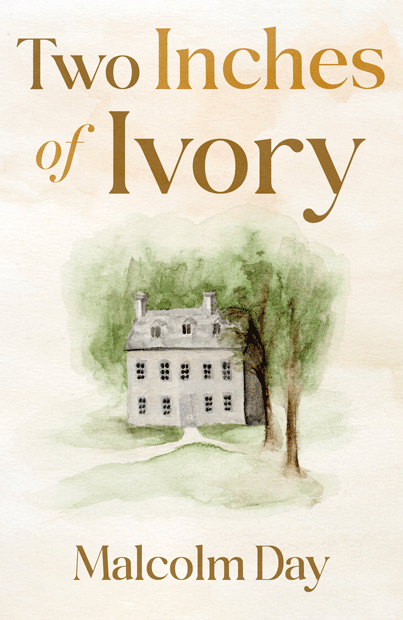
The real lives of Jane Austen and her family in times of turmoil
If you’re like me, you find it hard to keep track of the variety of characters who played a part in Jane Austen’s story. I’ve read two biographies of the author, helped edit a shortened life story, spent hours reading about her, and I finally feel that I’ve got a reasonable sense of the principal players she interacted with.
Malcolm Day’s book, Two Inches of Ivory, definitely helped me with this. His retelling of Jane’s life shifted some of the blurred figures into sharper focus, while also adding colour to the world in which they moved.
Two Inches of Ivory is a novel. In general, I don’t review novels. However, this caught my eye because it’s also a history book. In his introduction, Malcolm explains: “I wanted more than a factual recording… I wanted to be there… I wanted to get inside their heads.”
A hybrid book - history plus reasonable imagination
As he tells us about Jane’s life, and her world, Malcolm has kept as closely as he can to known facts. But by adopting the form of a novel he presents it as a series of scenes, where characters interact and speak to each other.
What we know about Jane comes from letters, journals and the later recollections of family and friends. It’s a historical record with gaps, and this is where Malcolm allows his imagination to take over.
The opening scene is set at Christmas, in Steventon, where little Cassy is crying and the heavily pregnant Mrs Austen is darning in her parlour. We’re given a glimpse into the busy household, and into the Austens’ concerns about education, the state of the monarchy and, the big issue for so many Georgian households, money.
I spoke to Malcolm Day while I was reading the book and he told me something of his process. Many of the words used by characters in the book, along with their motivations and ideas, come from those letters and journals that comprise the Austen history.
Not just another Jane Austen story
As the book’s subtitle states, Jane’s family lived through times of turmoil. For most of her adult life, Britain was at war with France. The king’s precarious health led to uncertainty in government and, in her final years, to the Regency.
Within her own family there was often disruption, such as her father’s sudden retirement to Bath, or the sudden death of a family member.
In the early sections of the book you could be mistaken for thinking it’s more about Jane’s colourful cousin, Eliza, whose ambitions to live in a French chateau were upset by the revolution and her husband’s execution. Her exotic story contrasts with Jane’s quiet existence in rural Hampshire.
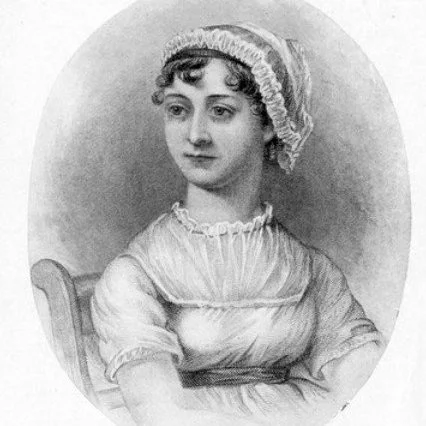
Jane Austen from A Memoir of Jane Austen by her nephew JE Austen Leigh 2nd edn 1871
What did Jane think?
I asked Malcolm what he wanted readers of his book to feel as they reached the end. His answer was: “That they know Jane Austen pretty well.”
That’s a challenge because, as he acknowledges, Jane was an enigmatic character. She’s left us with glimpses into her character, in letters and her other writing, but there are so many matters on which we don’t know what she thought.
As a novelist, Malcolm has provided possible answers to some of the questions we might have for Jane. We see her reach a decision about marrying Harris Bigg-Wither, after lying ‘awake, hour upon hour, tossing it about like a raft in a storm.’
We witness ‘a crumpling sound of heaping fabric’ - Jane’s involuntary reaction to the news that she’s required to move from her childhood home. This exposes, says Malcolm, her emotional vulnerability.
A vivid imagining of Jane’s story
Malcolm tells the story of Jane, and her family, in the present tense.
At this point Jane walks into the room rather purposefully, her head held up as if to make a declaration.
“There it is,” placing upon the table a manuscript pile, entitled Emma. “The next novel is finished.” To which all the family get up, one after another, and kiss her on the cheek with their congratulations.
“Amazing” says Cassy. “And in such quick time.”
This presentation is a continual reminder that the book is a novel, not a biography being told in the past tense. The story happens as you read it.
While it’s a novel, the book is packed with historical detail which Malcolm has worked hard to get right. There’s the occasional slip - such as references to Fanny Burney being at Windsor when she was actually in France - but only the most afflicted pedant would abandon reading in disgust.
Because this is a novel there are none of the extras associated with non-fiction, like a bibliography, index or illustrations. Personally, I’d have liked to see a historical note giving insights into where facts had blended with fiction, particularly at key moments in Jane’s life.
I enjoyed reading the authentic letters that Malcolm has included, although the choice of script takes a little getting used to.
I recommend this book to anyone who wants to learn more about Jane, her family, and the world they inhabited. It’s ideal if you find a strict biography too dry for your tastes, but it also has something to say to those of us who enjoy a more academic tome. I feel I’ve got to know Jane’s family a little better.
Two Inches of Ivory by Malcolm Day is published by Troubador.

Another imagining of Jane - her statue in Basingstoke, Hampshire
Andrew Knowles researches and writes about the late Georgian and Regency period. He’s also a freelance writer and editor for business. He lives with his wife Rachel, co-author of this blog, in the Dorset seaside town of Weymouth.
If you have enjoyed this blog and want to encourage us and help us to keep making our research freely available, please buy us a virtual cup of coffee by clicking the button below.
Regency History
by Andrew & Rachel Knowles

We research and write about the late Georgian and Regency period.
Rachel also writes faith-based Regency romance with rich historical detail.