Where Jane Austen Lived
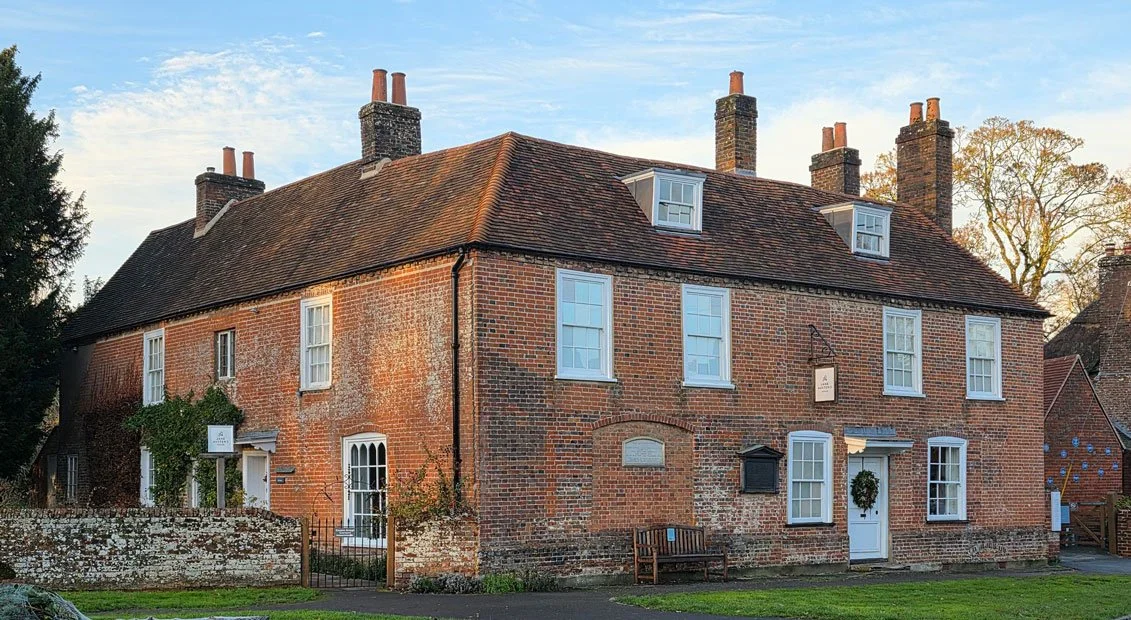
Chawton Cottage, where Jane Austen lived from 1809 until 1817.
Jane Austen spent most of her life in Hampshire. She was born in the village of Steventon on 16 December 1775. She lived in the same house for the next 25 years. In 1801 Jane moved, with her parents, to the city of Bath. In 1806 she moved again, this time to Southampton, accompanied by her mother and sister, Cassandra. Her father had died while they were in Bath.
In a final relocation, the three women took up residence in a cottage in the village of Chawton, in 1809. This is where Jane lived until the last few weeks of her life. By 1817 she was clearly unwell, and the family moved her to Winchester to get treatment.
It was here that she died, on 18 July 1817, aged 41.
Jane Austen’s homes were:
Steventon Rectory, Hampshire 1775-1801
4 Sydney Place, Bath 1801-1804
Green Park Buildings East, Bath 1804-1805
25 Gay Street, Bath 1805
Trim Street, Bath 1806
Castle Square, Southampton 1806-1809
Chawton Cottage, Hampshire 1809-1817
Jane died on 18 July 1817 while lodging in College Street, Winchester.
Steventon Rectory - Jane’s first home
Jane’s father, George Austen, was rector of the parish of Steventon, in Hampshire. Jane was born into the family home on 16 December 1775, the seventh of what would eventually be eight children.
She lived here until 1801, when her father decided it was time to retire from his work as a clergyman. He handed over the responsibilities of Steventon to his son, James, and this included handing over their house.
Steventon Rectory, or as it’s also known, Steventon Parsonage, was about a third of a mile from the church. Jane, and her family, must have walked up the hill to the church almost every Sunday for over 25 years.
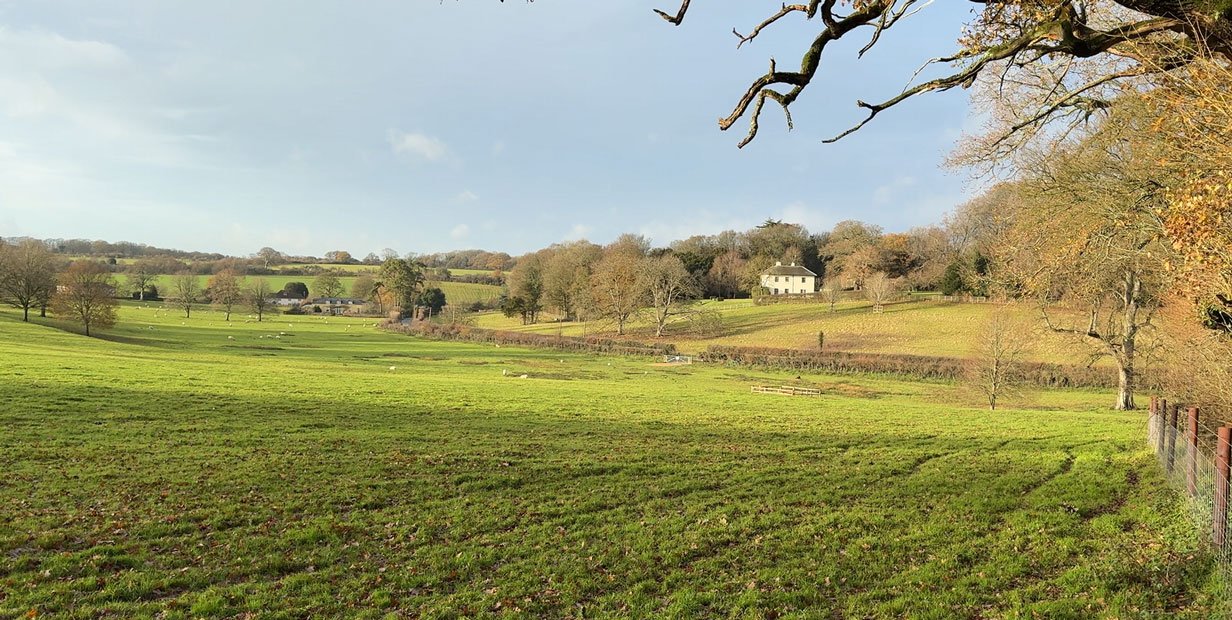
The site of Steventon Rectory. The tall tree in the field, on the right, was planted in its front garden.
Jane Austen’s nephew, James Edward Austen-Leigh, describes Steventon in his book A Memoir of Jane Austen, published in 1871. He says the area is ‘ not a picturesque country’ but admits ‘it has its beauties’. It’s ‘well clothed with woods and hedgerows’ and has attractive, winding lanes.
Of the Rectory he said:
The house itself stood in a shallow valley, surrounded by sloping meadows, well sprinkled with elm trees, at the end of a small village of cottages, each well provided with a garden, scattered about prettily on either side of the road.
It was sufficiently commodious to hold pupils in addition to a growing family, and was in those times considered to be above the average of parsonages; but the rooms were finished with less elegance than would now be found in the most ordinary dwellings.
No cornice marked the junction of wall and ceiling; while the beams which supported the upper floors projected into the rooms below in all their naked simplicity, covered only by a coat of paint or whitewash: accordingly it has since been considered unworthy of being the Rectory house of a family living, and about forty five years ago it was pulled down for the purpose of erecting a new house in a far better situation on the opposite side of the valley.
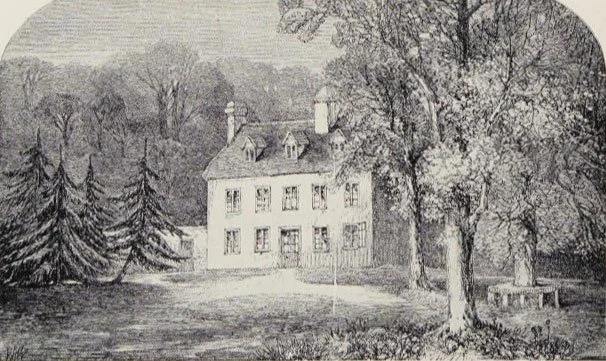
The house at Steventon, from A Memoir of Jane Austen.
Steventon Rectory today
Nothing remains of the house where Jane spent her formative years. It was demolished in the 1820s, at the request of Jane’s brother, Edward. He’d enjoyed the good fortune to become the landowner, having been adopted by Thomas and Catherine Knight. Edward’s son, William, had become rector and it was decided to build him a new house.
The site of Steventon Rectory is marked by a newly-constructed well, built as part of the 250th anniversary celebration of Jane’s birth. It’s on the site of the well that served the Rectory.
The well is in a field used for grazing animals. It’s private property and there’s no public access. However, it can be viewed from the road.
Jane’s homes in Bath
On his retirement, George Austen took his family to live in the city of Bath. Their first home was 4 Sydney Place, facing the fashionable Sydney Gardens. They arrived here in 1801 but by 1804 had moved on, to Green Park Buildings East. Here Jane’s father died on 21 January 1805.
Without her father’s income, Jane, her mother and her sister Cassandra, had very little money to live on. Their household also included family friend Martha Lloyd.
The four women moved to 25 Gay Street, where they rented rooms. From there they moved to lodgings in Trim Street, considered to be an undesirable area.
They were increasingly reliant on friends and family, and often spent time in their homes.
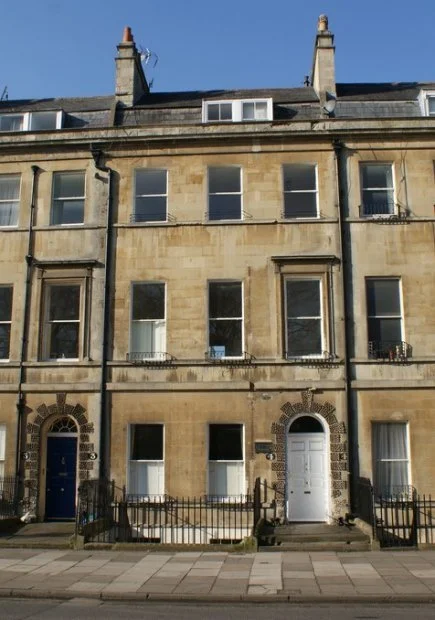
4 Sydney Place, the first house in Bath that George Austen leased for his family.
Jane’s homes in Bath today
The house at 4 Sydney Place is marked with a plaque. Green Park Buildings East was destroyed by bombing in the Second World War. I understand that the house on Trim Street is gone.
25 Gay Street has survived and is a commercial premises today.
Jane in Southampton
Jane, her sister, mother and Martha Lloyd were offered the opportunity to live with Frank Austen and his new wife. Frank was one of Jane’s brothers, and he was a serving officer in the Royal Navy. His home was in the port city of Southampton.
The house was in Castle Square, close to the medieval town walls, which still ran around much of the city.
This new arrangement lasted for three years. In 1809 Frank and his wife want to have a new home elsewhere. Another of Jane’s brothers, Edward, now offered them a home on one of his estates. They chose to move to Chawton, just a dozen or so miles from where they’d enjoyed so many years in Steventon.
James Edward Austen-Leigh recorded his memories of the house at Southampton. The house:
Had a pleasant garden, bounded on one side by the old city walls ; the top of this wall was sufficiently wide to afford a pleasant walk, with an extensive view, easily accessible to ladies by steps.
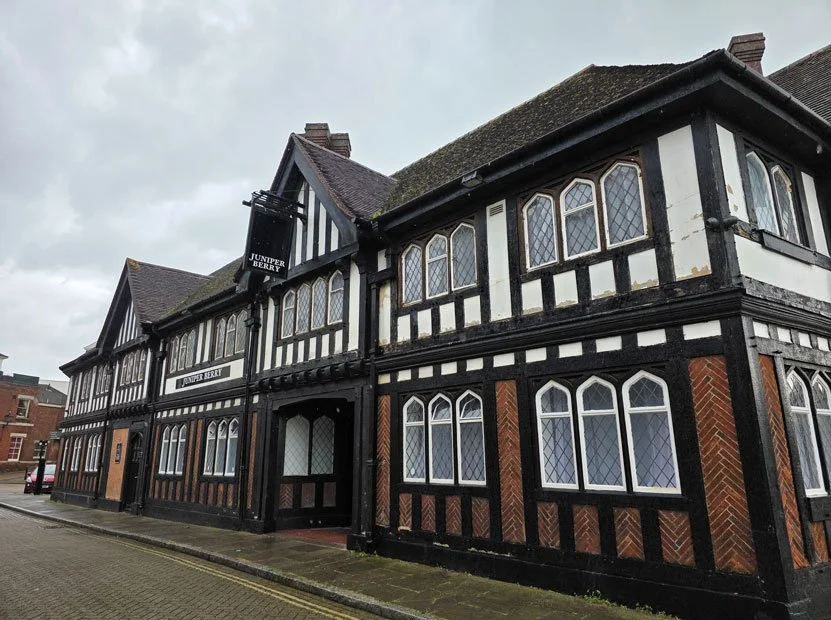
This stands on the site in Castle Square, formerly occupied by Jane Austen’s home.
Jane’s home in Southampton today
The old buildings in Castle Square in Southampton have long since been demolished, taking with it all evidence of the home that Jane shared with other members of her family.
A plaque on a building in Cement Street, indicating the spot where it once stood. You can still walk along the section of city walls that marked the end of their garden.
Chawton Cottage
Having inherited three large estates, Edward Knight (formerly Edward Austen) owned a number of grand houses and smaller properties. The house he made available to his mother, sisters and Martha, was a large cottage beside a busy road. He made several improvements to it before they moved in.
It was in Chawton Cottage that Jane revised her early works and wrote new novels. She lived here when the first four were published in her lifetime: Sense and Sensibility (1811), Pride and Prejudice (1813), Mansfield Park (1814) and Emma (1815).
Chawton was Jane’s final home. However, because her health was failing, she was sent to Winchester in May 1817 in the hope of being cured. She never returned.
James Edward Austen-Leigh described the cottage:
This house stood in the village of Chawton, about a mile from Alton, on the right hand side, just where the road to Winchester branches off from that to Gosport. It was so close to the road that the front door opened upon it.
A good-sized entrance and two sitting-rooms made the length of the house, all intended originally to look upon the road, but the large drawing-room window was blocked up and turned into a book-case, and another opened at the side which gave to view only turf and trees
ing other members of the family as frequent visitors. It was sufficiently well furnished ; everything inside and out was kept in good repair, and it was altogether a comfortable and ladylike establishment, though the means which supported it were not large.
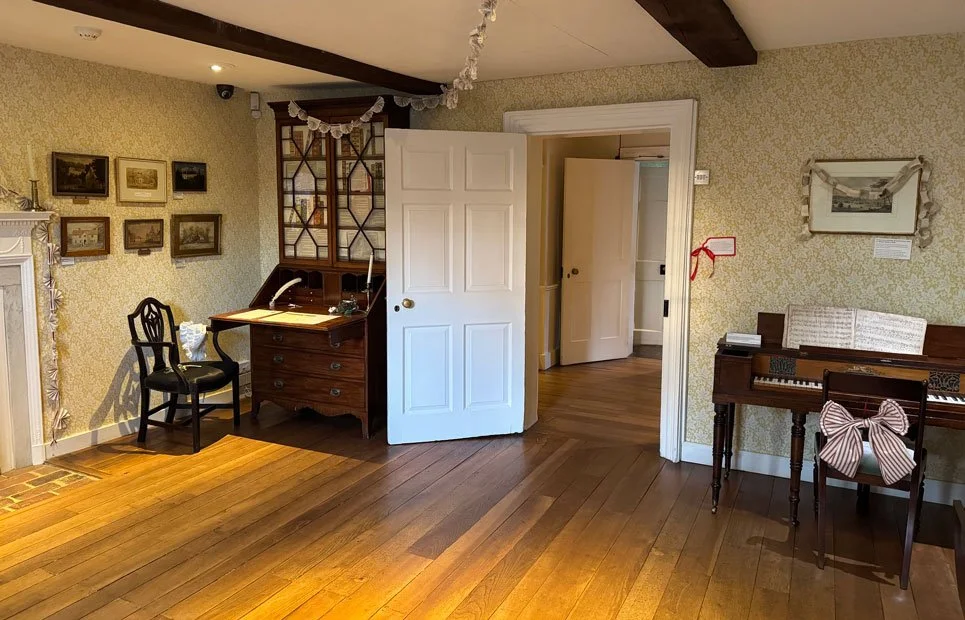
The cottage at Chawton has been restored to how it may have looked when Jane Austen lived there.
Chawton Cottage today
Chawton Cottage is now the Jane Austen House museum. It was purchased in the 1940s, for the purpose of creating a lasting memorial to Jane and her work. It’s now run as an independent charity.
College Street, Winchester
In late May 1817 Jane was taken to Winchester, where, she wrote, ‘there is a Hospital & capital Surgeons’.
She lodged in a house in College Street, where she described the accommodation as ‘very comfortable’.
We have a neat little Drawing-room with a Bow-window overlooking Dr Gabell’s Garden.
It was here that Jane Austen died on 18 July 1817.
College Street today
The house still stands and is marked with a plaque. It’s owned and used by Winchester College. During 2025 it was opened to the public for a few weeks, to allow Austen fans the opportunity to see where Jane spent her final days.
Andrew Knowles researches and writes about the late Georgian and Regency period. He’s also a freelance writer and editor for business. He lives with his wife Rachel, co-author of this blog, in the Dorset seaside town of Weymouth.
If you have enjoyed this blog and want to encourage us and help us to keep making our research freely available, please buy us a virtual cup of coffee by clicking the button below.
Regency History
by Andrew & Rachel Knowles

We research and write about the late Georgian and Regency period.
Rachel also writes faith-based Regency romance with rich historical detail.