HMS Ranger: The Cutter That Fought For Both Sides
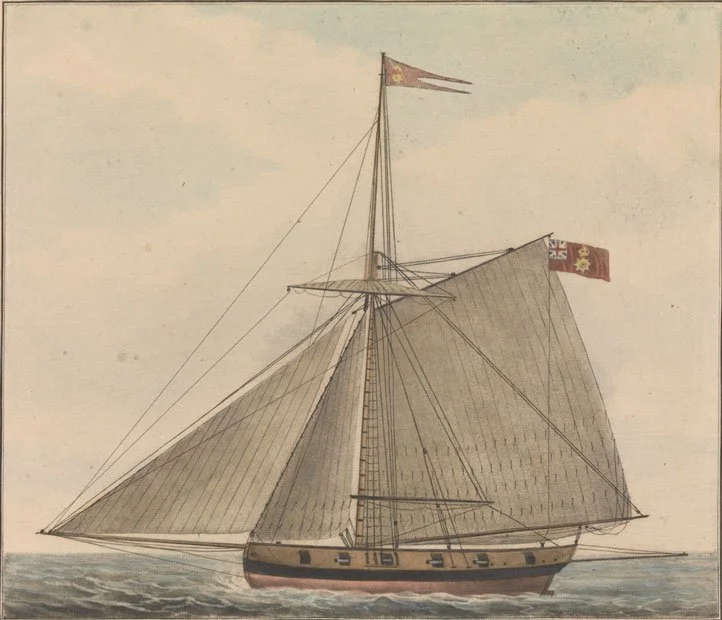
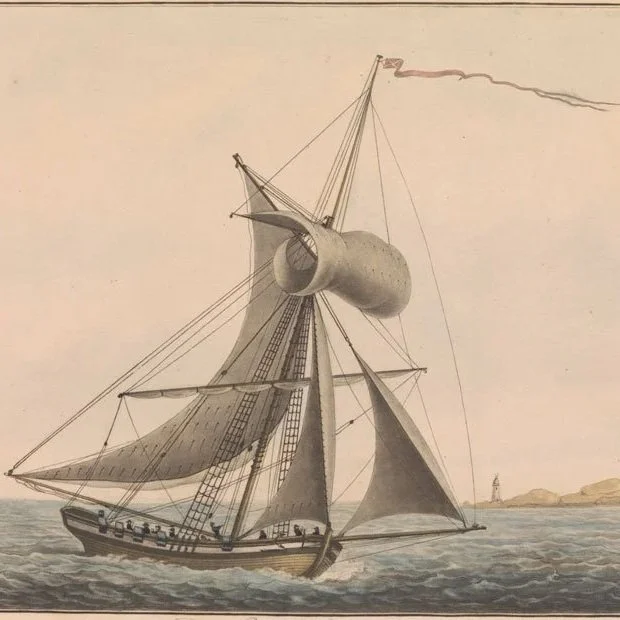
Excise cutter Resolution in 1794 - she was a similar size to Ranger (National Maritime Museum)
No one likes losing a ship.
A ship is a significant asset. Building and outfitting take time and money. No one wants to see that investment wasted by a ship being sunk. Perhaps even worse, particularly during wartime, is watching your enemy steal that investment.
Capture, rather than destruction, was the preferred objective of military sailors in the late Georgian and Regency era. Seizing an enemy vessel weakened their fleet and strengthened yours. That’s why prize money was paid to crews who captured ships, rather than sinking or burning them.
During the wars between Britain and France in the late 1700s and early 1800s, ships often changed hands. Four ships in the British fleet at Trafalgar had been captured from the French in previous engagements.
One of those ships, Tonnant, had changed hands three times. Built as a French warship, she’d been captured by the British in 1793. The French took her back a few months later, but lost her once more at the Battle of the Nile in 1798.
The ship that changed sides most often
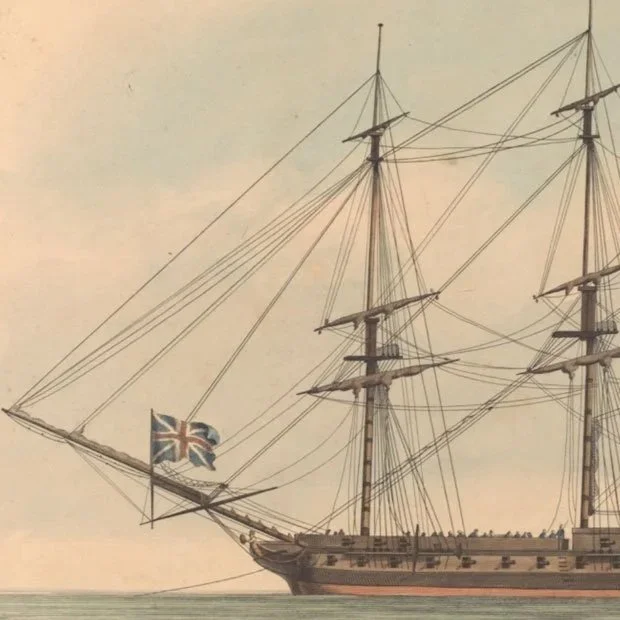
HMS Ranger is probably the Royal Navy ship that changed hands most often during the wars with France.
In this article I’ll drop the prefix HMS (His/Her Majesty’s Ship). It was only just coming into use in the late 1700s, and few accounts from the time use it.
The ship that became Ranger was originally Rose but was renamed Ranger when bought by the Navy in 1787.
She was a relatively small ship, 22m (74ft) long and 8m (25 ft) wide, with a single deck and a single mast. In The Naval Chronicle for January to July 1800 she’s described as a brig, having 16 guns. Over her active life her crew varied between 50 and 100 men.
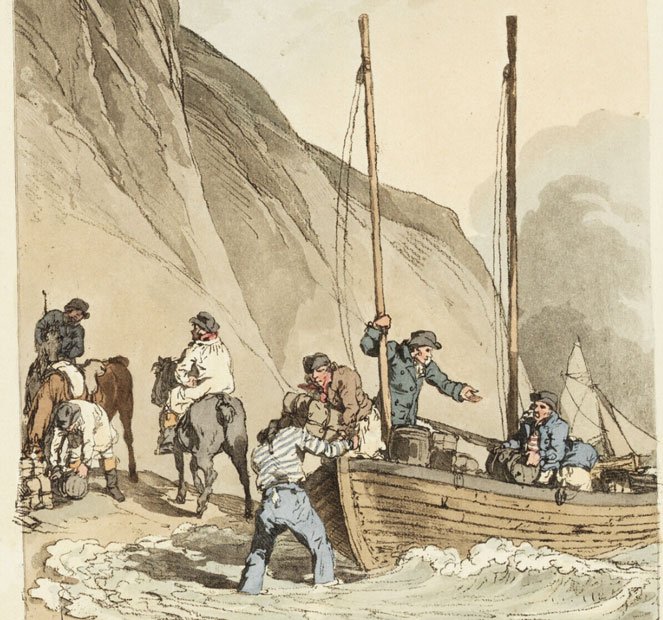
Smuggling was big business and the Royal Navy was one of the services that helped prevent it (John Atkinson 1808)
Chasing smugglers and witnessing battle
Ranger’s service began as a Revenue cutter. This meant patrolling the coast and chasing down vessels being used for smuggling. She was stationed off the south coast of England.
As a small ship, one of hundreds in the Royal Navy, she’s hard to find in the records of that time. She occasionally pops up in newspaper reports, such as this mention in the Hampshire Chronicle from June 1787, reporting on activities in Portsmouth harbour area:
Thursday morning went out of harbour to Spithead the Ranger cutter, and remains with the Adventure, Salisbury, Winchelsea, Scorpion and Expedition.
It may seem trivial for a newspaper to print that a particular ship left the harbour. But for people on land, who knew someone aboard ship, it might be the only news they had of their movements.
Another entry, in the Chelmsford Chronicle for February 1788, indicates Ranger had a success against smugglers:
The Ranger cutter, Lieut. Featherstone, has also seized a shallop with two hundred ankers on board, which is just arrived.
(Featherstone was in command, a shallops is a small sailing boat and ankers are barrels containing up to 10 gallons of liquid).
In late 1788 Ranger is noted as having arrived at Portsmouth, ‘to be fitted for foreign service.’ One newspaper states this will be in the Mediterranean, where there was a need for small vessels ‘to follow the Corsairs into shallow water, should they be troublesome.’
A few weeks later she sailed for Gibraltar. She was back in December, carrying dispatches for the Admiralty.
These reports give us a glimpse into the life of a small naval vessel. All this time it was commanded by Lieutenant Featherstone.
A few years later, in 1794, Lieutenant Cotgrave had taken over command. Ranger was part of the Channel Fleet that engaged the French at what became known as the Glorious First of June. This sea battle, in the Atlantic Ocean, resulted in France losing seven ships. As a smaller support vessel, Ranger was not directly involved in the fighting.
Just 11 days later, Ranger encountered the French again, and this time they weren’t so fortunate.
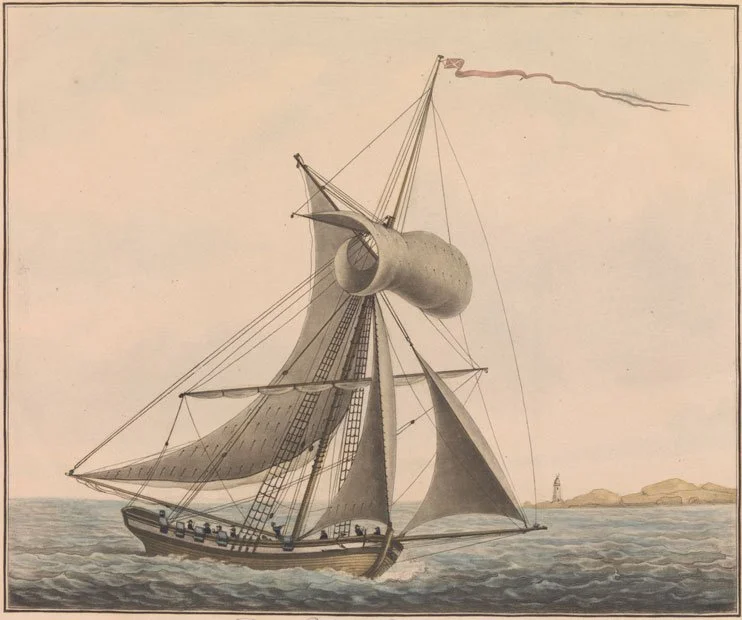
Excise cutter Badger in 1796 - she was a little smaller than Ranger (National Maritime Museum)
The first capture of Ranger
The French ship was Railleuse, whose 32 guns clearly outmatched Ranger. Unable to escape, Lieutenant Cotgrave surrendered.
In September 1795, 15 months after the capture, Cotgrave faced a court-martial for losing his ship. He was acquitted but felt he needed to inform the court of the ‘horrid and barbarous treatment he, his officers, and ship's company had experienced from the French.’
On the Ranger being boarded by the enemy, the Frenchmen drove Lieutenant Cotgrave, his officers and ship's company, out of the cutter into the boats of La Railleuse, with drawn swords. Lieutenant Cotgrave was one of the first on board the frigate. As soon as his head appeared above the gangway, two of the French seamen took him by the collar, hauled him with great violence up the side, and when on the gangway, threw him on the main deck, took off his hat, pulled out his cockade, and trampled on it. After suffering this indignity, they dragged him into the captain’s cabin. The second captain of La Railleuse, and a seaman by his orders, then pulled off his coat, waistcoat, shirt, boots, stockings, &c.
The entire crew was stripped of their belongings and forced to stand on deck, in the rain.
The French captain saying, ' that was the way he would treat all English slaves.'
On arriving at Brest, the English sailors had some measure of dignity restored to them.
In a minor twist, Railleuse converted to a privateer andwas captured by the Royal Navy in 1804. Renamed Antigua, she ended her days as a British prison ship.
Ranger becomes Le Ranger becomes Venturer
Ranger’s career in the French Navy was relatively short. In 1797, two years after the court-martial, Sir Edward Pellew, Captain of Indefatigable, wrote to the Admiralty stating:
October the 14th we made Tenerife; and at Midnight captured the French National Brig Corvette Le Ranger, of 14 Guns and 70 Men, conveying Dispatches to the West Indies, which were destroyed.
Ranger was back in English hands. But not for long, because the French captured her again on 2 November. She’d now changed hands three times, the same number as Tonnant, that fought at Trafalgar.
However, there was to be one more recapture. The London Gazette, in 1799, noted that the officers and company of HMS Galatea were due prize money for ‘the Capture of La Ranger French Privateer, on 6th November 1797.’
The recapture of Ranger presented a minor challenge to Royal Navy administrators. Following her capture by the French in 1794, her name had been given to another small ship.
The solution was to rename her. Ranger became Venturer. Or Venturier. Or La Venturer. Her name, in the few mentions I found, is not consistent.
In 1802, five years after her final recapture from the French, Venturer was sailed to Gibraltar. By now she was over 25 years old and, we assume, showing her age. The Royal Navy sold her off in early 1803.
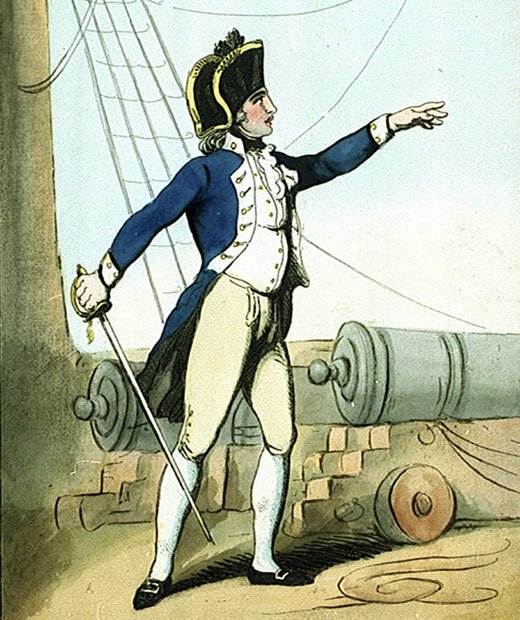
A Royal Navy lieutenant in 1799 - this was the rank that usually commanded a cutter (National Maritime Museum)
Telling Ranger’s story
In telling her story, I’m leaning on research by others, along with looking at some original sources. There’s an enthusiastic community of naval enthusiasts, who’ve documented the details of the hundreds of ships from the late 1700s and early 1800s.
They’ve spent hours poring over documents, such as the many editions of The Naval Chronicle. Published twice a year from 1799, it’s a wealth of information about the ships and men of the Royal Navy. While looking up Ranger I’ve followed in some of their footsteps. I like to see primary sources where I can.
Following the story of a single ship isn’t easy. Tracing Ranger was more difficult because the name was reused over and over. There were probably at least two other Rangers active in the late 1700s, one being an East Indiaman.
I can’t find any pictures of Ranger but that’s no surprise, given the nature of the ship. However, it’s also not clear what she looked like. In early reports she’s often described as a cutter, but in 1800, renamed Venturer, she’s called a brig.
What’s the difference? I’ll leave The Naval Chronicle to explain. It gives this definition.
Brigs are vessels with two masts. Commanders are also appointed to them, and sometime Lieutenants, They mount from 16 to 18 Guns.
Cutters, small Sloops with one mast, Schooners with two small masts, and Luggers with three small masts… mount from 14 Guns to 6. They are chiefly employed to carry dispatches, to attend on fleets, and to convey small craft along the coasts.
Did Ranger have one mast or two? Or, as one website suggested, did the French add a second mast, converting her from cutter to brig?
Ranger was just one of hundreds of small ships that formed the Royal Navy in the Revolutionary and Napoleonic Wars with France. She wasn’t involved in any major battles or events. But she has the distinction of probably being the ship which changed sides most often - and pursuing her history has been enjoyable and educational.
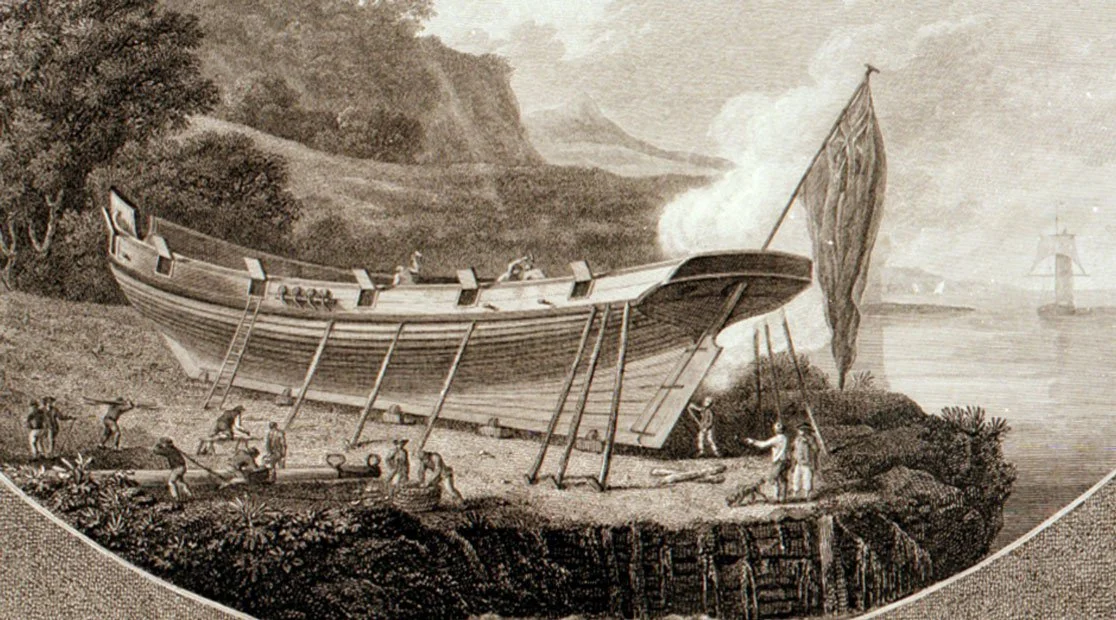
A cutter under construction in 1783 (National Maritime Museum)
Andrew Knowles researches and writes about the late Georgian and Regency period. He’s also a freelance writer and editor for business. He lives with his wife Rachel, co-author of this blog, in the Dorset seaside town of Weymouth.
If you have enjoyed this blog and want to encourage us and help us to keep making our research freely available, please buy us a virtual cup of coffee by clicking the button below.
Sources used include:
The Naval Chronicle
The London Gazette
Various newspapers
Regency History
by Andrew & Rachel Knowles
We research and write about the late Georgian and Regency period.
Rachel also writes faith-based Regency romance with rich historical detail.