An Emperor, a King and a Prince Visit the University of Oxford
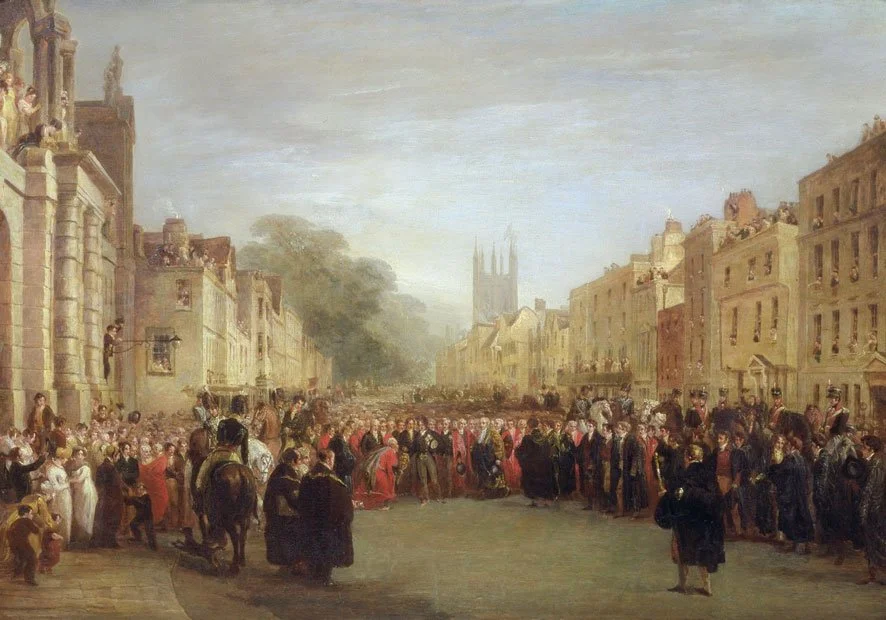
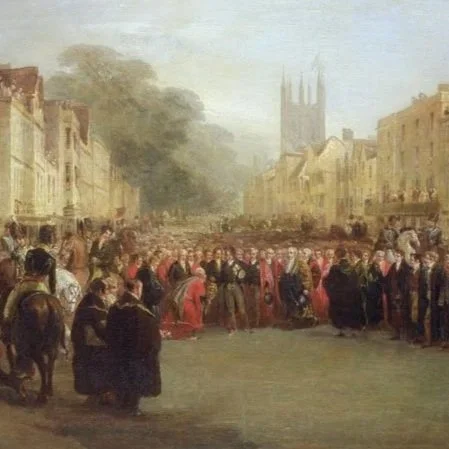
The Prince Regent’s Visit to Oxford in 1814 by George Jones
In June 1814 the Prince Regent went to the University of Oxford.
He didn’t go there to study. He was, however, awarded a degree.
Perhaps surprisingly, the first member of the British royal family to study a degree course and graduate from university was Charles III. He received a Bachelor of Arts from the University of Cambridge in 1970.
The Prince Regent’s degree, awarded in June 1814, was honorary.
That was a significant month for Britain. Peace had finally been secured in the long war against France, ending over two decades of almost continuous hostilities. More significantly, the great enemy, Napoleon Bonaparte, looked to be well and truly beaten. He’d abdicated his throne and gone into exile.
Victory by the nations allied against France was formally secured on 30 May 1814, when the Treaty of Paris was signed.
A long period of victory celebrations began. As part of these, the Prince Regent hosted a visit to Britain by the Emperor of Russia and the King of Prussia - vital allies in the war.
As part of their visit, they all took a trip to the University of Oxford.
This was, of course, all before Napoleon’s return to power and final defeat in 1815.
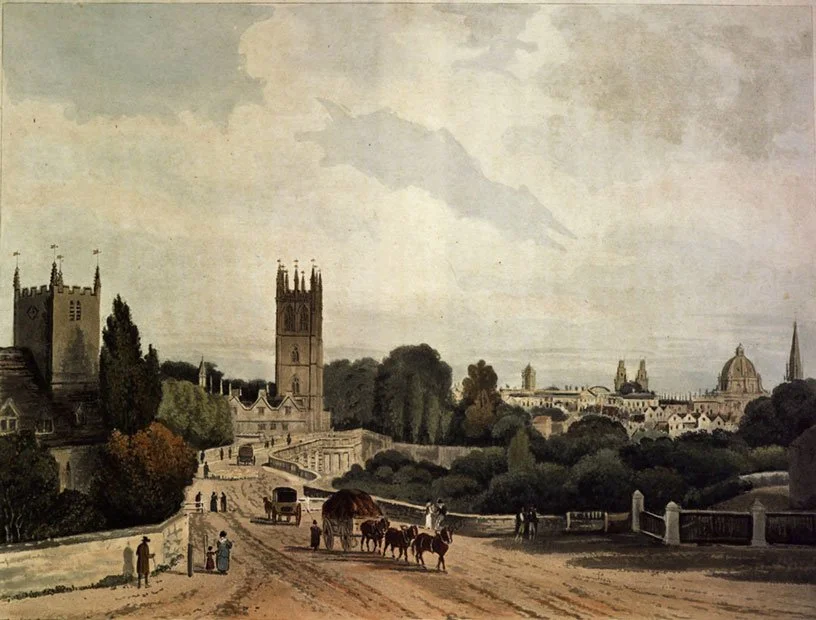
Entrance to Oxford in 1814, showing the Magdalen Bridge (Ackermann)
Celebrating the peace with honorary degrees
The Prince Regent’s official visit to the University of Oxford seems to have been organised at the last minute. The visitors arrived on 14 June 1814. The official account opens with a statement implying the university had just one week’s notice.
It’s worth noting that while the Prince Regent was not known for his academic achievements, he had already taken an interest in the work of the University of Oxford. In 1813 he endowed a Readership in Mineralogy.
Having been alerted to the official visit, on 11 June senior figures in the university proposed it was appropriate to present honorary degrees to the Emperor of Russia and the King of Prussia. Both would be made a Doctor in Civil Law by Diploma, the same degree the Prince Regent would receive. Convocation (a form of university government) met to agree to these.
These were not, however, the only honorary degrees dispensed as a result of the visit. The royal and imperial visitors were accompanied by a host of aristocrats and officers. On the morning of the ceremony to present the degrees, the Convocation met to agree at least seven more.
There were more to come. During the ceremony where the Emperor and King were presented with their degrees, it was put to the vote that one be awarded to the Duke of Wellington.
The official account includes the letter sent to Wellington with his diploma, and his reply sent the next day. Curiously, he received the diploma the day before it was voted on.
The moment the official visit was over, the Chancellor of the university proposed yet more of the recent visitors should be made Doctors of Law by Diploma (LL. D.). This required Convocation to meet yet again. One of the degrees was given to Field Marshal Blucher, who was accompanying the King of Prussia.
In all, around 40 honorary degrees were given out.
While the event looks to have been organised at short notice, it’s likely that honorary degrees had been offered at an earlier date.
The Prince Regent arrives at Oxford
The official account records that the Prince Regent announced his intention to arrive at Oxford at 12 o’clock on Tuesday 14 June 1814. When he reached the town:
The Chancellor, accompanied by His Royal Highness the Duke of York, and the whole University, proceeded from Magdalen College to meet the Prince Regent; and the Chancellor kneeling laid the Bedels' Staves at the Prince Regent's feet.
After a brief welcome speech and the presumably even shorter ‘most gracious answer’ from the Prince Regent, those gathered formed a procession along the High Street.
The plan had been for all those in the university to form up from 10.30am lining the street, with the official welcoming party on Magdalen Bridge. Here they would meet the Prince Regent.
However, in his Recollections, published decades later, George Cox notes that while the official account describes what was meant to happen, when the Prince arrived at the bridge there was no welcome party.
The Prince therefore advanced beyond the bridge, pulled up after passing the College gate, and actually waited for those who should have been, and really were (but in the wrong place), waiting for him. The University authorities, with the Chancellor, Lord Grenville, at their head, were quietly reposing in the hall of Magdalen College; the Mayor and the City authorities in the Common-room; — till at length at the cry of ' The Prince is waiting,' a disorderly, hasty rush took place through the cloisters and out of the College gate. There indeed it was found that the Regent (looking not very well pleased) had actually, according to arrangement, dismounted from his carriage.
Interestingly, newspaper reports describe the meeting as taking place on Magdalen Bridge, as planned. Were they using the official programme as their guide, or was Cox’s memory at fault?
Alexander I, Emperor of Russia, and Frederick William III, King of Prussia, arrived at Oxford while the Prince Regent was listening to a host of speeches in his honour.
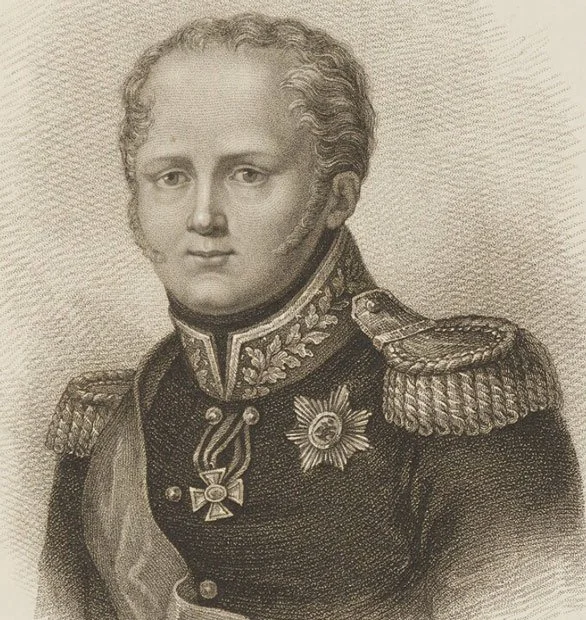
Alexander I, Emperor of Russia, in 1814
Tours, talks and tension
Next on this busy itinerary of this royal and imperial visit to Oxford was a tour of the university buildings and colleges. For this, the Prince Regent, along with the Duke of York and Prince of Orange, donned their Doctor in Civil Law by Diploma robes. The latter two had previously been given an honorary degree.
The tour included:
Christ Church
Merton College
Magdalen College
All Souls’ College
New College
Clarendon Printing House
Bodleian Library
All this was followed by a banquet in the Radcliffe Library for two hundred people. According to at least one newspaper, ‘the gallery was thrown open to the public, who ascended by the spiral staircase, and descended by a temporary wooden one erected externally.’
The following day (15 June) saw the formal awarding of honorary degrees at a ceremony that took place in the theatre at Christ Church. This involved listening to a lot of speeches, some given in Latin—the language of formal education. At that time, university lectures were given in Latin.
Most of those present would have been able to follow, at least in part, what was being said in Latin, even if they had never studied at a university. Early education, whether by private tutor or in one of the well-established schools, included a variety of languages.
The formal speeches were followed by readings of several poems written for the occasion. Some were in English, others in Latin or Greek.
All this formality and protocol helped to hide the simmering tensions between the Prince Regent and Emperor Alexander I of Russia. Their nations may have been allies against Napoleon, but that did not mean the two men had much regard for one another.
Awkward international relations
Perhaps much of the blame for the poor relations between the Prince Regent and the Emperor can be laid at the feet of the Emperor’s sister, the Grand Duchess Catherine Pavlovna of Oldenburg. She came to England three months before he did.
As an attractive, intelligent widow in her mid-twenties, her first meeting with the Prince Regent might have been expected to go well. It lasted fifteen minutes, after which she told Princess Lieven: “Your Prince is ill-bred.”
She also hated music and, when invited to dinner with the Prince Regent and his mother, Queen Charlotte, she silenced the musicians. According to Lieven, the Grand Duchess delighted in annoying the Prince Regent, and took every opportunity to do so.
The Grand Duchess accompanied her brother, the Emperor, on the visit to Oxford. Her dislike of music, and of the Prince Regent, prompted her request to silence the music being played before the formal diploma ceremony.
Catherine had considerable influence over her brother, the Emperor, and they wrote often. She coloured his judgement against the Prince Regent before he came to England.
Her silencing of the music at Oxford gives a hint of the needling relationship between the two men during the Oxford trip. The entire timing of the trip was, in Lieven’s opinion, intended to frustrate the Emperor.
Lieven tells us that when he was in London, his eye had been drawn to Lady Jersey. They shared a dislike of the Prince Regent.
To show her appreciation for the Emperor, Lady Jersey arranged a ball for him, on 15 June. In her journal Lieven wrote: ‘The Regent named for the 14th the visit to Oxford, evidently with a view to making the Emperor miss the ball.’
It didn’t quite work. On 15 June, following the diploma ceremony and a tour of the Radcliffe Observatory, both the Emperor and the King of Prussia took their leave of the Prince Regent. The Emperor hurried away to London, via Stowe.
He reached the city at 3am on 16 June, and immediately changed and went to Lady Jersey’s. She had kept the ball going in the hope he would turn up and ‘he danced the reel till five.’
The Prince Regent remained for one more evening. He signed his name in the Christ Church college book, indicating he was now a member. Finally, he demonstrated his linguistic abilities by translating from German a speech given by Field Marshal Blucher.
Letter written at the Prince Regent’s command after the visit
Whitehall, June 18, 1814.
MY LORD,
I HAVE received the commands of His Royal Highness the Prince Regent, to convey to Your Lordship, as Chancellor of the University of Oxford, His Royal Highness's warmest thanks for Your Lordship's great personal attention to His Royal Highness, during his late Visit to that University.
His Royal Highness further commands me to express to you, that he is fully sensible how much is to be attributed to Your Lordship's unremitting exertions, in maintaining good order and decorum, upon that occasion; and it gives me great satisfaction to be enabled to assure Your Lordship, that His Royal Highness's Visit to the University of Oxford has afforded His Royal Highness the highest gratification.
I have the Honour to be,
MY LORD, Your Lordship's
Most obedient humble Servant,
SIDMOUTH
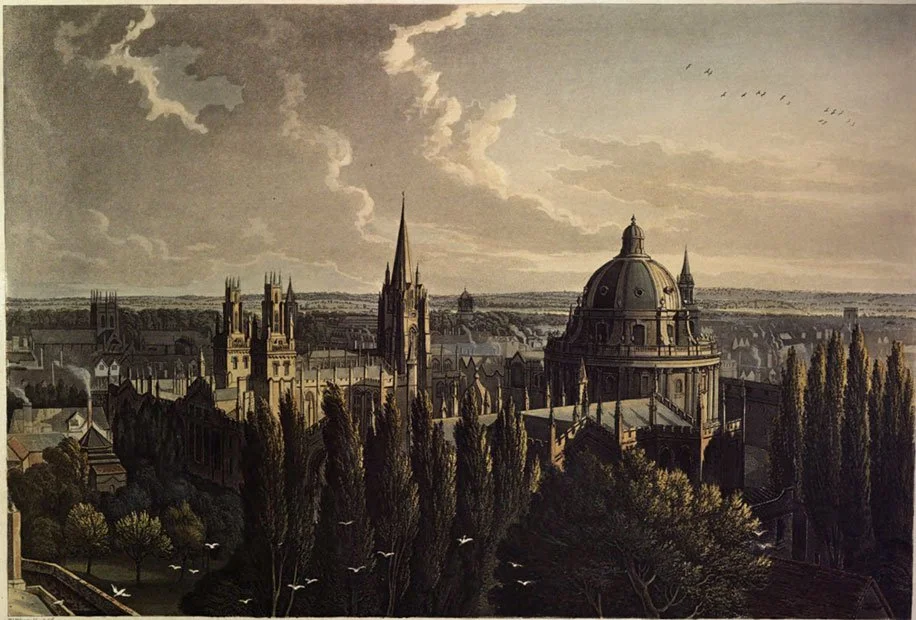
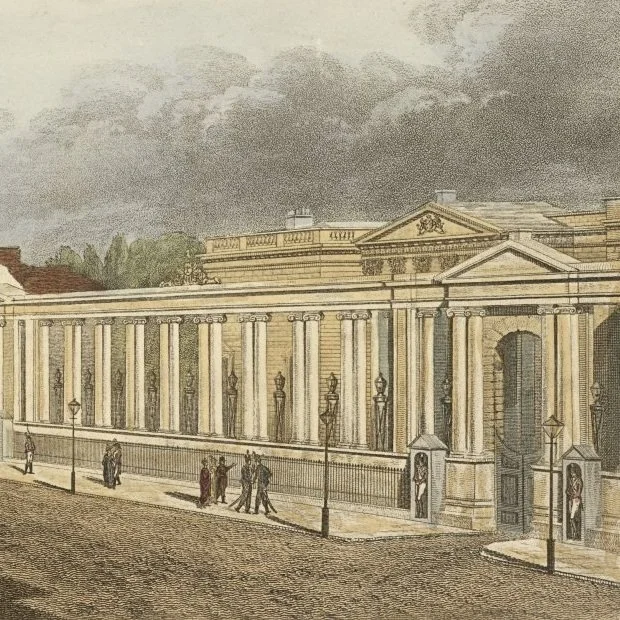
Oxford in 1814 (Ackermann)
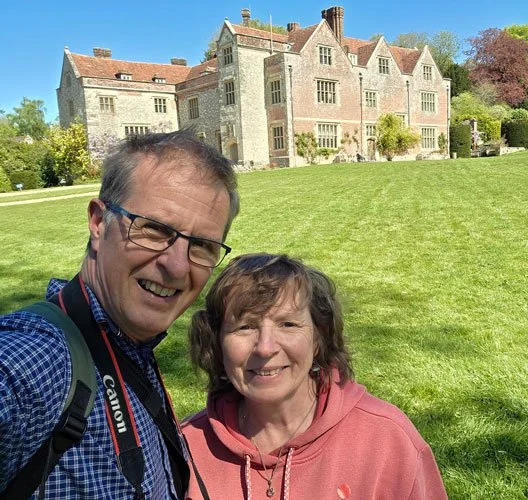
Andrew Knowles researches and writes about the late Georgian and Regency period. He’s also a freelance writer and editor for business. He lives with his wife Rachel, co-author of this blog, in the Dorset seaside town of Weymouth.
If you have enjoyed this blog and want to encourage us and help us to keep making our research freely available, please buy us a virtual cup of coffee by clicking the button below.
Sources used include:
Account of Prince Regent and Imperial Majesties Visit to University of Oxford (1815)
Recollections of Oxford by George V Cox (1870)
Scenes of Russian Court life, being the correspondence of Alexander I with his sister Catherine (1917)
Newspapers including The Sun and the Evening Mail
Regency History
by Andrew & Rachel Knowles
We research and write about the late Georgian and Regency period.
Rachel also writes faith-based Regency romance with rich historical detail.