Weymouth vs Brighton: Regency Resort Rivals

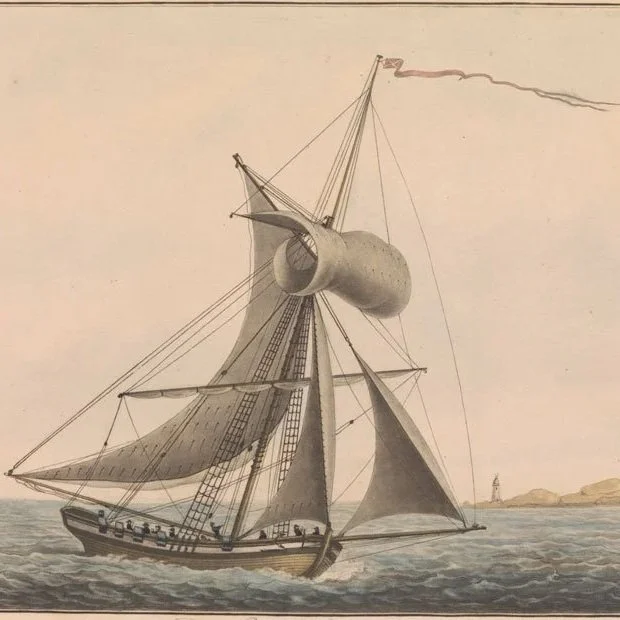
Weymouth, viewed from the Lookout, 1813. The king’s house, Gloucester House, is on the right.
Weymouth, our home town, is consistently rated as one of England’s top seaside destinations. For much of the Regency era it was the nation’s premier resort, thanks to the patronage of King George III.
But it’s the seaside town of Brighton, not Weymouth, that’s more closely associated with the Prince Regent himself. That’s where he built his Royal Pavilion, where today’s visitors are invited to ‘bask in Regency splendour’.
What’s the story behind these two rival resorts, made famous by the royal father and son?
Weymouth: historic harbour town becomes health resort
Seabathing is good for your health. So said influential voices in the medical profession in the mid-18th century. Weymouth, with its sheltered bay and gently shelving beach was an ideal spot.
Entrepreneurs began investing in the town’s facilities. The money was welcomed, because what had been an important medieval port had fallen on hard times.
An early health tourist was Ralph Allen, himself an entrepreneur who’d made a fortune from the postal system and Bath stone. He bought a house on the harbourside in 1750.
Allen attracted other men of wealth and influence, including the Duke of Gloucester, brother to George III. Delighted by the town, the duke built a house of his own on the seafront, in 1780.
This royal family connection with the town meant that in 1789, when George III needed somewhere to recover from a bout of madness, Weymouth was an obvious choice because he could use his brother’s seafront house.

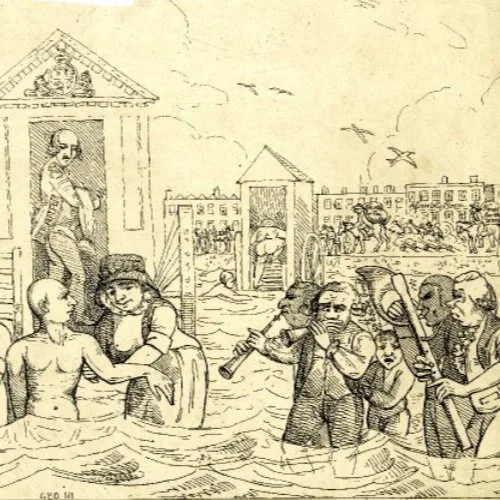
A Royal Dipping - illustrating George III’s first venture into the sea at Weymouth in July 1789
Weymouth: a resort fit for a king
George III loved Weymouth. He came back, with his family and staff, almost every year until 1805. He bought his brother’s house.
George and his wife, Queen Charlotte, enjoyed entertainments laid on by the town. The theatre and assembly rooms were regularly visited. Like today’s tourists they enjoyed excursions to Lulworth, Sherborne and Corfe Castles.
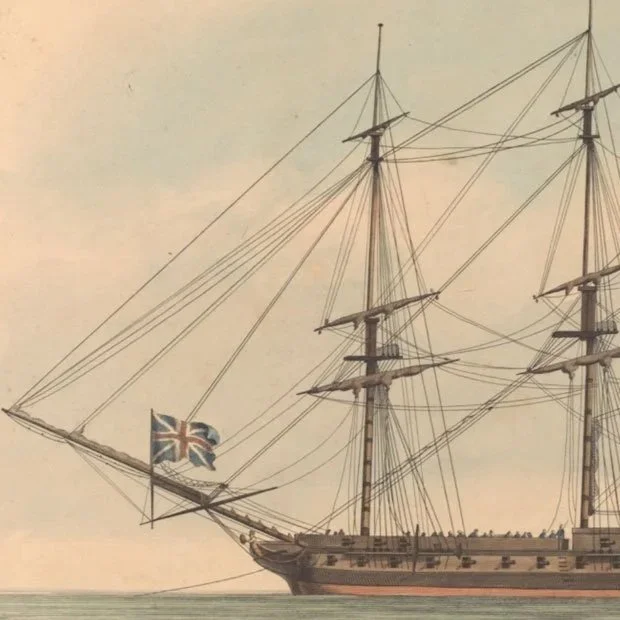
The king often inspected troops stationed in the area, and were welcomed on board Royal Navy ships. The royal family often trailed behind their parents - particularly the princesses, who were given little opportunity to marry.
However, the king’s eldest son, George Prince of Wales, was keen to escape the confines of family life.
Brighton: farmhouse to fantasy palace
Like his father, George, Prince of Wales, was also advised to try seabathing for his health. His uncle, the Duke of Cumberland, invited the young prince to Brighton. The two men both enjoyed extravagant, licentious lifestyles.
The Prince of Wales began spending a lot of time in Brighton. In 1786 he rented a farmhouse, which he later bought and converted into a sequence of increasingly grand villas, which became the Marine Pavilion.
Today it’s the Royal Pavilion, blending exotic architectural features into a skyline of towers and domes. The inside was described as being one of magnificence and luxury.
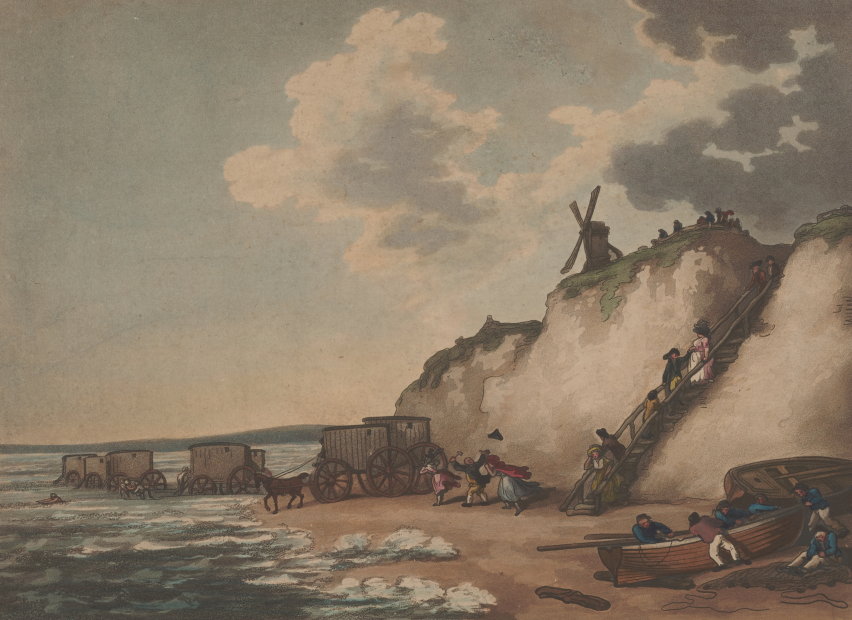
Bathing machines in Brighton by T Rowlandson (1790)
Brighton: fashion, freedom and feminine company
For the Prince, Brighton had twin advantages over Weymouth. It was closer to London, and it was distant from his father, the king.
The Georges, father and son, did not see eye to eye on almost anything. The king was a man of simple tastes and preferred an austere lifestyle. He enjoyed talking with farmers and spending time with his family. Unlike almost all the other men in his family, he did not keep a mistress.
The Prince, on the other hand, loved to party. He spent money freely and was a leader of fashion. Attractive women caught his eye and he installed Mrs Fitzherbert in Brighton - they had a private, illegal marriage. That did not stop him taking other mistresses.
Jane Austen on Weymouth and Brighton
From about 30 years the resorts were effectively rivals. One represented the old guard, the other the young upstarts. Weymouth was about function and duty, Brighton was fun and frivolous.
Jane Austen, it seems, had a poor opinion of both and visited neither. Her sister, Cassandra, spent some time in Weymouth and shared some of her experience in a letter to Jane.
Jane replied with typical humor.
Your account of Weymouth contains nothing which strikes me so forcibly as there being no ice in the town; for every other vexation I was in some measure prepared, & particularly for your disappointment in not seeing the Royal family go on board on Tuesday, having already heard from Mr Crawford that he had seen you in the very act of being too late. But for there being no ice, what could prepare me?
She goes on to say that Weymouth must be a ‘shocking place’ and she was glad not to have visited.
Jane was equally unenthusiastic about Brighton. In a letter she wrote of dreading the idea of toing there, and hoped ‘that something may happen to prevent it.’
Both resorts were, in her mind, full of the fashionably pretentious people she enjoyed poking fun at in her writing, but wanted to avoid in person.

Part of Weymouth’s Georgian seafront today - a legacy of George III’s patronage
Weymouth vs Brighton: which one won?
George III preferred Weymouth. His son, who became George IV preferred Brighton. Inevitably, the favourite of the younger man became the winning town, in that it retained royal favour for longer.
George III took his last holiday in Weymouth in 1805. Gloucester House remained a royal possession for another 15 years. Princess Charlotte, daughter of the Prince of Wales, made use of it in 1815, enjoying an extended stay from July to 1 January 1816.
Weymouth’s royal connection ended in 1820, when George, Prince of Wales, was finally promoted from Regent to King. He sold Gloucester House, the old king’s holiday home on the seafront.
Around the same time the new king, George IV, oversaw the finishing touches being added to his grand pavilion in Brighton. It was completed in 1823.
George’s health had been the cause of his early visits to the seaside. Now he was king, his health kept him away. Vastly overweight and reluctant to be seen in public, George IV preferred to hide himself away in Windsor. In his final years he made very few visits to Brighton.
After the king’s death in 1830, the town retained its royal connection for another two decades. But in 1850 Queen Victoria sold the Royal Pavilion.
Weymouth and Brighton today
Because of their south coast location, both Weymouth and Brighton were destined to be popular seaside resorts. The royal connection has shaped the look of both, thanks to elegant seafront terraces built to house fashionable visitors.
Gloucester House and the Royal Pavilion still stand. The former has been extended and converted into flats. The Pavilion, however, has been restored to its Regency splendor and is now a museum.
Many of this season’s holiday visitors to our home town of Weymouth are largely unaware of resort’s royal history. But, like George III, most will enjoy our beaches and clifftop walks.

Royal Pavilion, Brighton (2011)
Andrew Knowles researches and writes about the late Georgian and Regency period. He’s also a freelance writer and editor for business. He lives with his wife Rachel, co-author of this blog, in the Dorset seaside town of Weymouth.
If you have enjoyed this blog and want to encourage us and help us to keep making our research freely available, please buy us a virtual cup of coffee by clicking the button below.
Regency History
by Andrew & Rachel Knowles

We research and write about the late Georgian and Regency period.
Rachel also writes faith-based Regency romance with rich historical detail.