Trapped in France: Bertie Greatheed in Paris 1803
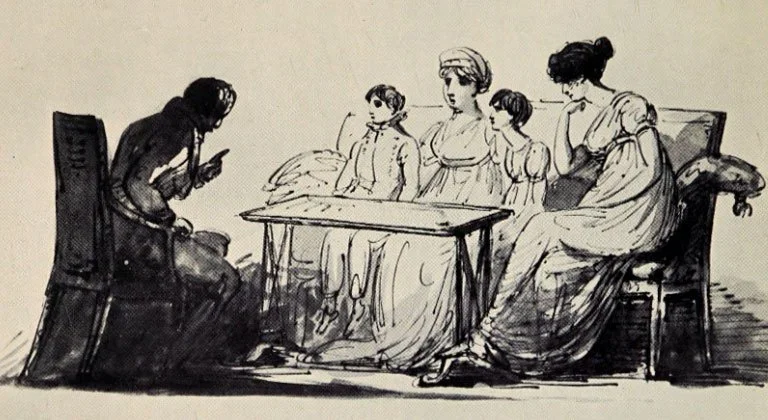
At the Hotel De L’Europe. Mrs Greatheed is in the middle of a family of other guests. Bertie was glad to leave: ‘Six months of cold, & heat, and bad living, & bad beds, and expence’
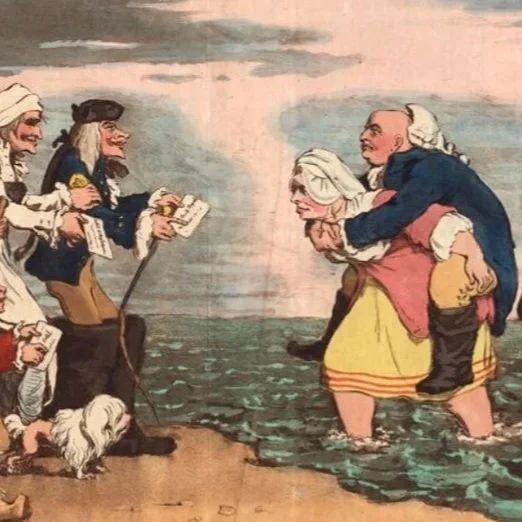
Every spring and summer, thousands of British families rush to make the sea crossing to France, to go on holiday.
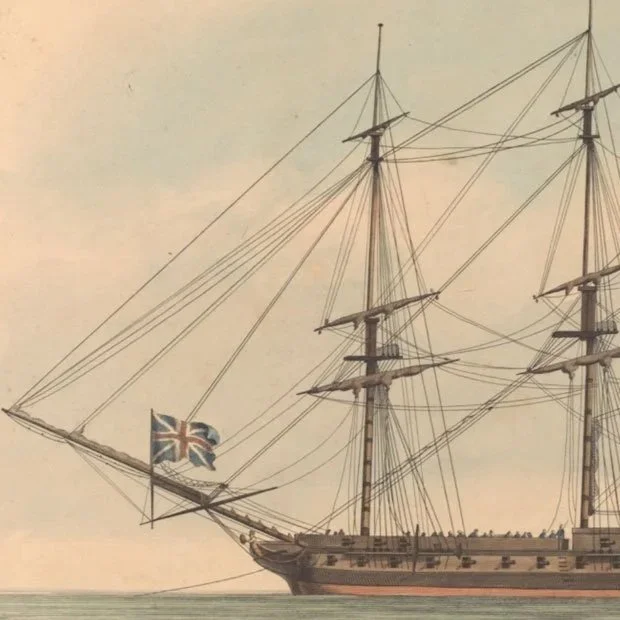
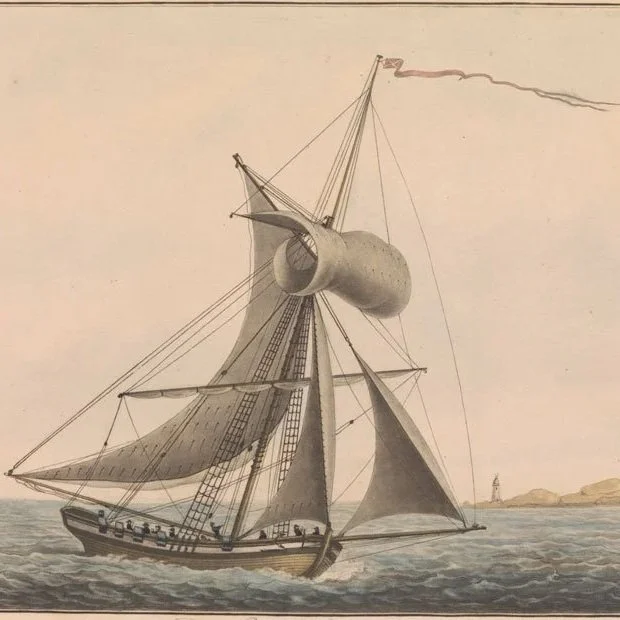
More than two hundred years ago, in 1803, British tourists were even keener to board packet boats and make the six to twelve hour journey across the English Channel. (It could take even longer on a bad day.)
Keen to travel in Europe, they had endured more than one winter of being cooped up in Britain. Travel to the Continent had been difficult for a decade, because of the war with France begun in 1793.
Peace made travel possible
Bertie Greatheed, with his wife, Anne, and adult son (also Bertie) arrived in Paris at the very end of 1802.
The Treaty of Amiens, which ended the war between Britain and France, had been signed months earlier, on 25 March 1802. Even before Joseph Bonaparte, Napoleon’s brother, scratched his signature, Britons were crossing the Channel in growing numbers.
Travel into Europe wasn’t impossible during the ten years of war. The Greatheeds were among those who’d sailed to German ports, going on to visit Berlin, Vienna and Dresden, in the late 1790s. Tourists could go around, rather than through, France.
But most people stayed safely in Britain, out of the way of the armies on the move in mainland Europe.
Springtime in Paris 1803
I scarce know what we did. Nothing useful nor nothing pleasant. House hunting in bad weather is not amusing.
Bertie (senior) kept a journal of the family visit to Paris. Arriving in late December, the family endured a cold winter.
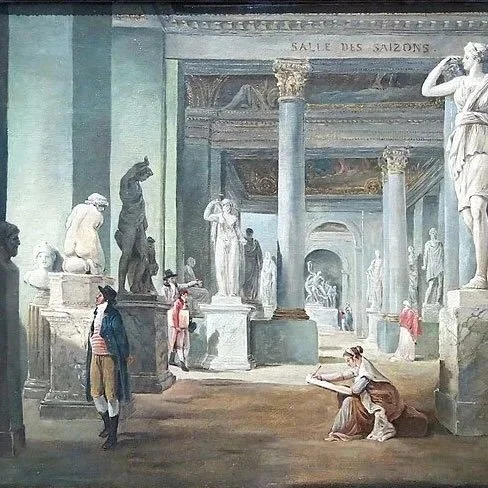
As they waited for spring, with its promise of onward travel to Switzerland, they had plenty to keep them busy. Bertie (junior) was a keen artist, so they often visited the gallery at the Louvre.
There was no shortage of fellow Brits to provide social entertainment. They went to the opera and theatre. A ‘must do’, for the well-connected, was an audience with Napoleon Bonaparte himself.
His hair was unpowderd & neglected, his countenance cheerful, fatter & not so sallow as I expected, his eyes I thought light, & not so large, nor so melancholy, nor so sunk as I expected… his person is not only little but, I think, mean.
The Greatheeds got to know the Bonapartes quite well. They met Napoleon’s mother several times, and had conversations with others close to the French ruler. Bertie Jnr was given the opportunity to paint a portrait of the great man himself.
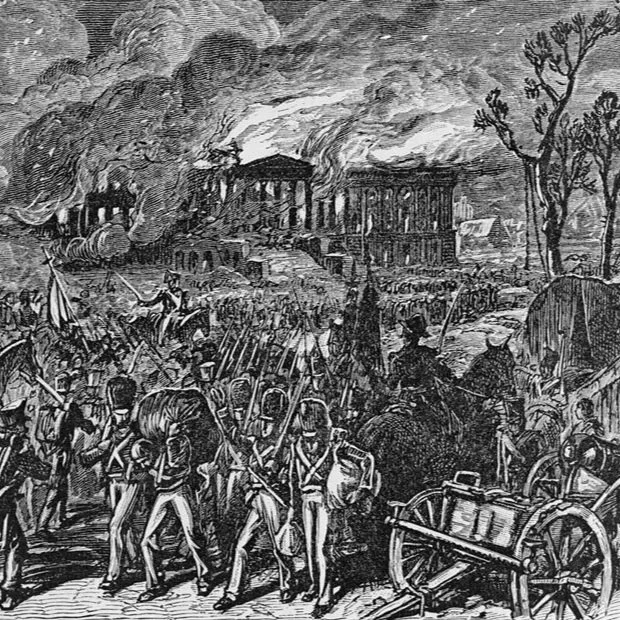
While the relations with the Bonapartes seemed to be warming, those between Britain and France were cooling. Springtime in Paris brought talk of a return to war.
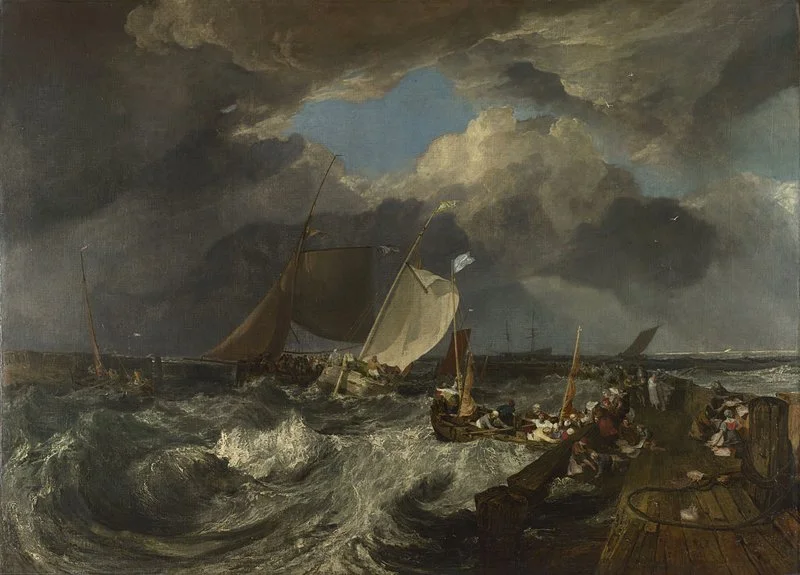
Artist JMW Turner was one of the many who crossed from England to France during the peace of 1802-3. This is his representation of arriving at Calais, in a storm.
Rumours, hopes and disappointment
On March 24 1803 Bertie Snr noted in his journal:
The weather delightful. The rumours of War rather abating: indeed here I see no indication for it, but much indifference about the matter.
A month later he wrote, ‘The buzz of War is everywhere’. British travellers were leaving Paris, most going home, rather than heading onwards into Europe. Bertie records his increasing concern that those going to Switzerland would find their stay ‘disagreeable, and their return to England difficult’.
By early May the Greatheeds were anxious to be on their way.
We have seen everything; our curiosity is quite satisfied, and there is not a single person belonging to this country we ever wish to meet again.
Bertie remained hopeful that war would be averted. In mid-May he noted that ‘the rumour of peace is more strong than ever’. His son continued to paint, and completion of his projects seems to be why the family lingered in Paris.
Anyone travelling from Paris to the coast had to carry a document giving permission to travel. On Monday 23 May Bertie Snr went to collect his, only to be told he and his family were all prisoners of war. They could not leave.
A holiday spoiled - sort of
Bertie Snr’s hopes of taking his wife and son on a Grand Tour, to Switzerland and perhaps on to Italy, were dashed. All British men in France aged between 18 and 60 were considered a threat, and therefore were prisoners.
Our image of prisoners of war is coloured by World War Two tales of barbed wire fences, guard towers and daring attempts to escape. For those now trapped in France, the experience was very different.
Most tourists were people of wealth and status. It was reckoned such people could be trusted to respect the rules of their imprisonment by not trying to escape. They were not locked up, but allowed considerable freedom of movement.
Regular visits to the police, to check in, were perhaps the biggest inconvenience. From Bertie’s complaints about the pettiness of French bureaucracy, these were not a brief formality.
Social visits continued, although much of the talk was about obtaining the correct permissions to leave. Bertie Jnr maintained his visits to the Louvre. The family kept up their sightseeing (despite having already ‘seen everything’).
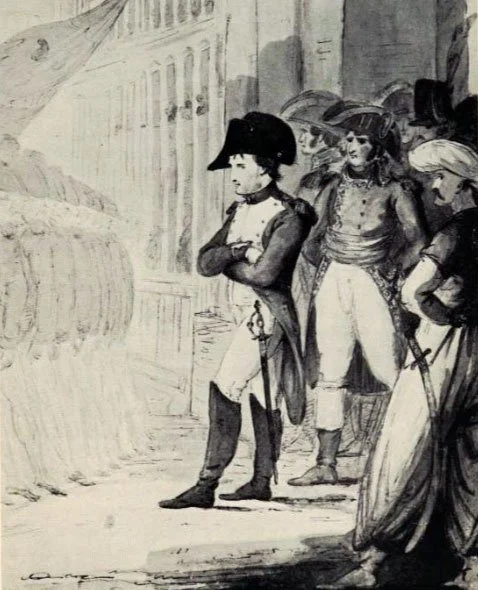
Napoleon at a parade, by Bertie Greatheed Jnr 1803. It seems Bertie made many sketches of the French leader.
Permission to depart
The escape route from Paris, if it can be called that, was via Germany. It required official permission to leave, which a number of British travellers obtained over the summer. It seems to have depended on who you knew, and who they knew, and so on.
On 22 September, more than four months after being declared prisoners, the Greatheeds heard a rumour that permission to leave would be granted.
Bertie wrote: ‘Has our letter to Madme Bonaparte [Napoleon’s mother] any share in this permission?’
Almost two weeks later the Greatheeds received their passports, which were their official permission to travel. They continued to linger in Paris and Anne Greatheed had a final meeting with Napoleon’s mother, which is perhaps a surprise, under the circumstances.
On 12 October 1803 the Greatheeds left Paris, crossing a bridge into Germany and freedom 10 days later.
We felt extreme pleasure in crossing it… it seemed as if a load of dependance was taken off our shoulders; we were no longer liable to the caprices of a wayward despot, nor the obsequious moroseness of his creatures in office, both civil and military. We have now been for 5 months without claim or right in a state of uncertainty and exposed to every insult. I hope never to experience a similar situation…
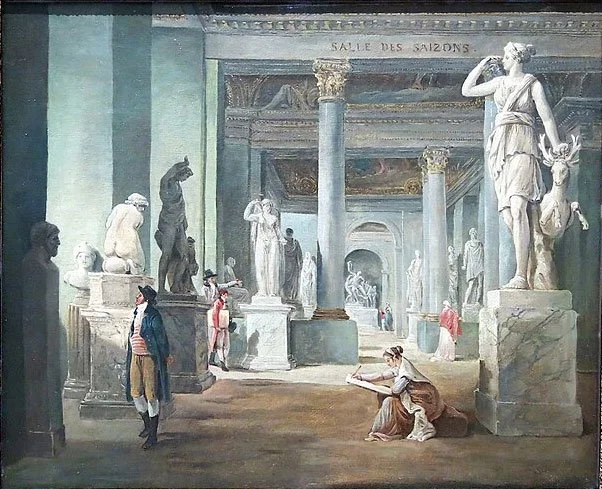
The Salle des Saisons in the Louvre by Hubert Robert. Napoleon’s armies added artwork from across Europe.
Andrew Knowles researches and writes about the late Georgian and Regency period. He’s also a freelance writer and editor for business. He lives with his wife Rachel, co-author of this blog, in the Dorset seaside town of Weymouth.
If you have enjoyed this blog and want to encourage us and help us to keep making our research freely available, please buy us a virtual cup of coffee by clicking the button below.
Notes
Sources include An Englishman in Paris 1803 by Bertie Greatheed (1953).
Regency History
by Andrew & Rachel Knowles

We research and write about the late Georgian and Regency period.
Rachel also writes faith-based Regency romance with rich historical detail.