Maria Graham: Researcher, Writer, Traveller
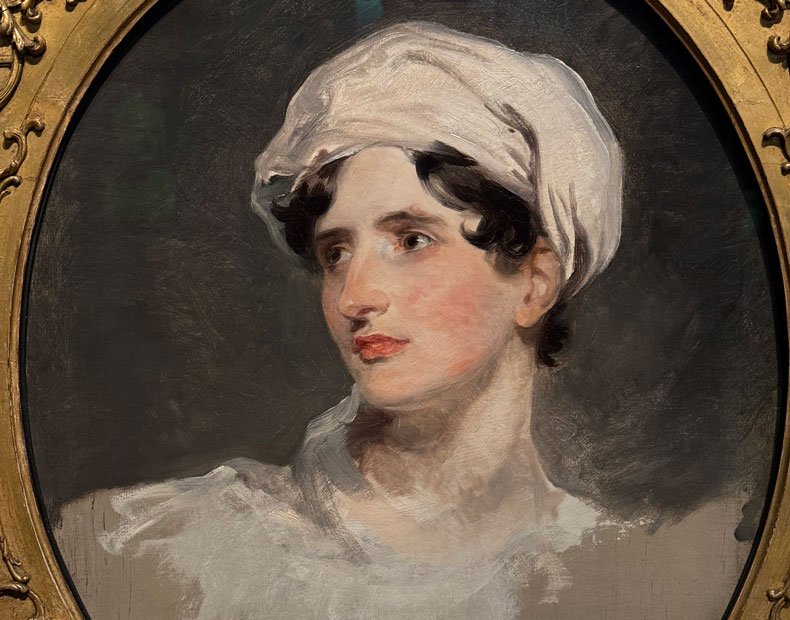
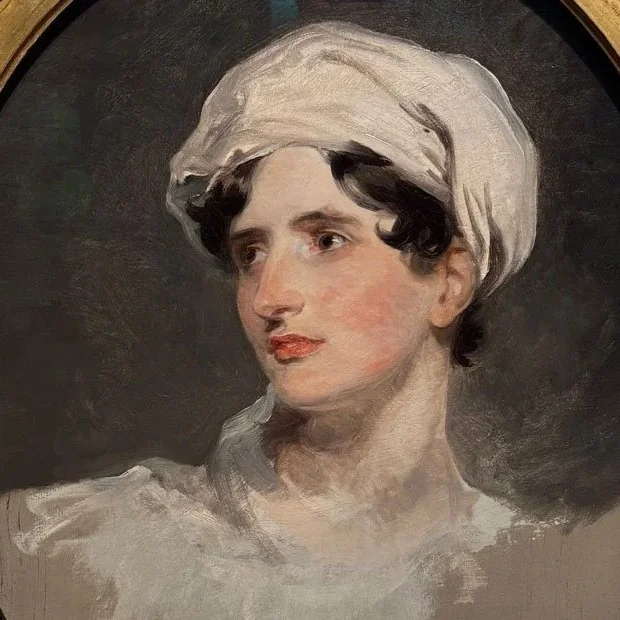
Maria Graham by Sir Thomas Lawrence (National Portrait Gallery)
It sounds like a classic Regency romance. The father of a spirited young woman takes her to India in the hope she will find a suitor among the wealthy British community. During the journey she falls in love with a naval officer and on arrival in India, they marry.
In the romance they sail off into the sunset to live happily ever after. In reality, their lives continue, often separately because of his naval duties. Twelve years after their marriage, they sail to South America together on a ship he captains. By the time they arrive, she’s a widow. Her husband has died of a fever.
This is how Maria Graham, aged 37, found herself thousands of miles away from everyone she knew.
Born in 1785 in Cumbria, Maria married Thomas Graham in India in 1809. He died in 1822, leaving her as a widow in Chile.
Author of A Residence in India
Maria’s married life in India lasted less than two years. She and her husband returned to England in 1811. In that time she recorded much of what she saw, and her observations were published in England in 1813 as A Journal of a Residence in India.
She felt that her book filled a gap in the market. Given the great number of ‘intelligent Englishmen’ who had visited India, she wrote:
It is remarkable that there is no work in our language containing such a popular and comprehensive view of its scenery and monuments, and of the manners and habits of its natives and resident colonists.
Maria was clearly inquisitive about the new world she found herself living in. She provides detailed descriptions of the local men and women as they went about their daily lives in India. It’s clear that she went out of her way to observe even the most mundane tasks, such as grinding rice into flour and making it into bread.
She also shares her often unflattering opinions of the British community.
The parties in Bombay are the most dull and uncomfortable meetings one can imagine. Forty or fifty persons assemble at seven o’clock, and stare at one another until dinner is announced.
The diners entertain themselves ‘with remarks on the company, as satirical as their wit will allow; and woe be to the stranger, whose ears are certain of being regaled with the catalogue of his supposed imperfections and misfortunes.’
The marriage prospects of any newly arrived young women are a keen topic of conversation.
The men (who outnumber women three to one) are mostly young civil servants but few make ‘rational companions’. Maria is very clear that she does not enjoy living among the English in India.
Maria’s book proved popular and in 1814 she produced another, aimed at educating people planning to work in India.
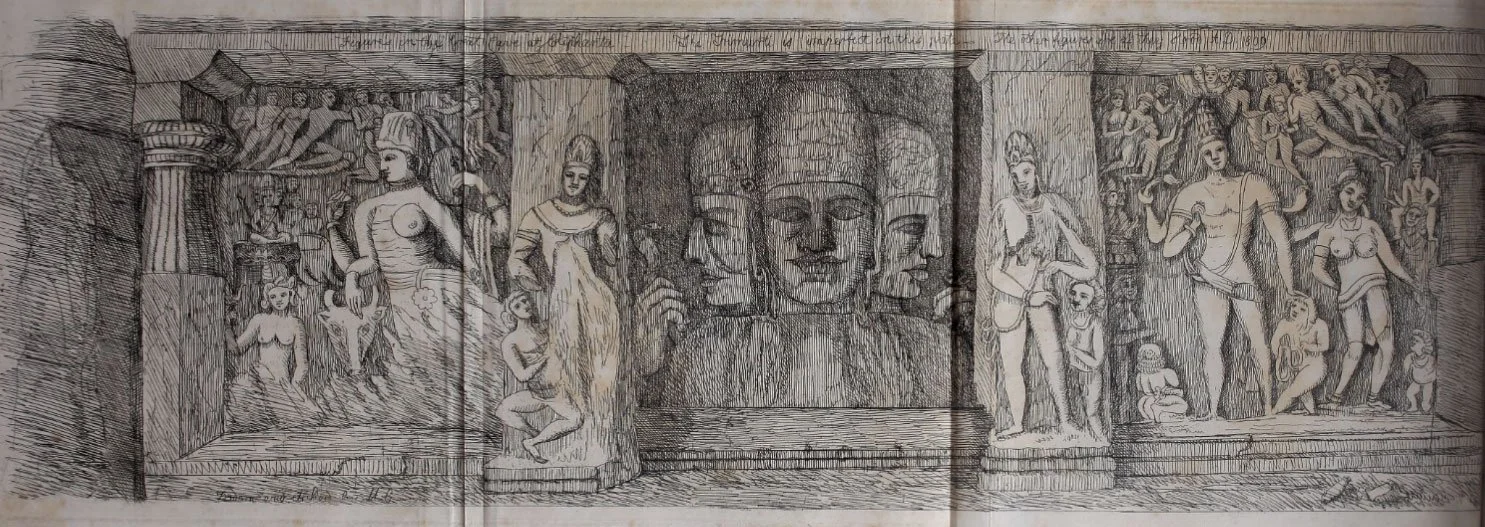
Figures in the Elephanta Caves near Mumbai, India - by Maria Graham
Three months in Italy
By the late Regency Maria had proven herself to be a keen observer and researcher, and an opinionated writer. Her work kept her busy while her husband was away at sea. She had no children to distract her.
Maria’s output included the translation of a French officer’s account of the Peninsula War (published 1816) and, being a keen artist, a biography of painter Nicholas Poussin (published 1820).
In 1819 Maria was able to spend the summer with her husband in Italy. Clearly unable to resist the urge to observe and record different cultures, she documented daily life in Poli, a small town some distance from Rome. The couple, accompanied by artist Charles Eastlake, went there to shelter from the hot Roman summer. (They were undoubtedly accompanied by servants, but such people rarely get a mention in travel journals.)
Again, she spotted a gap in the market. There are so many travellers in Italy:
Yet there is one subject on which modern travellers have been silent: the state of the present inhabitants of the near neighbourhood of Rome.
Her intent with the book, was: ‘to show the peasants of the hills as they are, and as they probably have been, with little change, since ‘Rome was at her height.’’
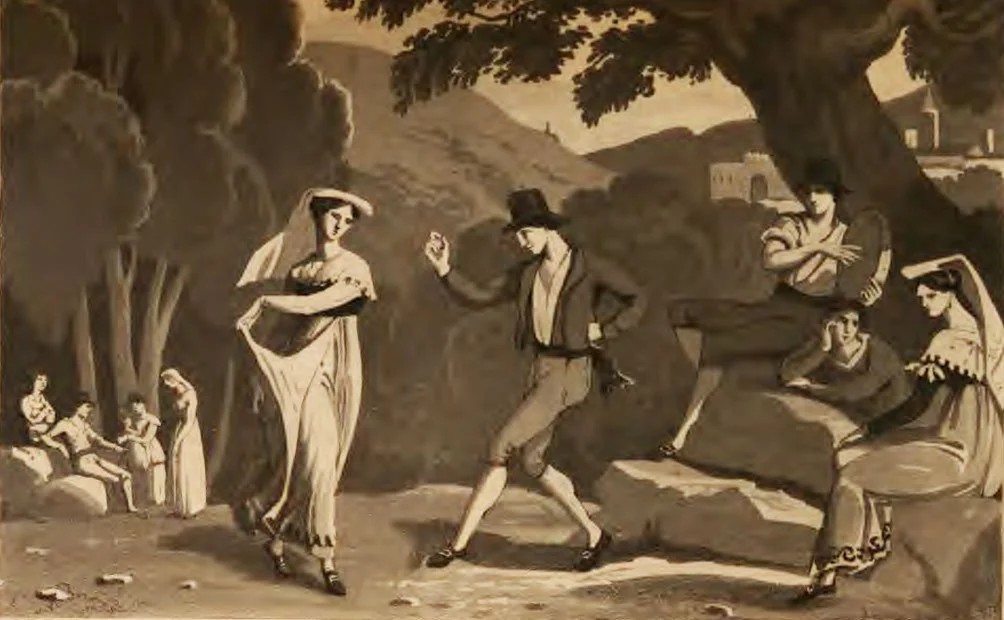
Costume of the people of Poli, Italy, by Charles Eastlake, who accompanied Maria and her husband on their trip in 1819.
Change at Chile
By her late 30s Maria, wife of a Royal Navy captain, was an established author and seasoned traveller. That comfortable life was challenged when, in April 1822, she and her husband were about to arrive in Chile. He died aboard ship, leaving the vessel to arrive without a captain and carrying his widow.
Maria’s friends arranged for her to live in a small cottage in Valparaiso. It seems that she chose to remain in Chile, rather than take the first ship back to England.
Did she have her eye on creating another travel journal? This seems quite likely. She certainly recorded, with her usual eye for detail, aspects of daily life among the Chilean people. By the time she left, in January 1823, she had plenty of material for another journal.
Her journey home involved a stop in Brazil, where she agreed to help educate Princess Maria da Gloria, the very young daughter of the newly installed Emperor of Brazil. Maria took up this post after returning to England, and then coming back to Brazil in 1824. It was a short-lived appointment and she was back in England in 1825.
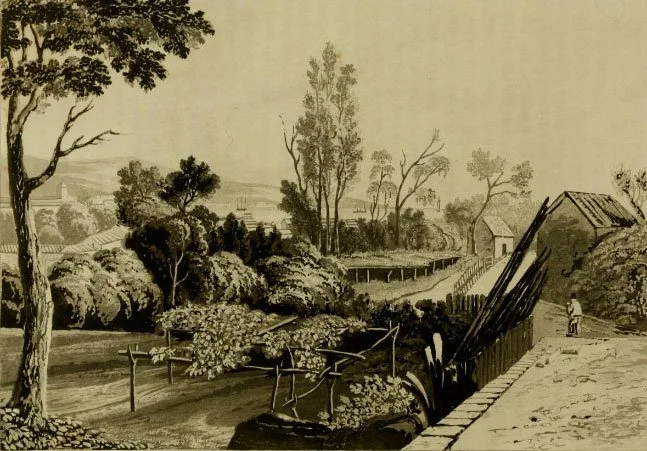
The view from Maria’s cottage in Valparaiso, Chile
‘The horrible sensation of that night’
On 19 November 1822 a huge earthquake struck Valparaiso. Maria, with her usual attention to detail, recorded it in her journal.
At a quarter past ten, the house received a violent shock, with a noise like the explosion of a mine; and Mr. Bennet starting up, ran out, exclaiming, “An earthquake, an earthquake! For God’s sake follow me!”
Maria hesitated, because one of their party was an invalid. The vibration continued and when the chimney fell, they knew they must get out and went onto the veranda.
The vibration increased with such violence, that hearing the fall of a wall behind us, we jumped down from the little platform to the ground; and were scarcely there, when the motion of the earth changed from a quick vibration to a rolling like that of a ship at sea.
Over the next few days she recorded the damage she saw, or that she heard reported. People had died, entire villages had crumbled, huge cracks appeared in the earth, roads and rivers were damaged.
Never shall I forget the horrible sensation of that night. In all other convulsions of nature we feel or fancy that some exertion may be made to avert or mitigate danger; but from an earthquake there is neither shelter nor escape.
This was one of the first well-documented eyewitness accounts of an earthquake. Henry Warburton, a founder of the Geological Society, asked Maria for a more detailed description. Apparently this created considerable debate, particularly her insistence that about 100 miles of coastline had been raised by around three or four feet.
Becoming Lady Callcott
Maria’s travelling days were not quite over. In 1827 she married Augustus Callcott, landscape artist and a member of the Royal Academy. She and her new husband embarked on a one-year tour of Italy, Germany and Austria. However, in 1831 her health prevented future travel.
She could still research and write, producing a number of books including A Short History of Spain (1828), Essays Towards the History of Painting (1836) and Little Arthur’s History of England (1835). This last book, a child’s introduction to English history, was reprinted many times, well into the late 20th century.
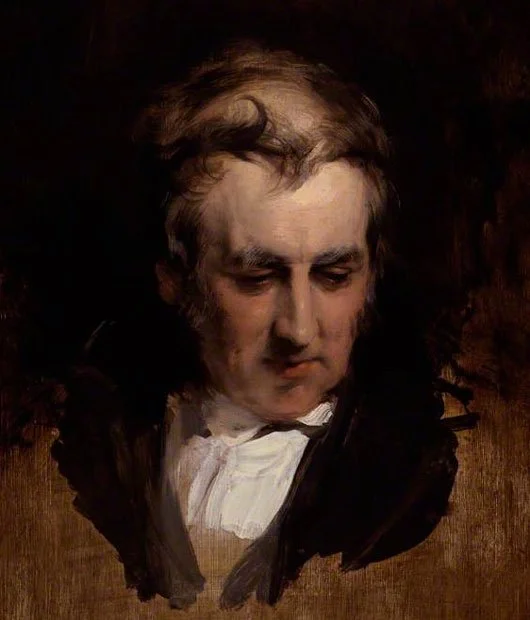
Sir Augustus Wall Callcott by Edwin Henry Landseer. Maria, his wife, died in 1842. The following year he was appointed Surveyor of the Queen’s Pictures, but died in 1844.
Andrew Knowles researches and writes about the late Georgian and Regency period. He’s also a freelance writer and editor for business. He lives with his wife Rachel, co-author of this blog, in the Dorset seaside town of Weymouth.
If you have enjoyed this blog and want to encourage us and help us to keep making our research freely available, please buy us a virtual cup of coffee by clicking the button below.
Sources include:
A Journal of a Residence in India by Maria Graham (1813)
Three Months Passed in the Mountains East of Rome by Maria Graham (1820)
A Journal of a Residence in Chile by Maria Graham (1824)
National Portrait Gallery, London
Maria Graham: A Literary Biography by Regina Akel (2009)
Regency History
by Andrew & Rachel Knowles

We research and write about the late Georgian and Regency period.
Rachel also writes faith-based Regency romance with rich historical detail.