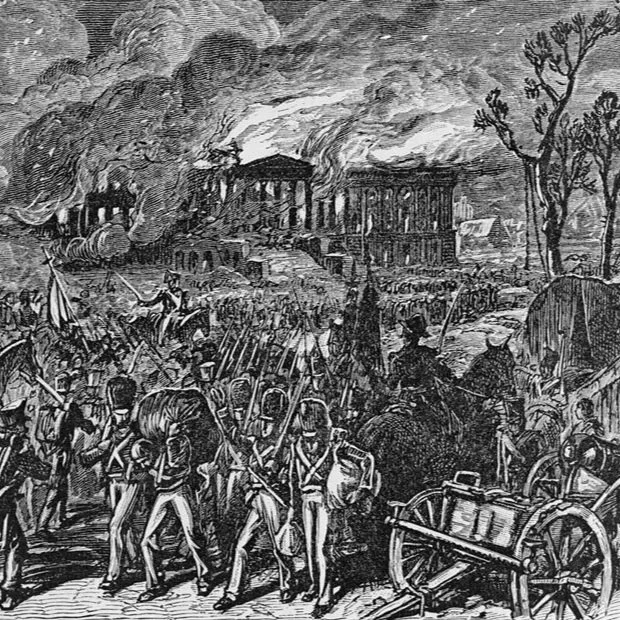
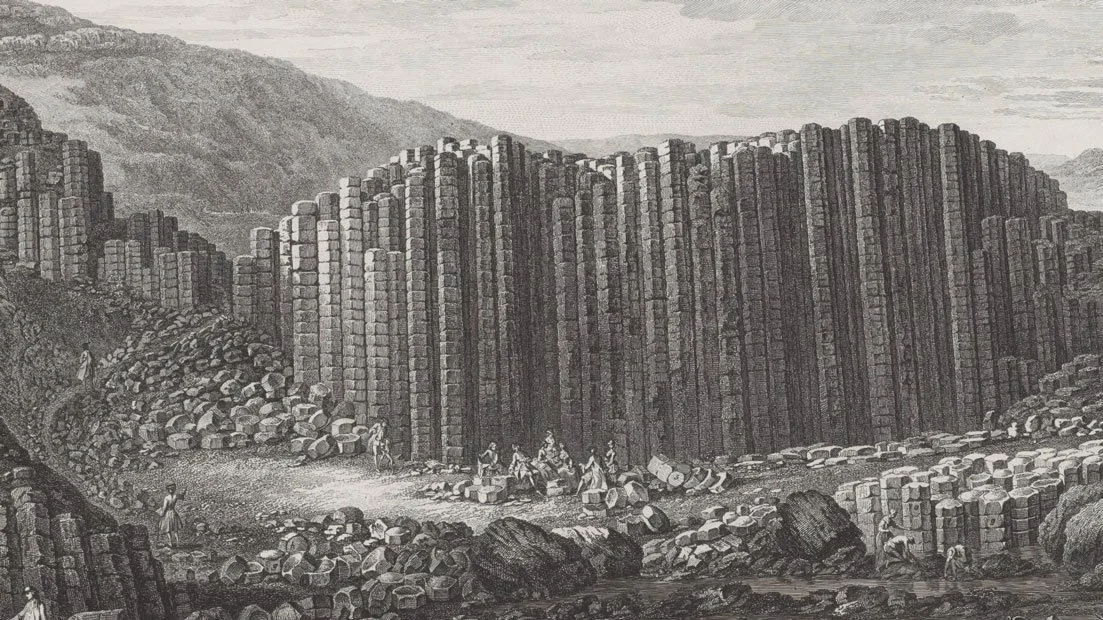
The Giant’s Causeway by Susanna Drury. Her watercolours and their later engravings introduced Georgians to this marvel of the natural landscape.
Regency travellers loved curiosities of nature, and there are plenty to be seen along the coast of Britain and Ireland.
Today, some of these sites are among Ireland’s most well-known tourist attractions. They’re now visited by up to a million people each year, and regularly feature in film and on television.
Even in the late Georgian and Regency era, when travel was more difficult, these same sights attracted those curious to see dramatic and unusual landscapes.
In the summer of 2025 we visited both. The first was the Giant’s Causeway, in County Antrim, Northern Ireland.
The Giant’s Causeway
Now a World Heritage Site, this unique site was initially made famous by the paintings of Susanna Drury. In 1740 her watercolours of the Causeway won £25 from the Dublin Society.
Susanna’s presentations of the unique coastal landscape were quickly copied by engravers. Scientists who heard about it were intrigued by the images of huge stone columns created by unknown forces.
The study of geology and volcanology was in its infancy. Even as they admired the rock formations, Georgian visitors were puzzled over how they could have come into being. A visitor in the 1780s referred to ‘whatever the process was by which nature produced that beautiful and curious arrangement of pillars’.
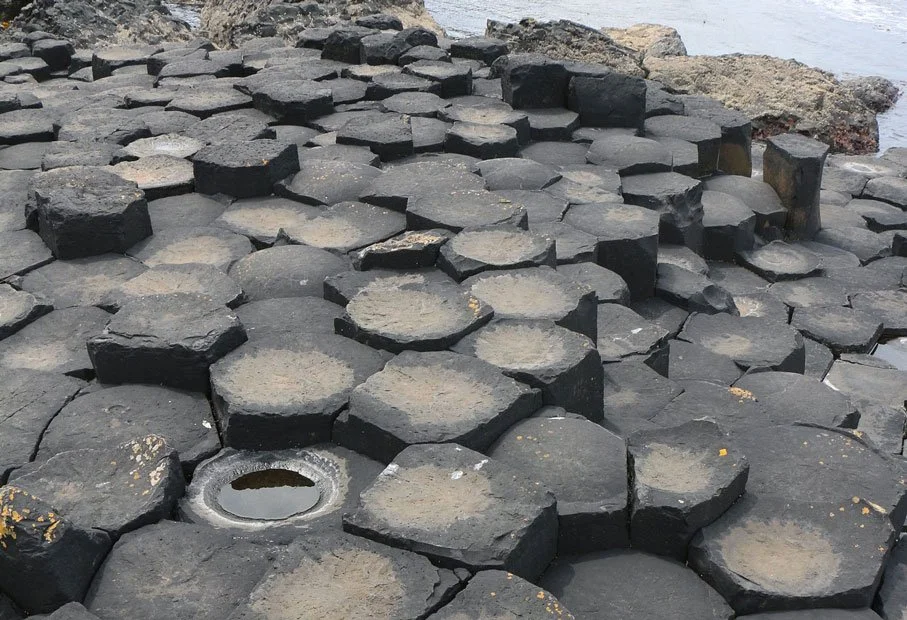
While it was created by volcanic activity, it’s easy to see how early visitors thought the Causeway could have been constructed deliberately.
The mythical origins of the Causeway are recorded in the 1823 Guide to the Giant’s Causeway:
The impression at first produced, is that of the building of an extensive pier, for which the stones, blocked out, had many years ago been laid upon the beech [sic]; but from some great national calamity, or other unknown cause, the work was interrupted, and the labourers all dismissed.
And so the natives believe, that the giants once commenced this colossal task of forming a causeway into Scotland, but that, being expelled by the ancient Irish heroes, they left the great work imperfect.
By the late 1700s the Causeway’s origins were recognised as being volcanic. The 1823 Guide attempts to explain, in non-technical language, the different theories as to how the basalt columns came into being. It avoids going into too much detail because:
The subject, however, is altogether too abstruse, and too little satisfactory in its conclusions, to occupy the general reader, or summer tourist, longer.
The Cliffs of Moher
Having enjoyed the Giant’s Causeway, we decided to visit the Cliffs of Moher, in County Clare.
The cliffs provide a dramatic, and sharp, edge to Western Ireland. They plunge almost vertically for over 100 metres, providing craggy nesting places for thousands of seabirds. We were thrilled to see, with the aid of binoculars, lines of puffins.
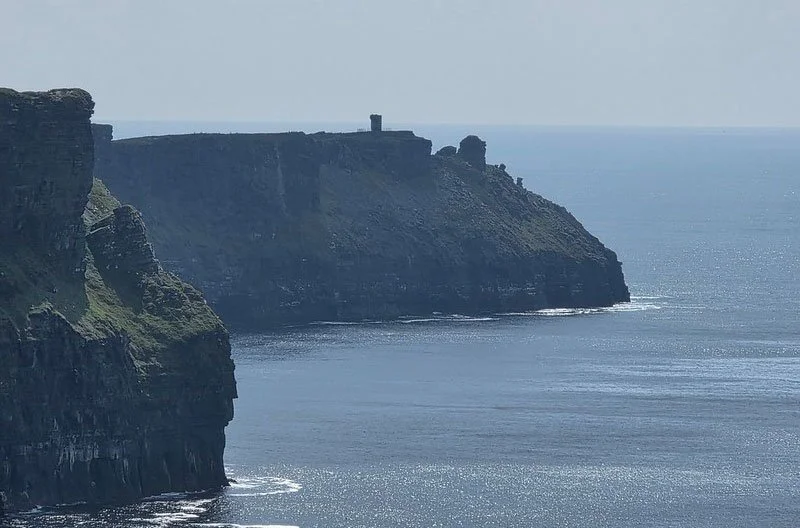
Hag’s Head, with its tower dating from the Napoleonic Wars. This was as close as we could get.
In a Tour of Clare, published in 1780, an area of the cliffs known as Hag’s Head is described as:
This wonderful Promontory almost encompass’d with devouring Seas, and the opposite Wild Shore, really affords a horrible and tremendous Aspect, vastly more to be dreaded than accounted for.
The author goes on to describe how the coast was already attracting tourists in the late 1700s.
Numbers of different Ranks, from far and near resort hither every Summer to see this amazing Appearance and Curiosity of Nature.
Unfortunately, we could not walk to Hag’s Head, because the clifftop footpaths in that direction were closed for safety reasons. A tower was built at Hag’s Head in the early 1800s as a lookout post.
However, we could get to O’Brien’s Tower, built in 1835 by a local landlord. This was built for late Georgian tourists, and still serves visitors today.
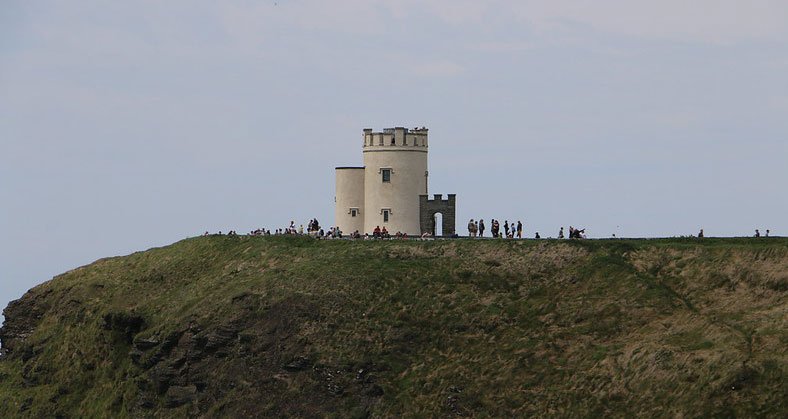
O’Brien’s Tower at the Cliffs of Moher. There’s a narrow spiral staircase inside, leading up to the parapet
Andrew Knowles researches and writes about the late Georgian and Regency period. He’s also a freelance writer and editor for business. He lives with his wife Rachel, co-author of this blog, in the Dorset seaside town of Weymouth.
If you have enjoyed this blog and want to encourage us and help us to keep making our research freely available, please buy us a virtual cup of coffee by clicking the button below.
Regency History
by Andrew & Rachel Knowles

We research and write about the late Georgian and Regency period.
Rachel also writes faith-based Regency romance with rich historical detail.