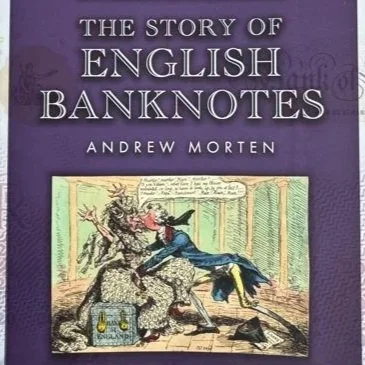
Book Review: The Story of English Banknotes
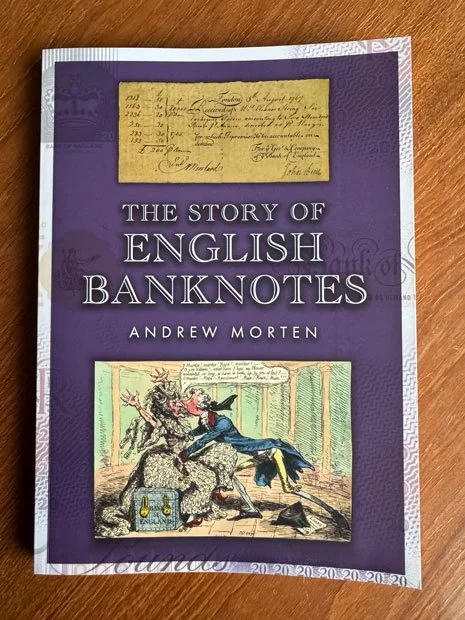
By Andrew Morten, from by Amberley Publishing.
I chose to review this book because banknotes became increasingly common in the late Georgian era.
As the title states, this short book (under 100 pages), traces the history of English banknotes.
It starts with an explanation of how the banking system began with goldsmiths in the medieval era. Their trade demanded secure storage, and the wealthy began to take advantage of this as somewhere to place their own valuables.
When financial transactions were required, it made sense to replace the movement of actual valuables to the exchange of notes, which promised the appropriate value. This led to cheques and banknotes.
The book is well-illustrated with images of banknotes, including some of the earliest, issued in the 1690s.
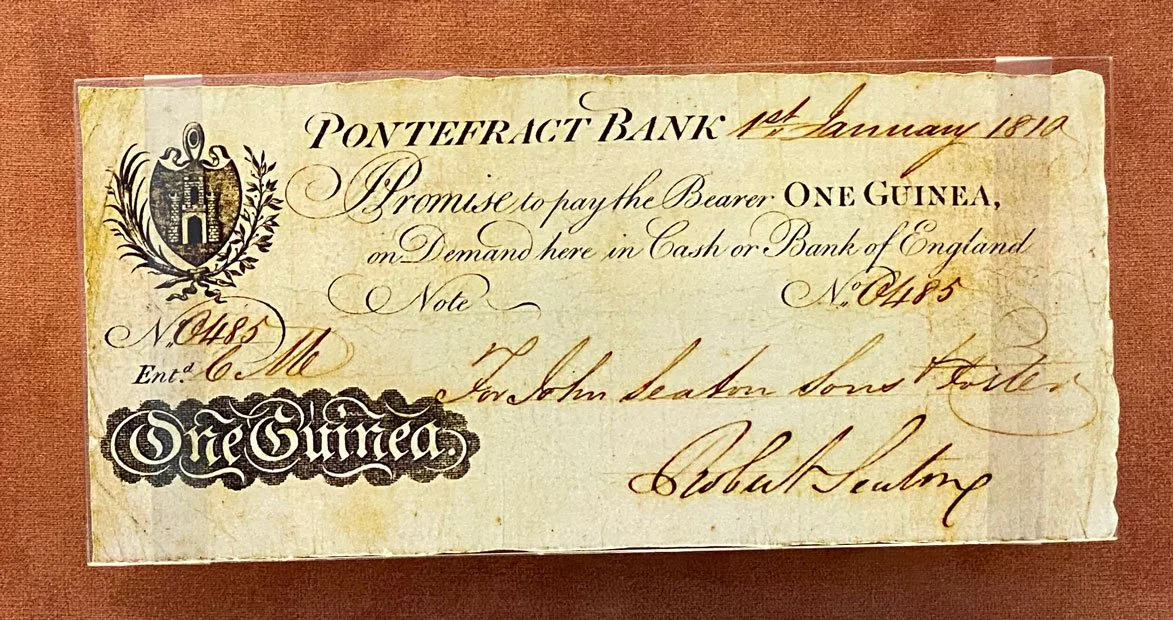
A one guinea note issued by Pontefract Bank in 1810 (Bank of England Museum)
The Bank of England was responsible for many banknotes, in part because it had a monopoly in and around London. However, private banks set up in country towns could, and did, print their own notes. This continued until the 1840s, when the system was simplified through an Act of Parliament.
The book discusses bank note forgery, and shows examples of historic fakes. There’s also a short section at the end on collecting banknotes.
The Story of English Banknotes ends with those issued in the reign of Charles III, the current king, and includes a brief discussion of digital currencies.
Perhaps a quarter of this book is particularly relevant to those interested in the bank notes of the eighteenth and early nineteenth centuries. The information is concise and well-presented.
Personally, I recommend a visit to the Bank of England Museum, in London, where there is a larger display of Georgian currency, including banknotes. If you can’t get there, this book is a good substitute.
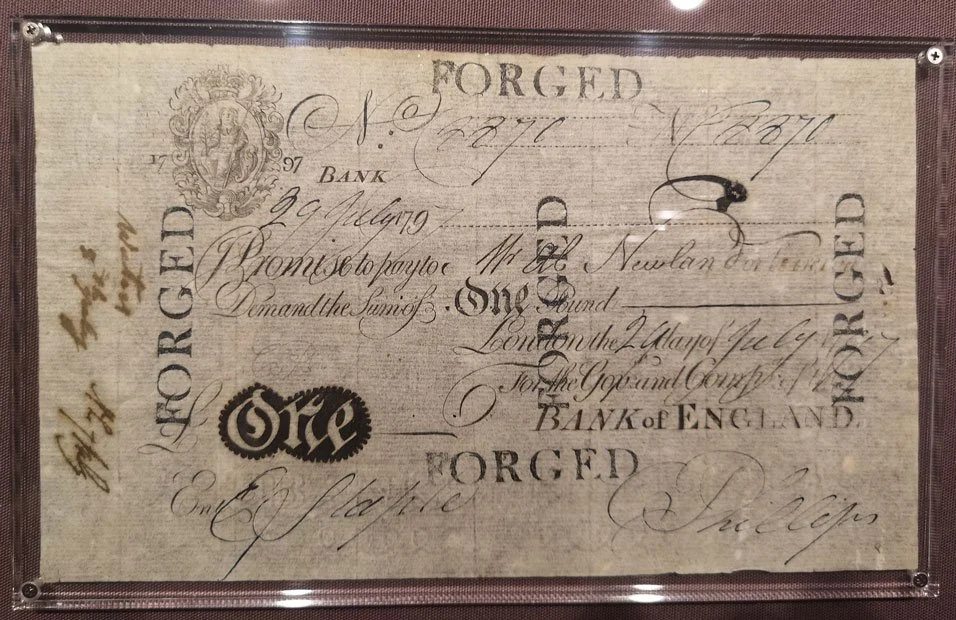
A counterfeit £1 note from 1797. Because they were new, people were unfamiliar with them and forgers took advantage of this (Bank of England Museum)
Andrew Knowles researches and writes about the late Georgian and Regency period. He’s also a freelance writer and editor for business. He lives with his wife Rachel, co-author of this blog, in the Dorset seaside town of Weymouth.
If you have enjoyed this blog and want to encourage us and help us to keep making our research freely available, please buy us a virtual cup of coffee by clicking the button below.
Regency History
by Andrew & Rachel Knowles

We research and write about the late Georgian and Regency period.
Rachel also writes faith-based Regency romance with rich historical detail.