Book Review: The Two Georges
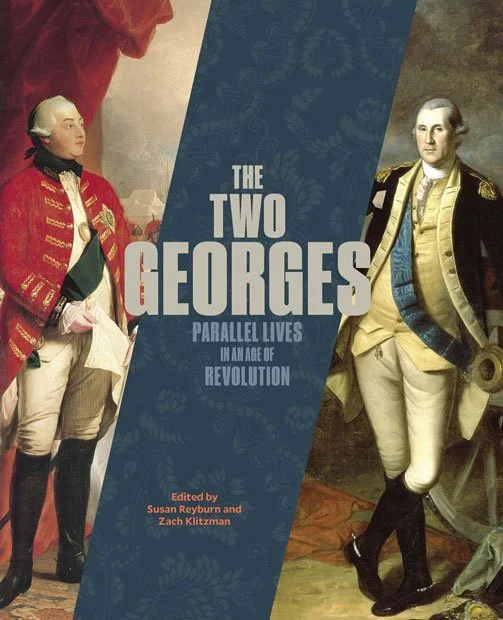
Parallel lives in an age of revolution
George Washington and King George III never met. I imagine the conversation would have been awkward if they had.
But what if they had encountered one another informally, without the weight of rank and responsibility? They may have enjoyed conversation about what they had in common and where their experiences and preferences differed.
George Washington was the older of the two by six years. Both were educated by tutors (as were many at that time). They shared a love of maps and scientific precision. Both were married only once (less usual at that time) and both survived assassination attempts. Each of the two men lived some of their life in the White House (but neither of them in Washington DC).
George III played musical instruments while Washington did not. The American preferred his horse, while the Englishman favoured dogs. Baseball was a sport for the king, not for the President. While family was important to both, only George III had children–15 of them.
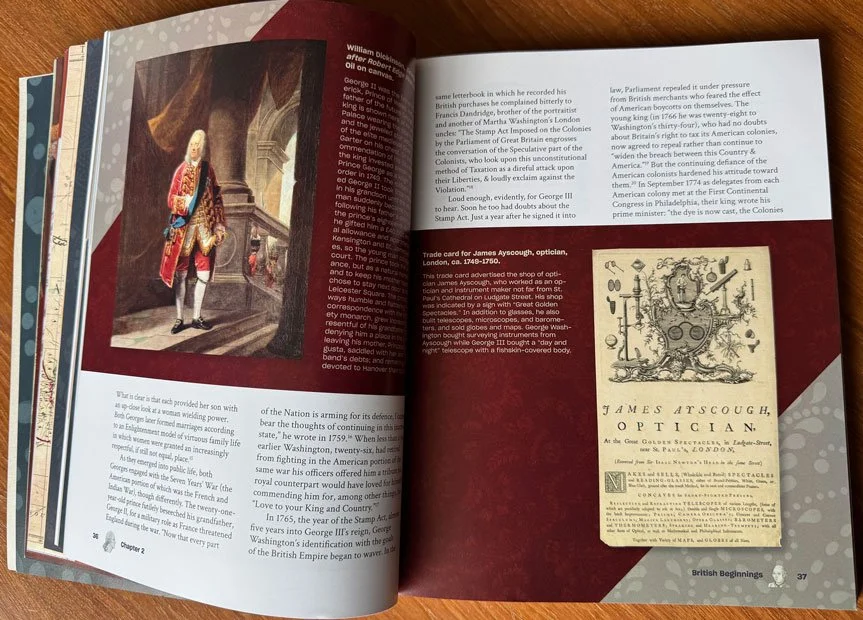
Example pages from The Two Georges
The tale of the two Georges
I was thrilled when the Library of Congress offered to send me a copy of The Two Georges, the official companion of their exhibition of the same name. It brings to life the lived experiences of these two leaders on either side of the Atlantic.
The book comprises essays written by a variety of experts in American and Georgian history. These cover a wide range of topics including:
The worlds of Planter George and Farmer George
Martha Washington and Queen Charlotte
Views on slavery and the slave trade
Dining and travelling
The legacy of the two Georges
There are discussions on the circumstances that shaped the lives of the Georges, along with short biographies of important people in their lives, and features on matters such as food preferences, agriculture and their love of science.
There’s plenty to look at as well as to read. The book is sumptuously illustrated with maps, caricatures, portraits and other images that represent the lives of these influential men.
A couple of words used in the book took me by surprise. One was the reference to trade using clipper ships, which I associate more with later in the 19th century. The other was the occasional reference to native Americans as Indians.
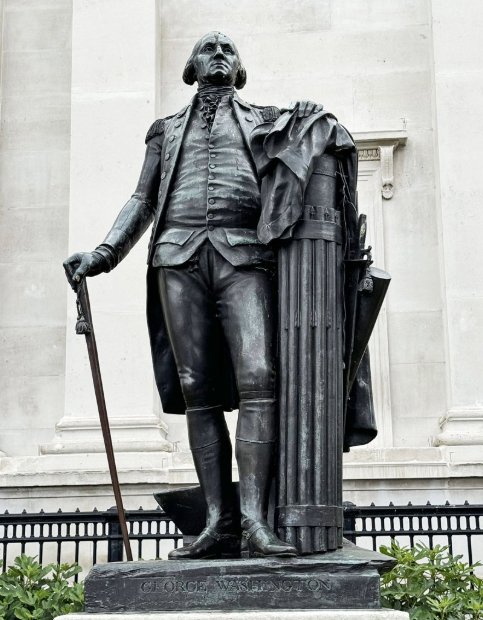
Statue of George Washington in Trafalgar Square, London
Who this book is for
The Two Georges can be read from start to finish, as I did, or dipped into. There are plenty of short sections that, along with their illustrations, provide plenty to entertain and inform both the casual reader and the more serious student.
It’s a wonderful reminder, or introduction to, the world and the histories of the two Georges. For me, it helped me better understand the history, interests and influences on George Washington, a character I’m not particularly familiar with.
For example, I didn’t know that Washington took such an interest in farming, to the extent that he designed a 16-sided barn for harvesting gain more efficiently.
The softback book includes a long list of sources, chapter notes and an index.
I recommend The Two Georges as an attractive addition to any collection of books about the histories of Britain and America in the late eighteenth century.
Oh, and that White House that both Georges lived in? George III spent some of his live in a palace at Kew called the White House—now demolished.
George Washington married Martha Dandridge Curtis, in her home, the White House plantation in Virginia. He never lived in the President’s Mansion, as today’s White House is now called.
The Two Georges is published by the Library of Congress. It’s edited by Susan Reyburn and Zach Litzman.

Statue of George III in Weymouth, Dorset
Andrew Knowles researches and writes about the late Georgian and Regency period. He’s also a freelance writer and editor for business. He lives with his wife Rachel, co-author of this blog, in the Dorset seaside town of Weymouth.
If you have enjoyed this blog and want to encourage us and help us to keep making our research freely available, please buy us a virtual cup of coffee by clicking the button below.
Regency History
by Andrew & Rachel Knowles

We research and write about the late Georgian and Regency period.
Rachel also writes faith-based Regency romance with rich historical detail.