Book Review: Women in Victorian Society
‘GRO statistics show that 85 per cent of Victorian women were married by the age of fifty. Marriage was simply a necessity for survival.’
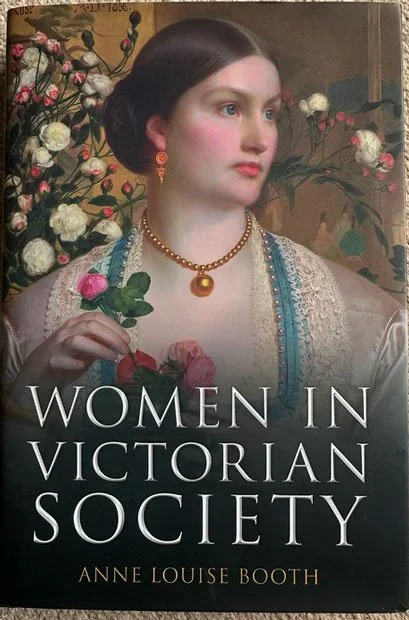
That’s among the statements opening this insightful book about the status of women in nineteenth century Britain: Women in Victorian Society by Anne Louise Booth.
That status was changing, and like so much else in Victorian Britain, the change was at a rate never seen before. In this book, Anne Louise Booth highlights aspects of how women’s experience and expectations altered during the 1800s.
She also highlights the social tensions in a nation where women’s contributions were increasingly valued, yet they had limited personal rights, particularly after marriage. And all this in a nation where the head of state was a woman.

Prince Albert and Queen Victoria
Women in an age of reform
Before they were Victorians, women were Georgians - hence my interest in this book. The reforms enjoyed by both men and women in the later nineteenth century have very visible roots in the years before Victoria took the throne.
Not all the reforms were positive for women. Since my school days I believed the 1832 Reform Act to be a significant milestone on the road to universal suffrage. From this book I learned that, for women, it was a small step backwards. Until then women could vote, if they met the property criteria. It was a right that very few exercised, and it caused consternation when they did, but it did happen.
Marriage stripped a woman of her property, making it her husband’s. However, it did not take away her entrepreneurial tendencies. A growing number of Victorian women were business owners and investors. They were taking more prominent roles in society, despite the limits placed on their legal status.
Many women did not seek equality with men. Early in her reign Queen Victoria herself said: ‘We women are not made for governing.’ Later she wrote that she was ‘anxious to enlist every one who can speak or write to join in checking this mad, wicked folly of ‘Women’s Rights’, with all its attendant horrors.’
Slow progress through the nineteenth century
This book charts the slow, and not always steady, journey of women’s rights through the Victorian years.
The opening chapter, ‘Expectations and Limitations’ describes the circumstances women found themselves in during the reign of Queen Victoria. It discusses matters such as property rights, marriage and divorce, and education.
The story of the creep towards some level of equality is often told through the tales of particular individuals. There’s Mrs Lily Maxwell who, because she paid rates for her business, found her name on a list of those eligible to vote in a local by-election. She insisted on casting her vote, although it was later ruled illegal.
Poor Caroline Norton was often assaulted by her husband, a Member of Parliament. Prominent in literary circles, she seems to have roused his jealousy and in 1836 he barred her from the family home, and from seeing her three children.
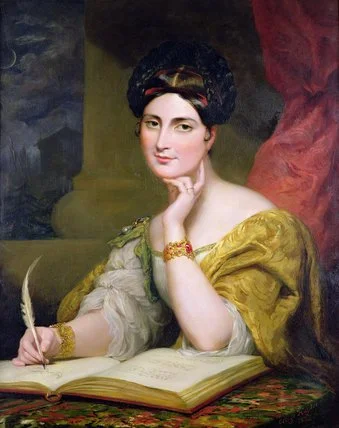
Caroline Norton by Sir George Hayter (1832)
He then sued the Prime Minister, Lord Melbourne, for criminal conversation (adultery), and while the case was thrown out, Caroline’s life, including her personal wealth, remained controlled by her husband. Her campaigning led to the Infant Custody Act of 1839, which gave women more rights to care for their young children.
‘It was the first piece of legislation to undermine the patriarchal structures of English law and the first step on a remarkable campaign that would transform marriage - and society - forever.’
There’s an extensive discussion of the True Woman versus the New Woman. The True Woman was a helpmeet for her husband, committed to home and hearth.
The New Woman, not labelled as such until the 1890s, sought to have more control over her own life. She wanted to choose how she spent her time, where she went, and the level to which she was educated.
What if Albert had lived?
In her final, short, chapter, author Anne Louise Booth explores how the Victorian woman might have fared, had Prince Albert not died so young. How might he have influenced policy? We can never know, but the suggestion is that women’s education might have advanced more quickly.
This book isn’t the full story of female emancipation. It opens with references to the Suffragette movement, while acknowledging they are post-Victorian. The story continues beyond the reign of Victoria.
However, it is of interest to anyone wanting to know more about how the rights of women in Britain changed during the nineteenth century. I found it a valuable read and will no doubt be referring to it in the future.
The book contains black and white illustrations, chapter notes (which function as a bibliography) and an index. It’s rich in quotes from original sources, and presented in a very readable style.
Women in Victorian Society by Anne Louise Booth is published by Amberley.
Andrew Knowles researches and writes about the late Georgian and Regency period. He’s also a freelance writer and editor for business. He lives with his wife Rachel, co-author of this blog, in the Dorset seaside town of Weymouth.
If you have enjoyed this blog and want to encourage us and help us to keep making our research freely available, please buy us a virtual cup of coffee by clicking the button below.
Regency History
by Andrew & Rachel Knowles

We research and write about the late Georgian and Regency period.
Rachel also writes faith-based Regency romance with rich historical detail.