Edward Austen Knight and Chawton House
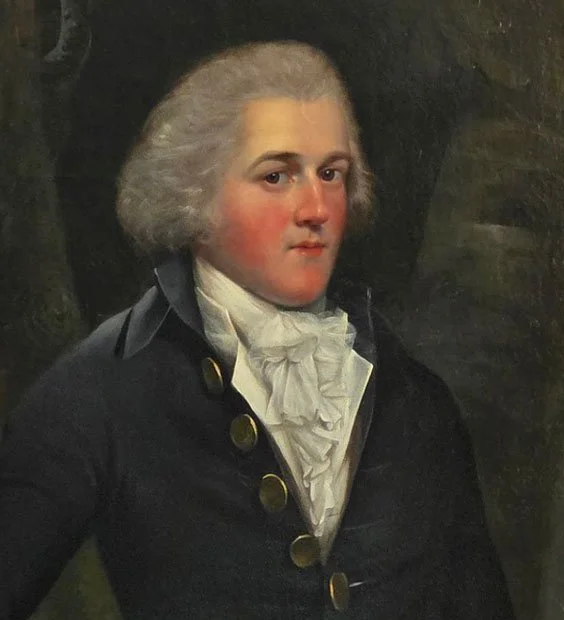
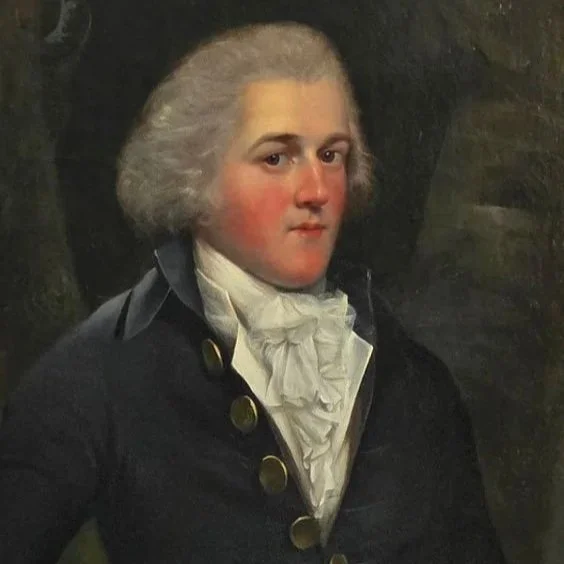
Edward Austen Knight in about 1790. This is his Grand Tour portrait, on display in Chawton House. (2026)
Edward Austen’s story isn’t quite rags to riches.
It’s the unusual, but not unique, tale of someone raised unexpectedly to great wealth. His story itself isn’t particularly interesting. Except that he played a part in allowing his sister’s genius to flourish.
Would Jane Austen have written what she did, if her brother Edward had not been her sponsor?
An unconventional honeymoon
The change in Edward’s circumstances began when he was 12 years old.
Newly-weds Thomas and Catherine Knight, on their honeymoon, dropped in on the Austens. They were distant relatives, but there was more than a family connection - George Austen’s role as rector in Steventon was granted by the landowner - Thomas Knight.
That honeymoon was in 1779. Thomas was in his mid-forties, whilst Catherine was in her mid-twenties. Not an unusual age gap for the era. (Jane Austen, for reference, was aged 3). What was unusual was that they whisked away young Edward Austen, aged 12, for the next part of their trip.
The couple, and in particular, Catherine, had clearly developed a fondness for Edward. Thomas, while considerably older, is said to have ‘possessed a spirit of fun and liveliness, which made him especially delightful to all young people.’
While it might seem odd to us that the Knights would take a 12-year-old on their honeymoon, they were already travelling with an entourage. As a wealthy landowner with estates in Hampshire and Kent, Thomas would have at least a couple of servants in the party. His new wife probably had at least one maid.
The servants most likely travelled in a separate carriage. Edward would have joined Thomas and Catherine in their vehicle, perhaps providing lively conversation on the road. He’s considered to have been an easy-going young man.
A form of adoption
The Knights were delighted with Edward, whom they invited to visit their home at Godmersham in Kent. The story, told by the family, is that George Austen, his father, wasn’t keen. He worried it would distract the boy from his education. Cassandra, his wife, persuaded him to let Edward go.
Edward went on to enjoy several holidays in Kent. Catherine Knight’s fondness for him continued and in 1783 he was considered to be adopted by them.
Today adoption is the legal transfer of parental rights and responsibilities to individuals who are not the natural parents of a child. The process for this was formalised in the UK in 1926. In the late Georgian era, while there was no formal process, the term was still used.
In a letter from Catherine to Edward, in the late 1790s, she calls him ‘our adopted child’ for whom she has ‘the tenderness of a Mother’.
It may seem curious to us that Edward’s parents, George and Cassandra Austen, allowed their son to be adopted into another family. But they were conscious of the benefits it offered to their son and, through him, to the wider family. There was no sign of the Knights having children of their own, and Edward’s position as adopted son put him in line for a considerable inheritance.
An immediate benefit of the adoption was the Knight’s financing Edward’s travels into Europe - his ‘Grand Tour’. This took him abroad from 1786 to 1790. Four years after his return, Thomas died and Edward inherited a huge amount of property.
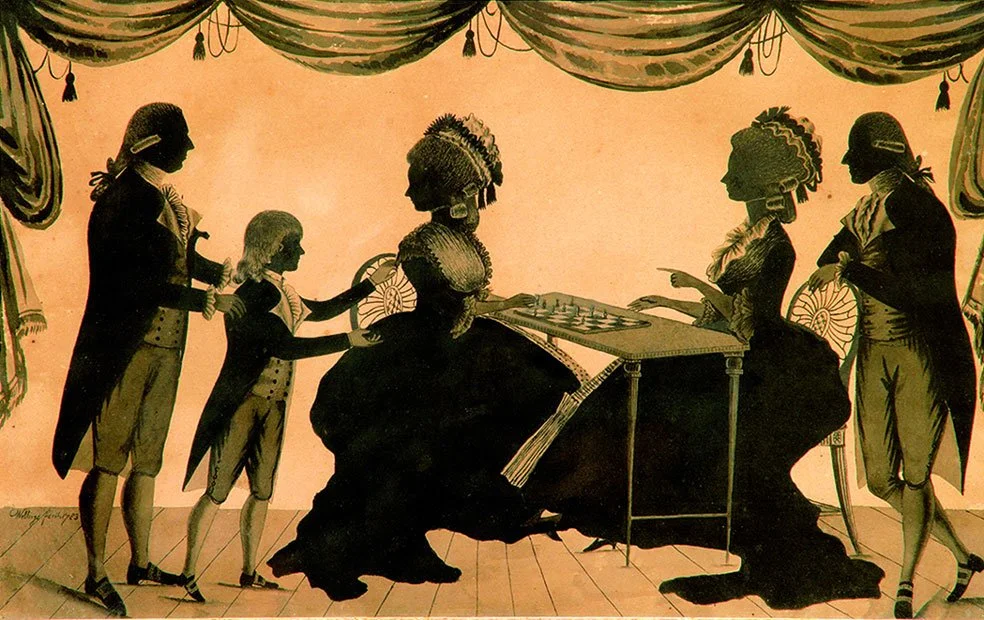
Silhouette representing the presentation of the young Edward Austen to Thomas and Catherine Knight. On display in Chawton House (2026).
Inheriting a name and estates
The house had been in the possession of the Knights for some generations before him, and continues to be owned by Knights to this day.
So where does Edward Austen fit into the history of Chawton House? As part of the condition of inheritance, he changed his surname to Knight.
This change of name, in order to inherit, was accepted practice in the Georgian era. It wasn’t just a convention, it was required by law. Thomas’s father, also called Thomas, previously had the surname May, and before that, Brodnax.
The generation before Thomas senior, the Knight name, and ownership of Chawton House, belonged to Elizabeth Knight. She had two husbands in succession, both of whom changed their surnames to hers in order to stand in line to inherit. As it was, both died before she did, and on her death, the house passed to Thomas Knight (previously May and Brodnax).
Confused? There’s more - Elizabeth Knight had been born with the surname Martin, as were her two older brothers. Each one inherited Chawton in turn, and changed their name to Knight.
Don’t worry if you can’t follow all that. The significant point is that while a Knight has owned Chawton for at least the last 400 years, some of them changed their name to Knight in order to inherit. So Edward Austen’s conversion to Edward Knight was nothing new.
Edward formally changed his name from Austen to Knight in 1812, when Thomas Knight’s widow, Catherine, died.
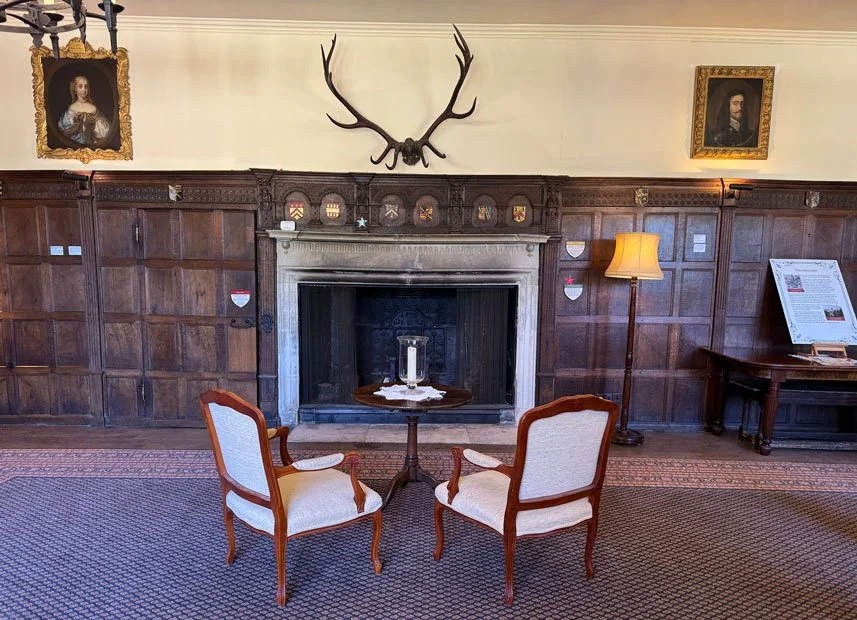
The Great Hall in Chawton House (2026). How often did Jane Austen sit before this fireplace?
The disinherited
Edward Austen must have been thrilled to inherit extensive estates in Kent and Hampshire. But before his adoption by the Knights, someone else expected to inherit the properties. No doubt Edward’s sudden promotion to heir caused more than a stir in local households.
Without going into the legal technicalities (of which there are many), Edward’s right to inherit Chawton faced a challenge in law. The Hinton family believed they had a claim, which was first tested in law in 1741 - long before Edward was born. The first attempt failed.
The claim resurfaced after Catherine Knight died in 1812. It was pursued by Jane Baverstock and John Knight Hinton. Both were distant relatives of Elizabeth Knight (previously Martin) who believed they took precedence over Edward Austen. He was adopted and not in the bloodline.
Jane Austen was aware of the legal challenge, and made occasional mention in her letters. The matter was not resolved until 1818, and the claim was now based on failure to follow legal procedures in the correct order. Edward’s adopted status was not referred to.
The complexity of the matters, and the ongoing threat to the inheritance, seems to have persuaded Edward to settle. He paid £15,000, about a year’s income from his estates. Having just lost an equally large amount in the failure of Henry Austen’s bank, Edward found the money by felling a large number of trees in the woods at Chawton.
The Austen women face poverty
When Edward inherited, in 1794, the 19-year-old Jane Austen was enjoying life at home in Steventon, with her parents, and sister Cassandra. The house was quieter now that all her brothers had left. Jane’s letters reveal how much she enjoyed, and was entertained by, the balls and dinners of local society, along with journeys into Kent.
But she knew this lifestyle, funded by her father’s role as rector, could not last. She would one day have to find something, or someone, to support her. Marriage was the obvious solution.
In her novel Emma, she portrays the fate of a woman in a situation similar to her own. Miss Bates was the daughter of the now deceased vicar of Highbury. As Mr Knightley reminds Emma:
She is poor; she has sunk from the comforts she was born to; and, if she live to old age, must probably sink more.
Miss Bates and her widowed mother are increasingly reliant on the charity of their more affluent neighbours. As older, single women they have no means of earning an income for themselves.
Emma was published in 1815. Through Miss Bate’s deteriorating financial circumstances, Jane, then in her late 30s, was sharing her own experience. Her father’s abrupt retirement in 1800, and death five years later, significantly reduced the income she, her mother and her sister had to live on.
In 1794, all that was still in Jane’s future.
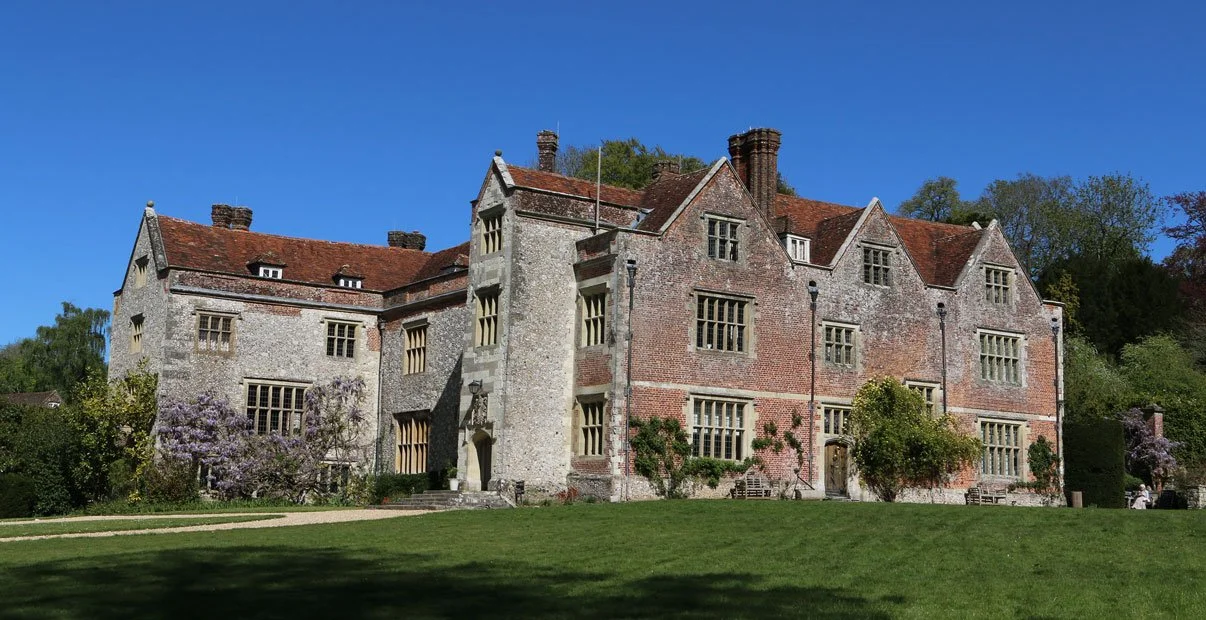
Chawton House (2026)
Property brings responsibility
On the death of his adopted father, Edward inherited two significant estates: Godmersham in Kent and Chawton in Hampshire. The will gave Thomas’s widow, Catherine, the right to live in Godmersham until her death. However, in 1797 she decided to move to a smaller property, leaving the big house to Edward, his wife Elizabeth, and their growing family.
A delightful exchange of letters shows that Edward was reluctant for Catherine to give up her long-time home ‘where I have so often heard you say your whole Happiness was centre’d’.
I am confident we should never be happy at Godmersham whilst you were living at a smaller and less comfortable House.
Catherine was insistent that Edward accept the idea. In her reply, she states that his expressions of gratitude and affection had confirmed her decision:
To reward your merit, therefore, and to place you in a situation where your many excellent qualities will be call’d forth and render’d useful to the neighbourhood, is the fondest wish of my heart.
It’s clear Edward felt some responsibility towards his adopted mother. He and his wife would also appreciate the space offered at Godmersham - in 1797 they had four children, and by 1808 they had added seven more and, unusually for the time, they all survived infancy.
Their mother, Elizabeth, was less fortunate. She died in 1808, shortly after the birth of their youngest. Jane’s sister, Cassandra, was visiting at the time. While this could be construed as taking advantage of a spinster sister to provide free childcare, the visit was one of many made by the Austens to Godmersham. Edward was generous in his hospitality to his natural family.
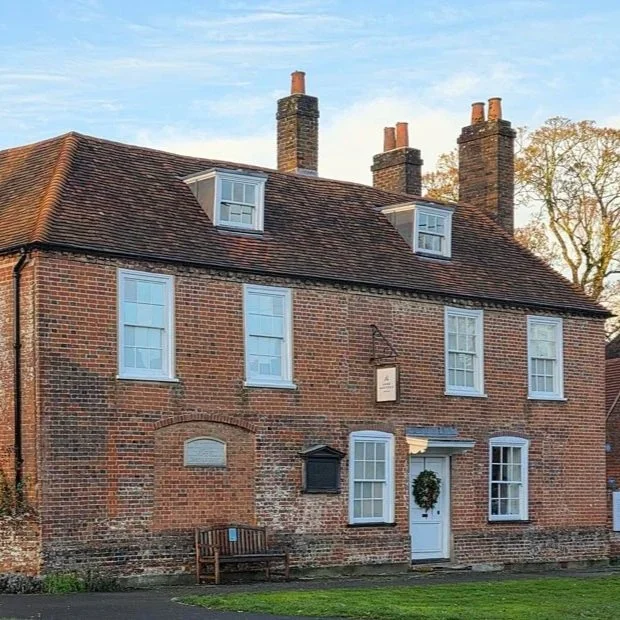
He was also concerned for his natural mother and sisters who, in the early 1800s, found themselves without a home or an income. In 1808 he offered them a six-bedroomed house in Chawton, which they accepted. They moved in on 7 July 1809.
Jane lived in the house with her mother and sister and friend Martha Lloyd until the final weeks of her life.
The property was a short walk from Chawton House, which the women often visited. Edward and his children were there from time to time, although Godmersham remained their primary residence. It’s clear he could afford to run not one but two great houses at the same time.
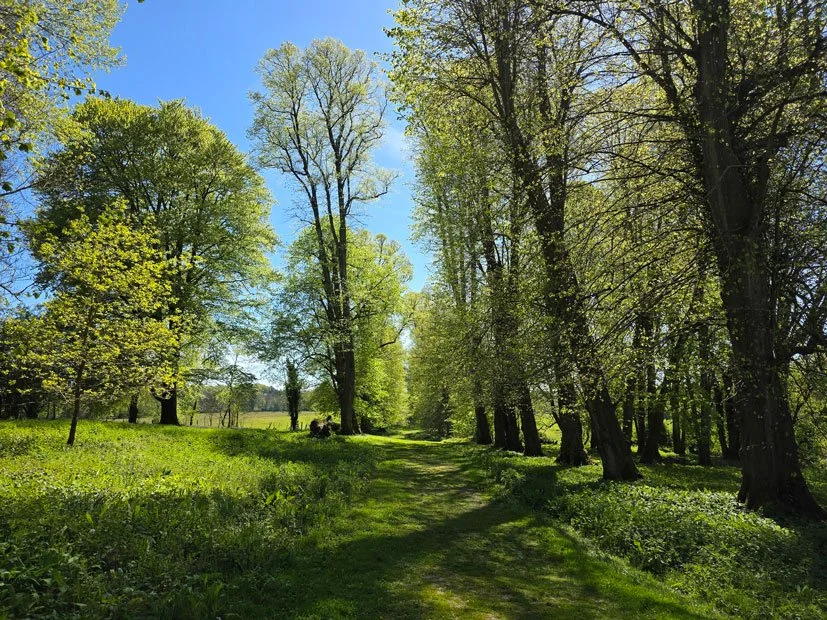
Part of the Chawton estate (2026). The extensive estates at Godermersham and Chawton gave Edward an income of around £15,000 a year.
Security and stability for Jane Austen
Jane had been writing for almost her entire life. However, her most productive periods were the latter years at Steventon (her late teens and early twenties), and the years at Chawton, when she was in her late thirties.
I am not equipped to critique Jane’s writing history in detail, but on the face of it, Edward looks to have given her the security and stability she needed to convert her writing into published works.
Between 1800, when she was forced to move to Bath, and 1809, when she moved into the house in Chawton, her writing life seems to have stalled somewhat. Not stopped entirely, but certainly stalled.
They were years of disruption and uncertainty. They moved house several times, first in Bath and then to Southampton. The Austens’ income was reduced and they were unsure of their future. Against this background, Jane’s writing output seems to have diminished.
Edward’s provision of the Chawton house changed this. Jane was once again in a home she felt comfortable in, surrounded by her beloved Hampshire countryside. Her writing life blossomed.
The years after Jane
Jane Austen died on 18 July 1817 in Winchester. Her mother and sister continued to live together in Chawton, and Edward maintained his life as the owner of extensive properties.
Jane’s mother died in 1827 and her sister, Cassandra, in 1845. They are buried, side by side, in the churchyard of St Nicholas. It’s just a stone’s throw from Chawton House.
Edward outlived them, dying in 1852. His son, also Edward, inherited the properties at Godmersham and Chawton.
Edward Austen was a younger son with uncertain prospects, transformed into a man of wealth and status through the generosity of distant relatives. His story is interesting in its own right, but what makes it stand out is how it made a difference to the life of his author sister, Jane Austen.
By providing her a comfortable home he gave her the time and space to write the six novels (and see four of them published) that are now beloved around the world.
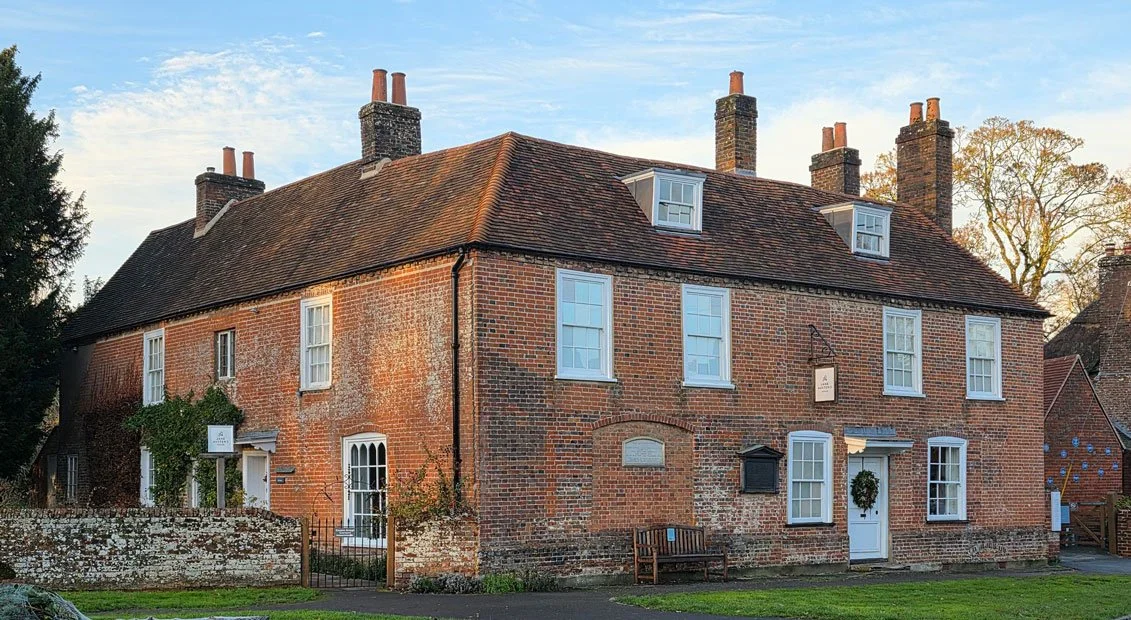
Jane Austen’s House Museum (2025). The house in Chawton that Edward made available to Jane, Cassandra and their mother.
Andrew Knowles researches and writes about the late Georgian and Regency period. He’s also a freelance writer and editor for business. He lives with his wife Rachel, co-author of this blog, in the Dorset seaside town of Weymouth.
If you have enjoyed this blog and want to encourage us and help us to keep making our research freely available, please buy us a virtual cup of coffee by clicking the button below.
Sources used include:
Jane Austen’s Letters by Deirdre Le Faye (1995)
Jane Austen’s Men by Helen Amy (2024)
Pride, Prejudice and the Threat to Edward Knight’s Inheritance, Jane Austen Society of North America (2014)
Chawton Manor and its Owners by William Austen Leigh (1911)
Jane Austen - Her Contemporaries and Herself by Walter Herries Pollock (1899)
Regency History
by Andrew & Rachel Knowles
We research and write about the late Georgian and Regency period.
Rachel also writes faith-based Regency romance with rich historical detail.