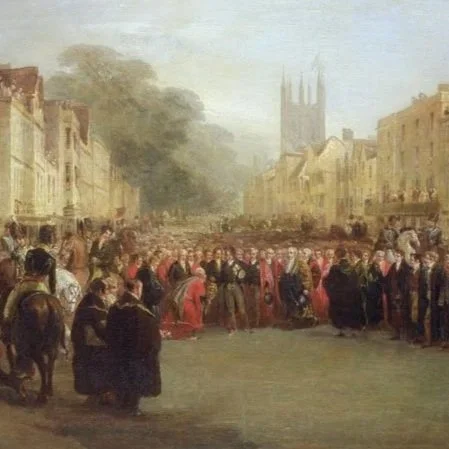
Bribery and kisses: Elections in Georgian Britain
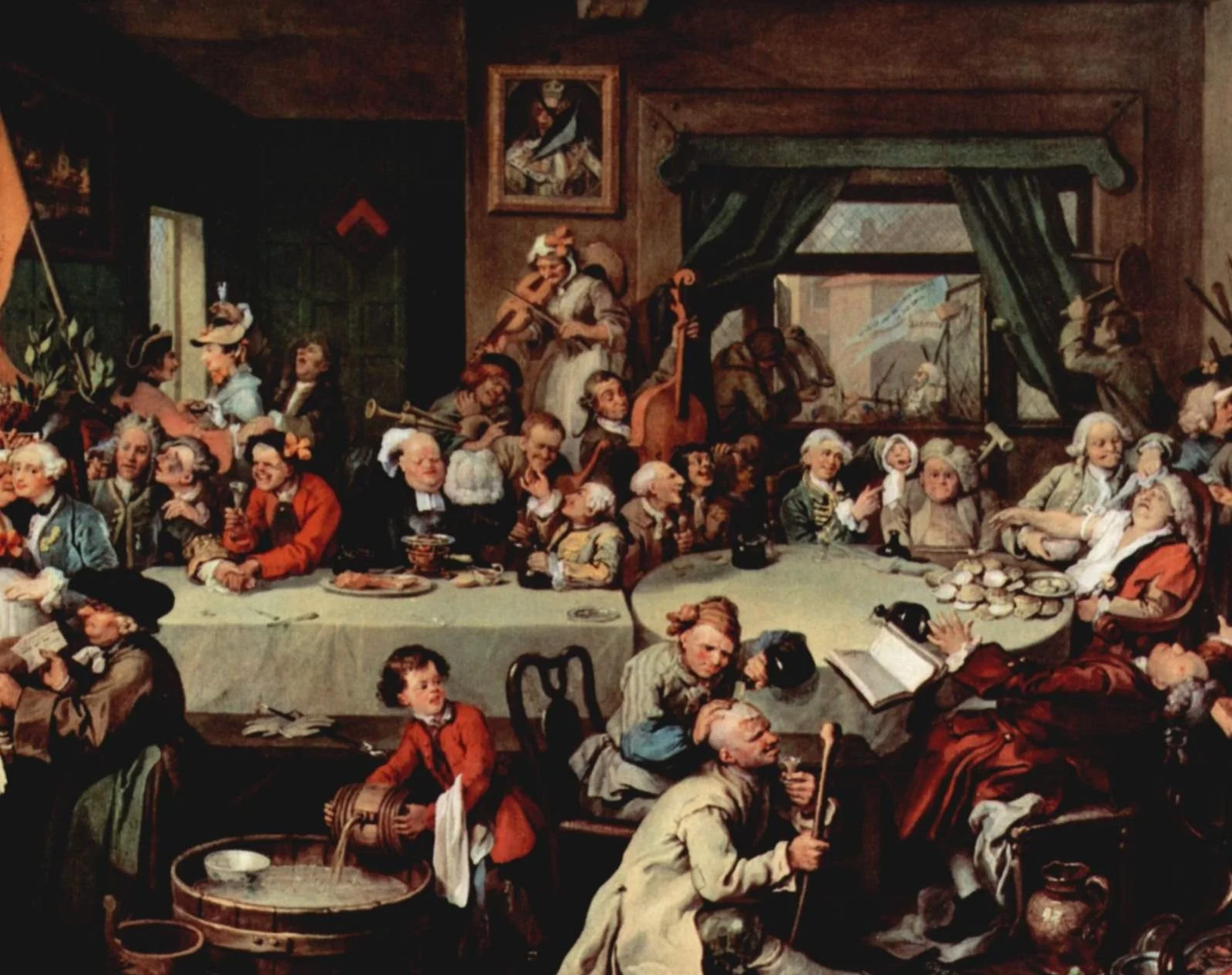
An Election Entertainment from The Humours of an Election series by William Hogarth (1755)
Britain has a long history of parliaments, going back to medieval times. Parliament is made up of two bodies. One is the House of Commons, which is meant to represent ordinary people. The other, the House of Lords, is made up of aristocrats and bishops.
The House of Commons is made up of Members of Parliament (MPs). These are elected to represent particular areas of the country.
In medieval times our home town, Weymouth, was a major port. This meant it could elect four Members of Parliament. In 1701 this included famous architect Sir Christopher Wren.
Georgian elections were famously boisterous affairs, as prospective MPs competed for the relatively small number of votes available.
Weymouth could send four MPs to parliament, but in 1800 there were only about 600 men entitled to vote. With the right persuasion it was possible to secure plenty of support, particularly as everyone’s voting choice was announced in public. The privilege of voting in secret wasn’t permitted until 1872.

Bristol Delft bowl from 1741 General Election in support of Blackett and Fenwick.
Now at Wallington, Yorkshire (2024)
Rotten and pocket boroughs
Unsurprisingly, to get elected you needed money or influence - preferably both. William Wilberforce, champion of the abolition of the slave trade, spent over £8,000 to secure his first election in 1780. John Wilkes spent a similar amount in 1757, at Aylesbury. Even today that’s a lot of money - back then it was an absolute fortune.
In some places there was no need for a vote, because there were no rivals to the preferred candidates.
It was illegal to bribe someone to vote for you. However, voters could be entertained with food, drink, and free travel to where the vote was held. Candidates might choose to pay inflated prices when buying goods and services from voters.
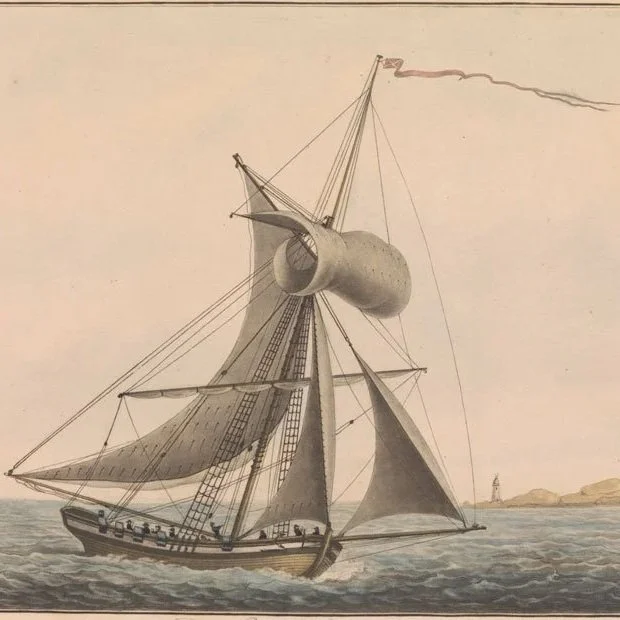
In 1754 John Wilkes attempted to bribe a sea captain to delay the arrival of voters for his opponent. He suggested they be taken to Norway ‘by accident’. Wilkes lost the election and his plan may have backfired because another party of voters did miss the poll because their ship took a wrong turn.
Rouen, April 1. Yesterday arrived safe the Newcastle-duke, loaded with Gin, and several Voters on board, bound for Berwick. Having lost their Way thither, they offered their Votes to the Parliament of Rouen, but were rejected…
We don’t know for sure that the voters were supporters of Wilkes, but it’s unlikely their arrival in France was due entirely to poor navigation. Berwick is in the far north of England, while Rouen is nearly 500 miles south, in Normandy.
Women could not vote but could influence
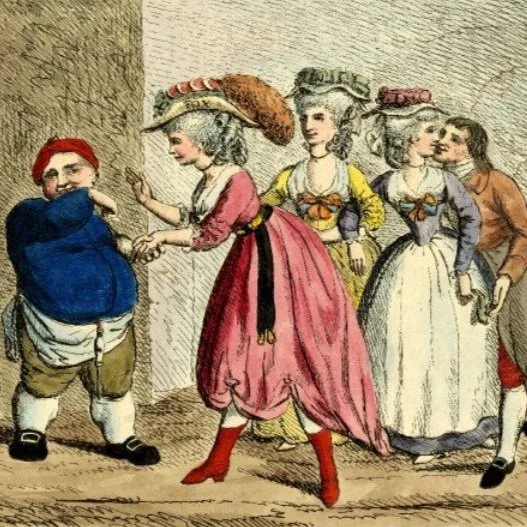
Not all favours were financial. In the 1784 election Georgiana, Duchess of Devonshire, used her personal charms to win the hearts of voters.
It was at this election that the beautiful Georgiana, Duchess of Devonshire, successfully wooed the electors for the great Whig leader by her smiles and her kisses.
‘Your eyes are so bright, my lady, that I could light my pipe by them,’ said an Irish labourer to her at Covent Garden.
She is said to have valued that compliment more highly than any she received during a long and brilliant career in social and political life.
‘The Duchess having purchased the vote of an impracticable butcher by a kiss is said to be unquestionable,’ says Earl Stanhope.
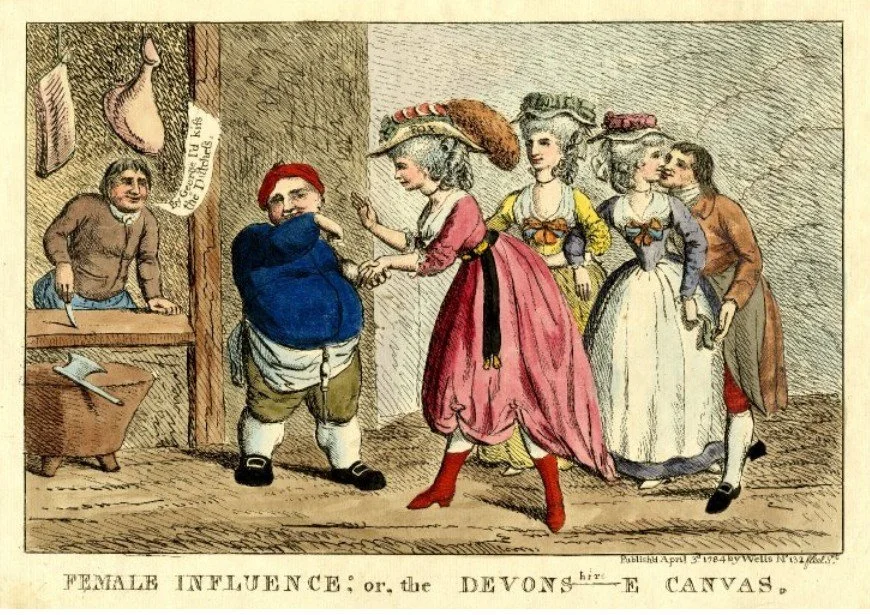
Female influence published by Williiam Wells (1784) © British Museum
Georgiana, Duchess of Devonshire, winning support with kisses
Her kisses were in support of Charles James Fox and they may have helped, as he was successfully elected.
Not all canvassing was as gentle as Georgiana’s kisses. Crowds gathered to show support for a particular candidate, both before and during the election. Voting itself could take several days.
A drawing of the 1768 election in Brentford shows men wielding clubs as they attack women and children at a hustings meeting - where candidates debate in public. In the 1784 election campaign Hannah More wrote of a crowd of armed men gathered at Covent Garden, who were attacking people they thought did not support their candidate.
Today anyone aged over 18 can vote, and do so in secret. But in many other ways our modern elections are just as combative and controversial as those in Georgian Britain.
Andrew Knowles researches and writes about the late Georgian and Regency period. He’s also a freelance writer and editor for business. He lives with his wife Rachel, co-author of this blog, in the Dorset seaside town of Weymouth.
If you have enjoyed this blog and want to encourage us and help us to keep making our research freely available, please buy us a virtual cup of coffee by clicking the button below.
Regency History
by Andrew & Rachel Knowles

We research and write about the late Georgian and Regency period.
Rachel also writes faith-based Regency romance with rich historical detail.