
Frederick, Duke of York (1763-1827)

Prince Frederick, Duke of York and Albany from La Belle Assemblée (1827)
Profile
Prince Frederick, Duke of York (16 August 1763 - 5 January 1827), was the second son of George III and Queen Charlotte. He became heir presumptive to the British throne on the death of his father in 1820, but never became king because he died before his older brother, George IV.
Early years
Prince Frederick was born on 16 August 1763 at St James’s Palace, London, the second son of King George III and Queen Charlotte and younger brother of George IV. He was George III’s favourite son, but despite this, he was close friends with his brother George.
Duke of York
On 27 November 1784, Frederick was made Duke of York and Albany and Earl of Ulster.
An extravagant lifestyle
Frederick and George shared the same extravagant lifestyle, though Frederick took his official duties rather more seriously than his brother. He was constantly in debt due to his passion for gambling, both on horses and cards. During the Regency crisis of 1788 he supported George, causing him to fall out with his parents.
In May 1789, he was nearly killed in a duel by Lieutenant Colonel Charles Lennox. The Gentleman's Magazine reported that Lennox's ball "grazed his Royal Highness's curl."1

Frederica, Duchess of York from A Biographical Memoir of Frederick, Duke of York and Albany by John Watkins (1827)
The Duchess of York
On 29 September 1791, in Berlin, the Duke married his cousin, Princess Frederica Charlotte of Prussia. The ceremony was repeated at Buckingham Palace on 23 November 1791. The marriage was not successful. The couple had no children and they soon separated.
The Duchess of York retired to Oatlands Park in Weybridge, where she lived an eccentric life until her death in 1820. She was a popular local benefactress and was buried in Weybridge Old Church.
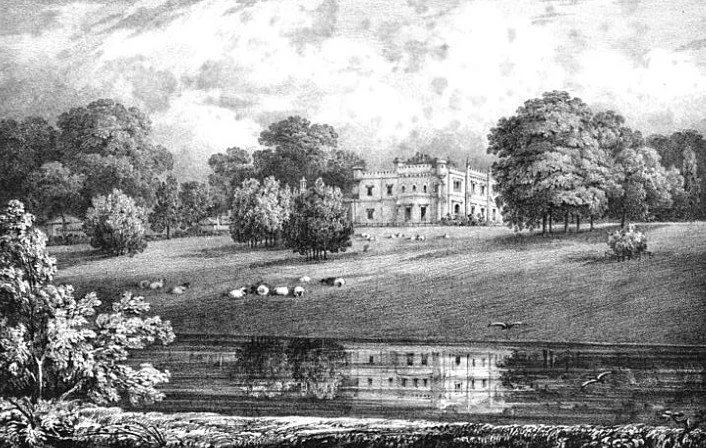
Oatlands from Select illustrations of the County of Surrey by GF Prosser (1828)
Military career
Frederick joined the army in 1780 and spent several years in Hanover studying at the University of Gottingen with his younger brothers. As an inexperienced officer, he was put in command of the army in Flanders and suffered humiliating defeat.
He became commander-in-chief of the British army in 1795 and embarked upon a series of reforms which revolutionised the army. He took control of discipline, training the troops in drill and field manoeuvres. He also ensured the provision of greatcoats bought with public funds rather than the old system of leaving colonels to clothe their own regiments. In addition, he introduced a system for sending confidential reports to head office.
The Duke created and trained the Rifle Brigade – the 95th Regiment – and equipped them with deadly accurate Baker rifles and uniforms designed for camouflage rather than display. The same desire for merit-based promotion led to the establishment of the Royal Military College in 1802 for the training of military officers.
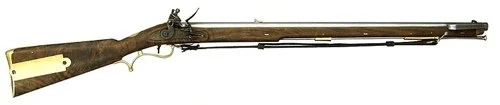
Baker Rifle
The Mrs Clarke scandal
In January 1809, Lloyd Wardle, a radical member of parliament, brought accusations against the Duke of York and his mistress, Mrs Clarke. It was revealed that Mrs Clarke, an extravagant actress under the Duke’s protection, had accepted money from people wishful of buying promotion or favours in the military. The Duke was accused of knowing about her sales of office and even sharing the proceeds.
Parliament examined the evidence closely before clearing the Duke of personal corruption or aiding the corruption of his mistress. However, it was clear that Mrs Clarke had been told far too much information of an official nature by her royal lover, and the Duke was obliged to resign his official appointments due to the embarrassment caused by this scandal.
The Duke was, however, exonerated by his elder brother and reappointed commander-in-chief in 1811 when George became Prince Regent.
King in waiting
Frederick became heir presumptive to the British throne on the death of his father, George III, in 1820, but he never became king because he died on 5 January 1827, more than three years before his brother George IV.
Rachel Knowles writes faith-based Regency romance and historical non-fiction. She has been sharing her research on this blog since 2011. Rachel lives in the beautiful Georgian seaside town of Weymouth, Dorset, on the south coast of England, with her husband, Andrew, who co-writes this blog.
If you have enjoyed this blog and want to encourage us and help us to keep making our research freely available, please buy us a virtual cup of coffee by clicking the button below.
Note
The Gentleman's Magazine (May 1789).
Sources used include:
Chedzoy, Alan, Seaside Sovereign - King George III at Weymouth, (2003)
Fry, Plantagenet Somerset, The Kings & Queens of England & Scotland, (1990)
Watkins, John, A Biographical Memoir of Frederick, Duke of York and Albany (1827)
Watson, J. Steven, Oxford History of England: The Reign of George III 1760-1815, (1960)